
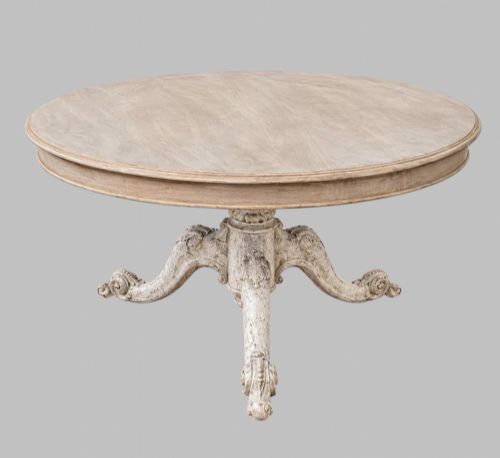
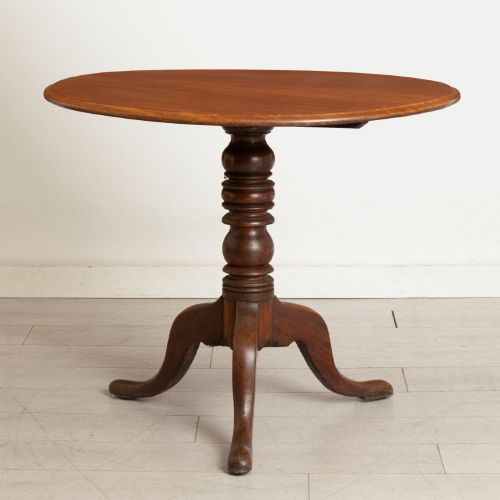
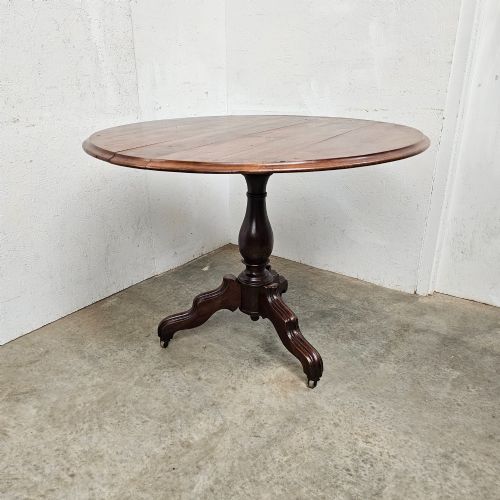


Victorian Mahogany Supper Table
A victorian mahogany supper table is a substantial timber dining piece built for flexible evening use, combining rich wood with sturdy construction.
Victorian Mahogany Supper Table
When you search for a victorian mahogany supper table, you encounter nineteenth-century dining tables, breakfast tables, and tilt-top tables built from rich timber. These pieces span the nineteenth century, including Regency, William IV, and 1860 examples designed for flexible evening dining.
The styles range from plain nineteenth-century English utility to Grand Regency and Chippendale Revival interpretations. These tables served multifunctional roles in nineteenth-century homes, adapting easily from dining use to social gatherings.
How they were made
Cabinetmakers constructed these tables primarily using mahogany and timber, frequently pairing solid tops with sturdy pedestals and brass fittings. The selection of dense mahogany provided a durable surface capable of handling daily domestic life.
Mechanisms like tilt-top hinges, snap-top catches, and drop-leaf pivots required precise joinery to ensure the heavy timber tops remained stable when lowered. Tripod legs and pedestal bases were jointed securely to support the weight of the central column and tabletop.
This site's listings show nineteenth-century pieces utilising mahogany, walnut, brass, and timber across dining, tilt-top, and occasional table forms.
What varies in quality
Quality rests in the choice of timber figure, the stability of the pedestal mechanism, and the crispness of edge details such as pie crust carving. Superior examples display carefully matched mahogany grains across the tabletop rather than mismatched boards.
The smoothness of the tilt-top snap mechanism and the rigidity of the tripod or pedestal base distinguish finer workshop production from simpler utility pieces. Better construction ensures the table balances evenly without wobble when the top is locked horizontal.
The Victorian Mahogany Supper Table Glossary
- Tilt top table
- A table with a hinged top that pivots vertically to save space when not in use. This mechanism relies on a brass or wooden catch to lock the surface flat.
- Snap top table
- A piece featuring a spring-loaded catch that snaps the pivoting tabletop securely into a horizontal position. It prevents the top from tilting unexpectedly during use.
- Pie crust edge
- A decorative raised border carved into the perimeter of a circular tabletop in undulating curves. It resembles the fluted edge of pastry on a pie.
- Tripod table
- A freestanding table supported by a central pillar resting on three spreading legs. This design provides stability on uneven floors.
- Breakfast table
- A pedestal dining table designed for morning meals or informal dining, often sharing proportions with supper tables. They frequently feature circular tops suited for smaller rooms.
Victorian Mahogany Supper Table: Frequently Asked Questions
What is a victorian mahogany supper table?
A victorian mahogany supper table is a nineteenth-century timber dining piece designed for evening meals and social gatherings. These tables often feature pivoting tops or pedestal bases for easy storage.
Cabinetmakers built them to serve flexible roles in domestic spaces, transitioning between dining and general living use.
How do tilt-top mechanisms work?
Tilt-top mechanisms use a hinged block beneath the tabletop connected to a central pillar. A brass or wooden catch locks the surface flat when lowered.
Releasing the catch allows the heavy mahogany top to pivot upright against the pedestal, freeing up floor space.
Where were these tables used?
These tables stood in principal dining rooms, libraries, and drawing rooms of nineteenth-century homes. Their flexible designs suited them for evening supper parties and morning breakfast service alike.
Dropleaf and tilt-top variants allowed owners to reposition them against walls when rooms required open space.
How do I care for mahogany timber?
Mahogany surfaces respond best to regular dusting with a soft dry cloth and occasional applications of traditional wax polish. Avoid placing them near direct heat sources or strong sunlight to prevent timber warping.
Maintaining stable room humidity preserves the finish and structural integrity of the antique wood.