


Polished Steel Fire Curb
These polished steel fire curb pieces anchor a hearth with clean metalwork, bringing period character and practical protection to an open fire.
Polished Steel Fire Curb
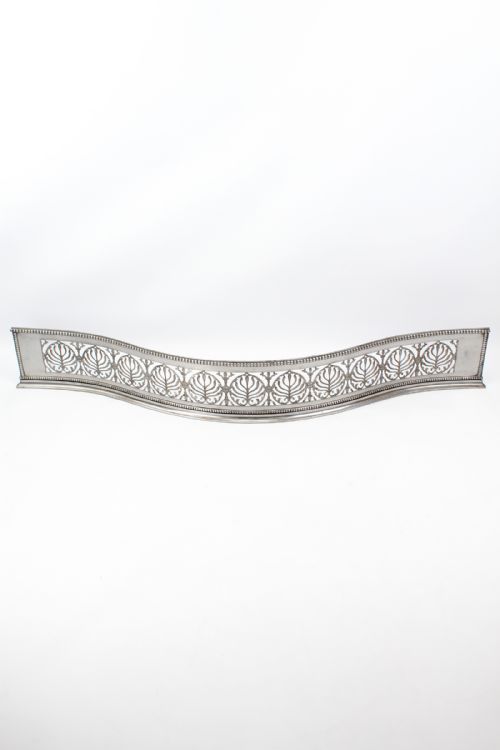
A polished steel fire curb guards the hearth while framing the fireplace, appearing across Georgian, Victorian, and Edwardian periods. The inventory here spans formal serpentine fronts from the eighteenth century down to later nineteenth-century iterations incorporating brass and copper.
Most examples take the form of fire fenders or hearth curbs made primarily of steel, often paired with contrasting metals like brass or iron. Makers shaped these architectural barriers to sit directly upon the floor, containing ash and sparks while anchoring the room's central hearth.
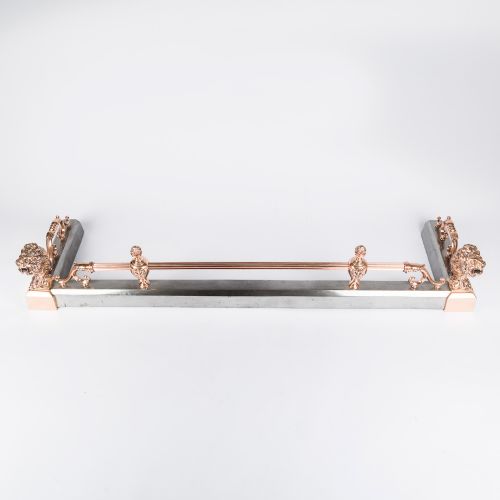
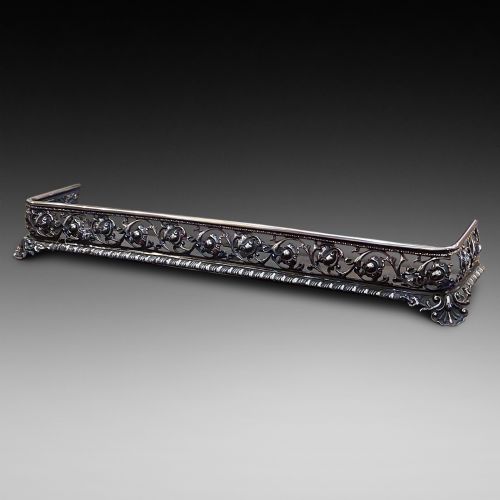
Buyers meet pieces ranging from austere George II designs to ornate Victorian examples featuring lions, flowers, and dragon details. The selection leans heavily on Georgian serpentine shapes and nineteenth-century mixed-metal constructions.
How they were made
Smiths hammered and polished steel sheets and bars to create reflective surfaces, occasionally incorporating cast iron or wrought iron for structural rigidity. Pierced decoration required careful hand-cutting through the metal plate to form geometric or scrolling patterns.
Makers integrated brass and copper elements through riveting, brazing, or direct mounting, adding warmth to the cold grey steel. Gilt bronze and applied cast details like lions or floral motifs further enriched the principal metal structure.
What varies in quality
The refinement of the metalwork defines the upper tier of these curbs, visible in crisp hand-engraving and meticulously pierced decoration rather than heavy casting. Superior examples display balanced proportions, particularly in serpentine profiles where the sweep of the steel demands absolute precision.
The integration of secondary metals reveals the maker's hand, with high-quality pieces using solid brass and bronze mounts securely fitted to the polished steel body. Poorer quality often shows lazy surface finishing or clumsy joints where the hearth curb meets its decorative corners.
The Polished Steel Fire Curb Glossary
- Serpentine
- A gentle undulating curve shaped like a snake, frequently seen on the front edges of Georgian hearth furniture. This profile requires skilled hammering to maintain a clean line across the steel.
- Fender
- A low metal guard placed around the hearth to keep burning fuel and ash inside the fireplace. It doubles as a physical barrier for the room.
- Pierced
- Metalwork perforated with decorative holes or patterns cut through the plate. This technique lightens the visual weight of heavy steel curbs.
- Gilt bronze
- Bronze coated with a thin layer of gold, providing bright metallic highlights against polished steel. It appears on finer nineteenth-century hearth furnishings.
- George III
- The period of British history spanning the late eighteenth and early nineteenth centuries, noted for refined Neoclassical design. Pieces from this era often feature precise engraving and elegant proportions.
Polished Steel Fire Curb: Frequently Asked Questions
What is a polished steel fire curb used for?
These pieces sit directly on the floor in front of a fireplace to keep logs, embers, and ash contained within the hearth area. They also act as a physical barrier protecting the room from stray sparks.
Beyond utility, a metal hearth curb frames the fireplace opening, adding architectural structure and period style to the room's main focal point.
How do I tell Georgian periods from Victorian ones?
Georgian examples, including George II and George III pieces, generally rely on clean serpentine shapes, precise hand-engraving, and disciplined pierced decoration. They reflect Neoclassical restraint and refined metalwork.
Victorian and Edwardian curbs often introduce heavier cast ornamentation, mixed metals like copper and brass, and figurative details such as lions or floral motifs.
How do I clean and live with polished steel?
Living with polished steel requires keeping the metal dry and free from soot or ash accumulation to prevent surface oxidation. Gentle dusting and appropriate metal care maintain the reflective finish.
Position the curb securely against the hearth stone so it stays stable during daily use around the fireplace.
Why are some curbs paired with brass?
Makers combined polished steel with brass and copper to create visual contrast against the grey metal body. Brass allowed for cast decorative elements like feet, rails, or appliqués that stood out warmly.
This mixed-metal approach grew particularly popular during the nineteenth century as manufacturing techniques allowed for more varied assembly.