



Pierced Steel Fire Curb
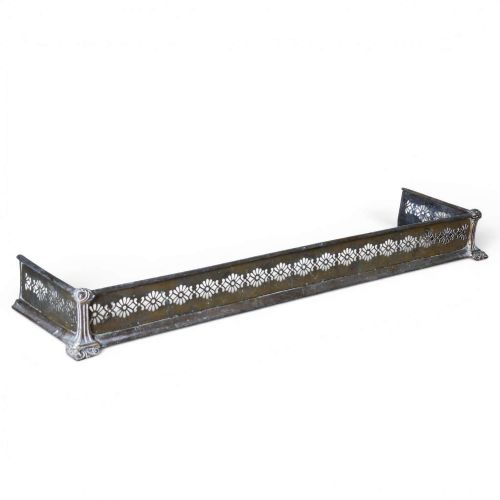
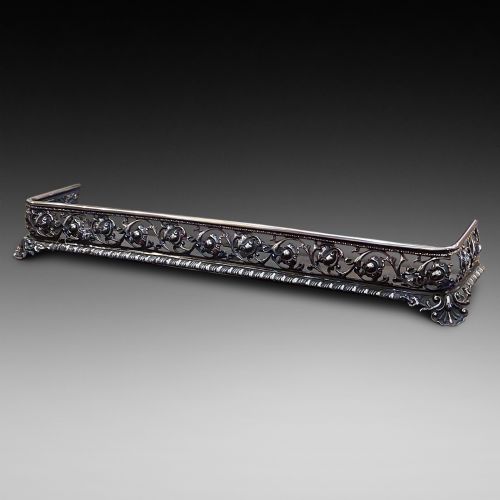
A pierced steel fire curb frames the hearth with a perforated metal barrier that stops stray embers while letting warmth through.
Pierced Steel Fire Curb
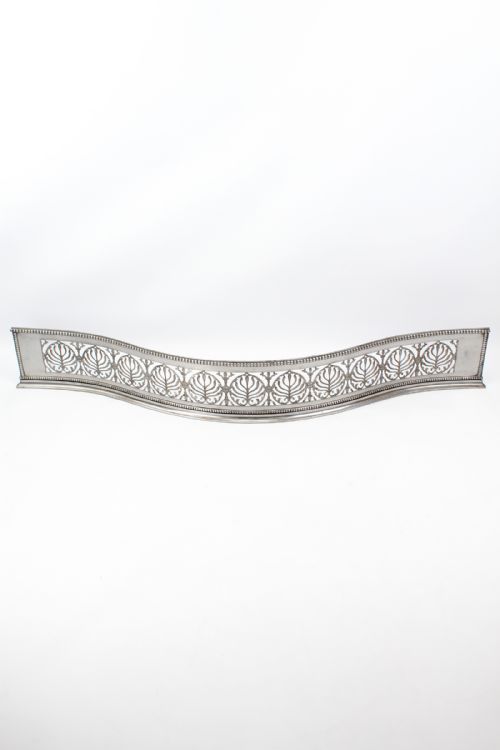
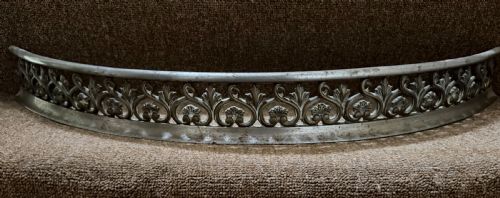
A pierced steel fire curb serves as a protective hearth boundary, designed to contain embers and position coal or wood fires safely within the fireplace opening. Buyers searching for a pierced steel fire curb will encounter guards shaped to fit domestic grates, most commonly taking the form of serpentine fronts from the Georgian period.
The selections available here span from the mid eighteenth century through the nineteenth century, taking in George II, George III, and Victorian periods alongside Regency and Art Nouveau styles. Most pieces combine steel with brass highlights or accents, reflecting the domestic hearth fashions of their respective eras.
Materials and construction
Makers constructed these curbs primarily from steel, iron, and brass, utilising sheets of metal that were beaten, shaped, and joined to form low guards. Piercing work involved cutting geometric or floral designs directly into the metal plate by hand.
Surface treatments range from bright polished steel to blackened finishes, often paired with cast or applied brass details such as flower and dragon motifs. Serpentine fronts required careful hammering to achieve their curved profiles.
Listings feature pieces spanning from the mid eighteenth century to the late nineteenth century, predominantly in steel, brass, and iron.
What separates fine examples
The distinction between standard examples and superior pieces rests upon the precision of the piercing and the crispness of the engraved decoration. Hand-cut lattice work and deep serpentine curves demand greater skill than straightforward straight-sided iron bars.
The combination of materials also dictates standing, where steel bodies enhanced by substantial brass mouldings and patinated surfaces command closer attention from collectors. Condition and original finish preservation remain central to how these hearth furnishings are judged.
The Pierced Steel Fire Curb Glossary
- Serpentine
- A curved shape featuring a convex centre flanked by concave ends, frequently found on eighteenth-century hearth furniture. This profile requires skilled smithing to follow a flowing line along the floor.
- Hearth fender
- A low metal barrier placed on the floor around an open fireplace to contain falling coals and sparks. It defines the boundary between the fire and the room.
- Polished steel
- Metal finished to a bright, reflective surface that highlights the texture and quality of the smith's work. It needs regular maintenance to prevent oxidation in damp rooms.
- Pierced work
- Metal plate that has been cut through in specific patterns to let light pass and create decorative motifs. It transforms a heavy protective barrier into an ornamental frame.
Pierced Steel Fire Curb: Frequently Asked Questions
What is a fire curb?
A fire curb is a low metal barrier placed on the floor directly in front of an open fireplace. Its primary purpose is to keep logs, coal, and hot embers from rolling out onto the room flooring.
Beyond safety, these pieces frame the hearth and coordinate with other fireplace accessories like fire dogs and coal scuttles.
How do I date a steel fender?
Dating relies on observing the overall style, silhouette, and manufacturing techniques present in the metalwork. Georgian pieces often display serpentine fronts and fine hand-engraving, while later Victorian items might incorporate mixed metals and distinct aesthetic movement motifs.
Examining the joining methods at the corners and the type of piercing provides further clues to the period of manufacture.
Are brass and steel mixed?
Many hearth guards combine a primary structure of steel or iron with applied brass details, mouldings, or feet. This dual-metal construction was popular across several design periods to create visual contrast against the dark hearth.
The brass elements were typically cast separately and fixed to the pierced steel body.
How do I maintain polished steel?
Polished steel requires dry conditions and regular light wiping to prevent surface rust from forming in domestic environments. Protective waxes formulated for metals can help maintain the reflective finish over time.
Avoid abrasive cleaners that might scratch the historic surface or remove patination accumulated over the decades.