


Georgian Hearth Fender
A georgian hearth fender protects the floor and frames the grate, bringing architectural weight and period metalwork to a traditional fireplace.
Georgian Hearth Fender
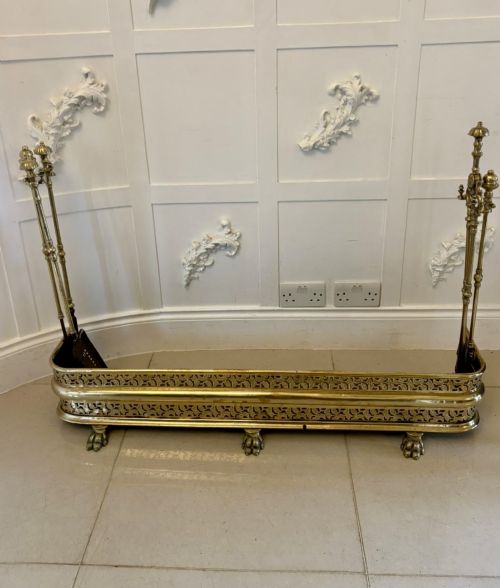
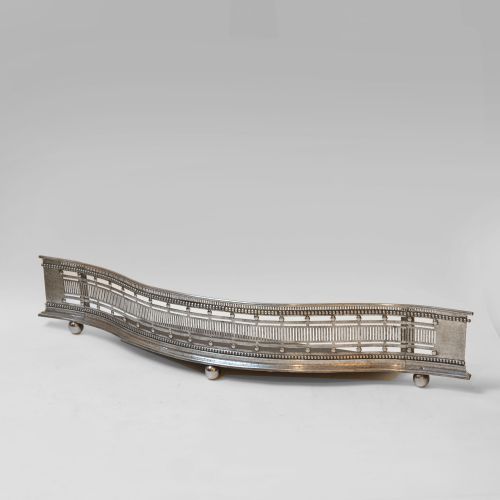
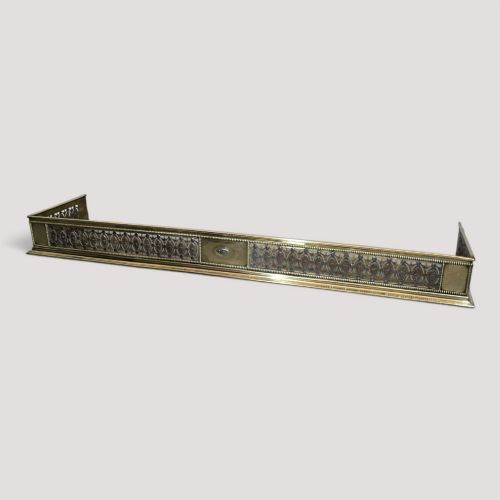
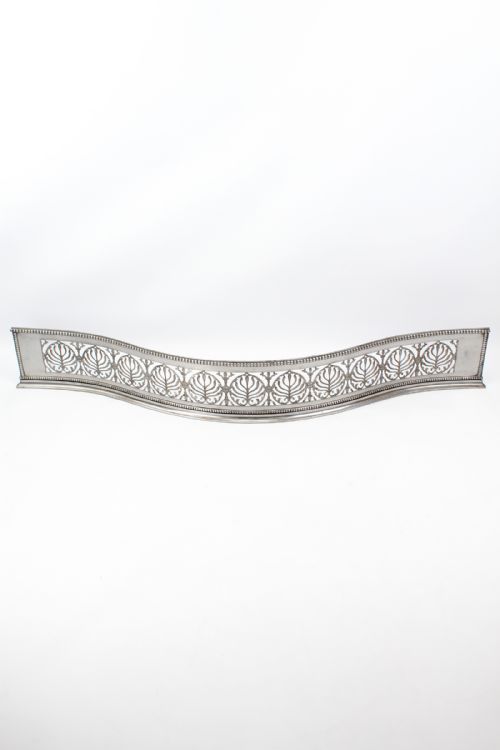
A georgian hearth fender anchors the fireplace opening, appearing in straightforward straight fronts as well as serpentine and bowfront shapes. These pieces date from the Georgian period through to the nineteenth century, reflecting shifts in domestic hearth design.
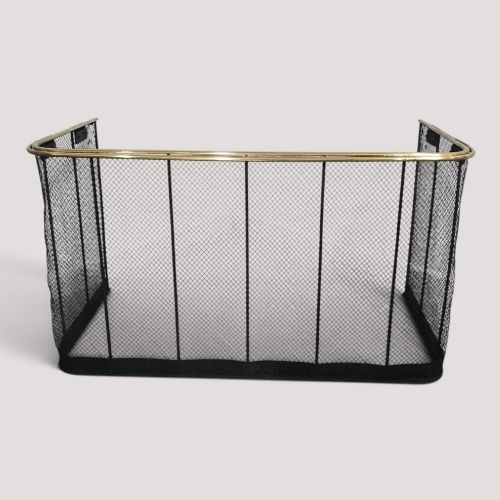
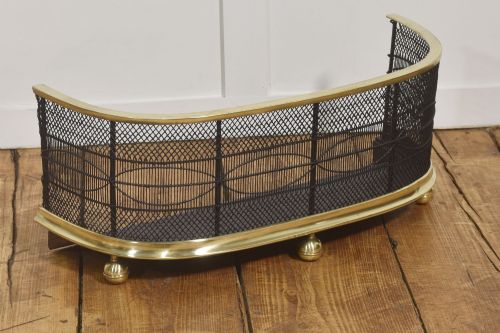
The materials span brass, polished steel, cast iron, and woven iron wire, often combined within a single curb. Most examples sit low to the ground to contain ash and embers while framing the hearth stone.
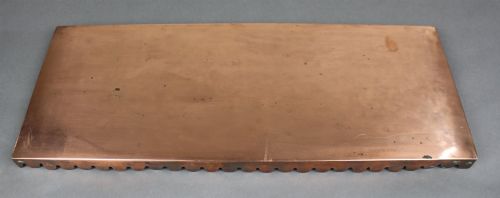
Beyond standard hearth fenders, the selection includes related fireside accessories such as copper hearth plates and wirework fire guards. These variations provide functional protection while maintaining period character.
Materials and construction
Makers utilised heavy brass, cast iron, and steel, shaping them through piercing, engraving, and wirework construction. Polished steel surfaces and cut steel details required precise metalworking skills to catch the light from the fire.
Curved and serpentine profiles demanded careful forging and fitting, particularly when joining brass mouldings to iron frames. Perforated panels and pierced frets were hand-cut to create decorative patterns that also allowed heat to circulate.
The listings span brass, steel, iron, and copper, with forms ranging from simple straight curbs to serpentine fronts and woven wire guards.
Build and finish
Quality rests on the heaviness of the metal gauge and the crispness of any pierced or engraved ornament. Superior examples display clean joints, substantial brass or steel thickness, and well-finished mouldings that retain their structural integrity.
The refinement of the decorative details, such as finely chased brass mounts or intricate cut steel studs, distinguishes standard hearth furniture from finer workshop production. Original components and matching fire irons add further substance.
The Georgian Hearth Fender Glossary
- Curb fender
- A low metal barrier placed around the hearth to contain embers. It forms the primary protective border for the fireplace.
- Serpentine front
- A curved shape curving outward in the centre and inward at the ends. This profile softens the rigid lines of the hearth.
- Cut steel
- Small faceted steel studs riveted to a polished steel backing. This technique creates a shimmering decorative effect under candlelight.
- Pierced brass
- Metal sheet perforated with geometric or floral patterns. It combines ventilation with decorative metalcraft.
- Bowfront
- A rounded convex curve projecting forward from the fireplace opening. This shape follows the architectural lines of period rooms.
Georgian Hearth Fender: Frequently Asked Questions
How do I measure for a fender?
Measure the width and depth of your hearth stone, leaving clearance for the hearth surround and any fire irons.
Take measurements from wall to wall or across the opening depending on whether the fender sits inside or outside the fireplace reveal.
Are steel and brass fenders original?
Many retain their original period construction, combining cast iron frames with brass mouldings and steel plates.
Signs of age include hand-cut piercing, traditional joining methods, and natural wear to the metal surfaces.
What is a club fender?
A club fender is a low hearth barrier featuring upholstered top rails designed for fireside seating.
These pieces expanded the utility of the traditional guard by providing a comfortable perch close to the warmth.
How do I clean antique metal?
Dust regularly with a dry cloth and apply appropriate metal polish sparingly to brass components.
Avoid abrasive cleaners that remove the aged patina built up over centuries of use.
Can I use these with modern fires?
These pieces suit solid fuel grates, gas inserts, and decorative hearth settings alike.
Check the internal dimensions to ensure the fender clears the grate legs and fire basket feet.