



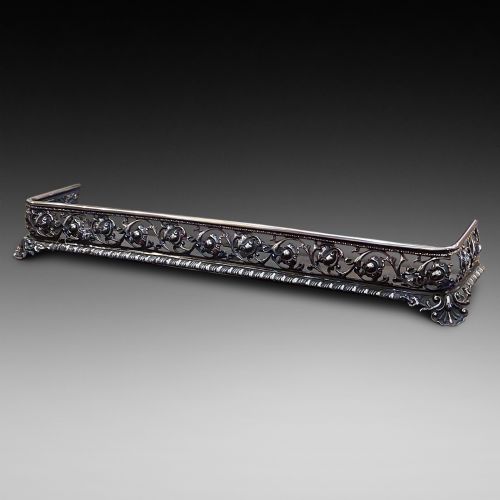
Polished Steel Hearth Fender
A polished steel hearth fender frames the hearth with a bright, reflective boundary that catches the flickering firelight.
Polished Steel Hearth Fender
A polished steel hearth fender provides a practical barrier between the open fire and the room, preventing embers from escaping onto the floor. These metal guards sit directly on the hearthstone, anchoring the fireplace arrangement with a defined perimeter.
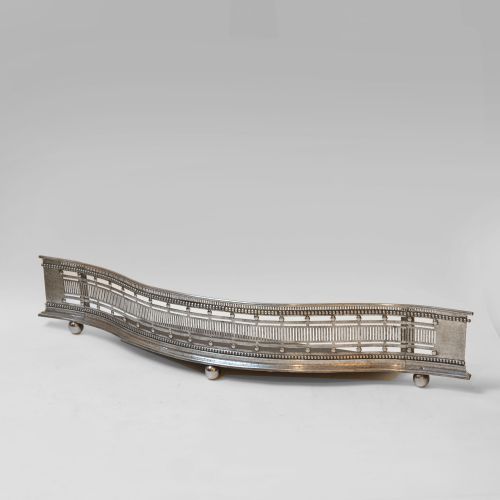
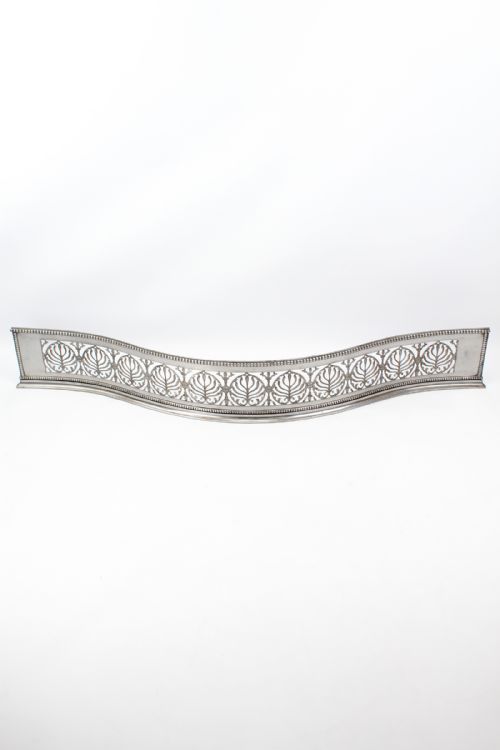
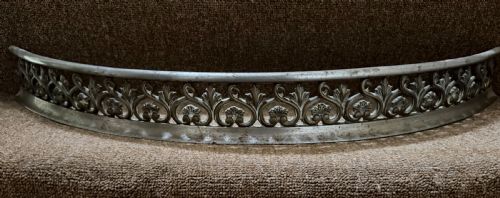
The pieces available here span several historical periods, most notably the Georgian and Victorian eras, alongside Edwardian examples. Forms range from straight curbs to dramatic bowfront and serpentine shapes, often incorporating brass details or contrasting metals.
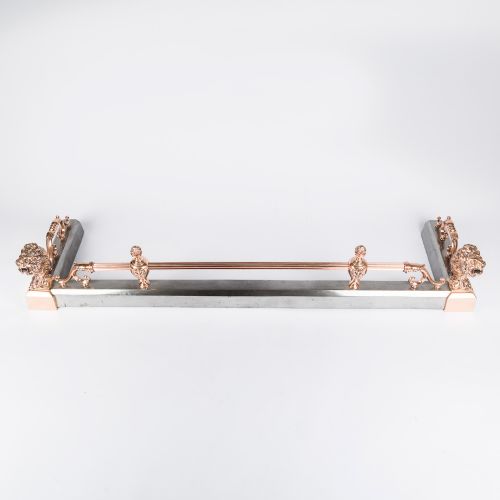
Makers of these hearth furnishings utilised iron and steel as the primary structure, occasionally pairing the polished metal with copper, gilt bronze, or cast brass ornaments. Many examples display detailed piercing, engraving, or figural mounts such as lions and floral motifs.
Materials and construction methods
Blacksmiths and metalworkers shaped robust bars of iron and steel into curved or straight fenders, using heat and hammering to achieve serpentine and bowfront profiles. The surfaces were then ground and polished to a bright, mirror-like finish that contrasted with the dark interior of the fireplace.
The listings span periods from the mid-eighteenth century through the Edwardian era, featuring steel, brass, copper, and iron.
Judging the quality of a hearth fender
Quality in a polished steel hearth fender rests on the precision of the metalwork, particularly in complex serpentine or bowfront shapes where the curves must remain smooth and symmetrical. Superior pieces show crisp piercing and cleanly executed engraving rather than soft or shallow surface decoration.
The integration of mixed metals, such as contrasting brass galleries or applied bronze mounts, reveals the maker's skill in assembly and proportion. Heavier gauge steel and robust construction ensure the fender retains its structural integrity around the hearth.
The Polished Steel Hearth Fender Glossary
- Serpentine
- A curved shape featuring a convex centre flanked by concave sweeps, frequently seen on Georgian fire fenders. This profile required skilled forging to maintain symmetry along the front edge.
- Bowfront
- A rounded, outward-curving front profile that projects into the room from the hearth. It softens the linear geometry of the fireplace surround.
- Pierced
- Metalwork perforated with decorative patterns or openwork slots, often allowing light through or simply lightening the visual weight of the heavy steel border.
- Gilt bronze
- Bronze treated with a gold coating, sometimes referred to as ormolu, utilised for decorative mounts and accents on nineteenth-century hearth furnishings.
Polished Steel Hearth Fender: Frequently Asked Questions
How do I measure for a hearth fender?
Measure the width and depth of your hearthstone to ensure the fender sits comfortably within the perimeter without overhanging the edges. Take note of the clearance needed for fire irons if they accompany the set.
Check the internal dimensions against the opening of your fireplace to confirm proper alignment with the hearth surround.
Can I use an antique fender with a modern fire?
These metal guards function effectively around gas or electric hearth installations, provided the heat output does not compromise the historic metal surface. They act primarily as a decorative boundary and physical barrier.
Ensure the dimensions match your existing floor space and that the placement leaves adequate clearance from active heat sources.
How do I care for polished steel?
Maintain the bright surface by keeping the steel dry and applying a light protective wax or specialised metal polish to prevent oxidation. Avoid abrasive cleaners that might scratch the polished finish.
Regular dusting with a soft cloth preserves the reflective quality of the iron and steel components over time.
What distinguishes Georgian fenders from Victorian ones?
Georgian examples often favour restrained neoclassical lines, delicate piercing, and serpentine curves forged entirely from steel or paired sparingly with brass. Victorian pieces frequently introduce heavier cast ornament, mixed metals like copper and bronze, and more robust proportions.
Stylistic cues such as lion mounts or floral repoussé work typically point toward the later nineteenth-century manufacturing traditions.