
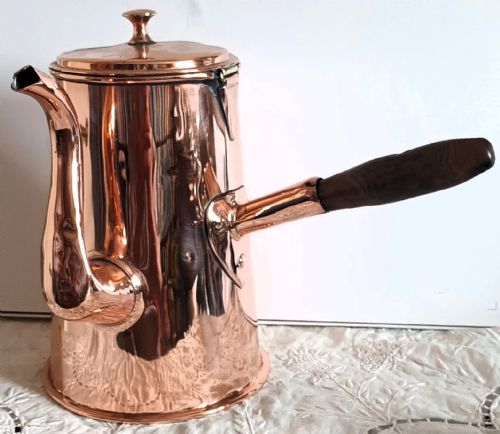


Polished Copper Pot
A polished copper pot brings the warm, reflective glow of metalwork from the Georgian and Victorian eras straight into a modern interior.
Polished Copper Pot
When you search for a polished copper pot, you encounter domestic vessels and display pieces spanning the eighteenth century through to the Edwardian period. The selection on this page ranges from George III kitchenware to Victorian and Art Nouveau planters.
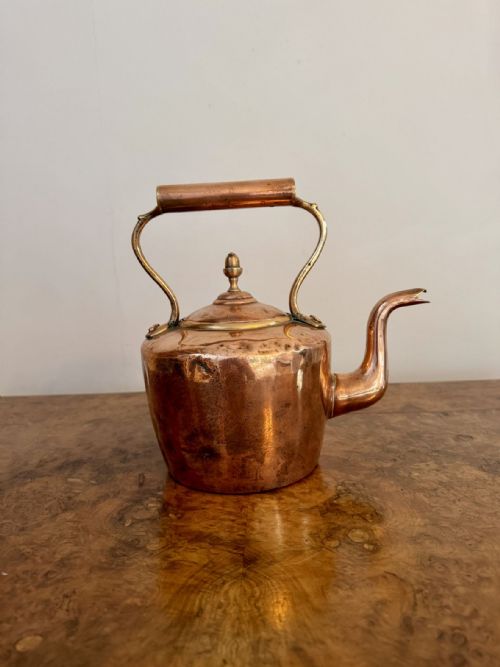
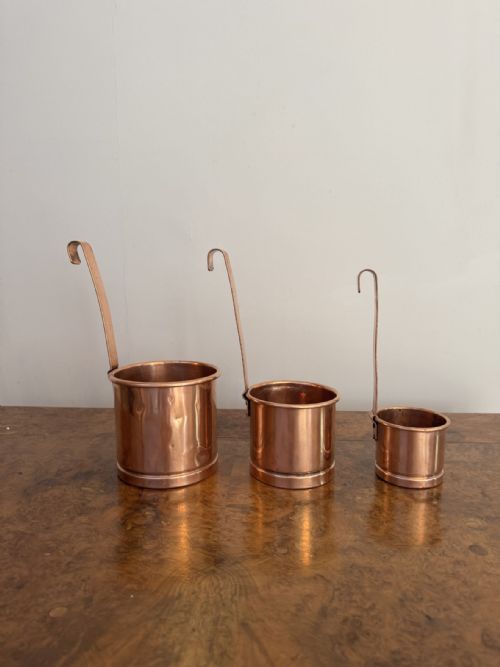
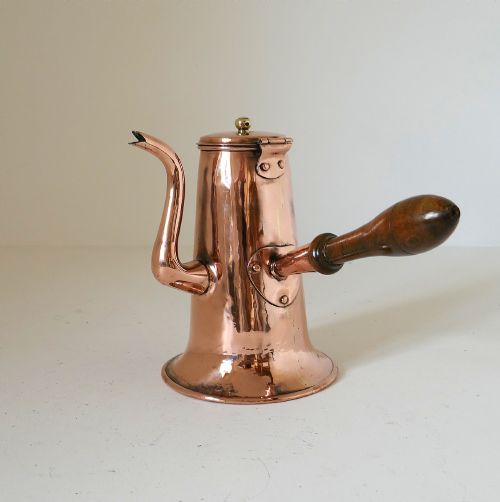
Kettles, pans, and coffee pots sit alongside jardinieres and preserving pans in copper, often paired with brass handles or iron fittings. These items derive from Georgian and Victorian utility, repurposed today for decorative display.
The version you are most likely to meet is a Victorian or Georgian kettle or planter, polished to highlight the natural reddish hue of the metal. These pieces survive from English and French workshops, shaped for both hearth and parlor.
How they were made
The construction of these vessels relies on beaten or sheet copper, frequently combined with brass for handles and rims, and occasionally supported by oak or cast iron. Artisans shaped the metal by hand or used early industrial presses to form seamless bodies and riveted joints.
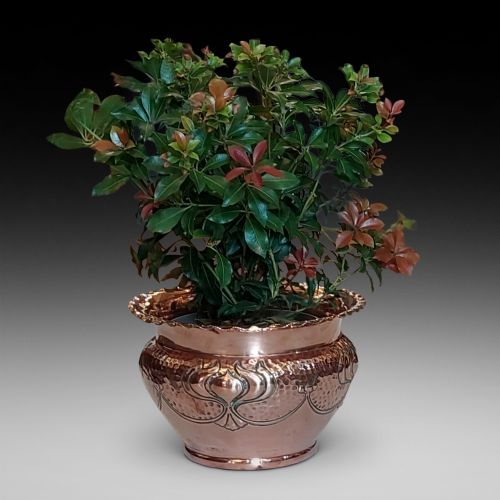
Surface decoration appears on specific forms, such as French repoussé work on planters and raised seams on early coffee pots and kettles. The finish depends on manual polishing to bring out the bright sheen of the copper.
Some Victorian copper watering cans were built well enough to outlast the gardens they originally watered.
What varies in quality
The distinction between a standard utility vessel and a superior piece lies in the weight of the metal and the crispness of the hand-finishing. Heavier gauge copper and well-formed brass attachments indicate a higher grade of manufacture.
Proportion and detail separate ordinary items from finer examples, particularly in the shaping of spouts on coffee pots and the hammered relief on Art Nouveau and Arts & Crafts jardinieres.
The Polished Copper Pot Glossary
- Repoussé
- A metalworking technique where the artisan hammers the design from the reverse side to form raised patterns on the surface. This method is frequently seen on decorative planters from the late nineteenth century.
- Jardiniere
- A decorative pot or stand designed to hold growing plants or flowers. These items often appear in copper during the Victorian and Edwardian periods.
- George III
- The period of British history spanning from 1760 to 1820, associated with refined proportions in domestic metalware. Pieces from this era often display hand-beaten construction.
- Kitchenalia
- Utilitarian objects once used in food preparation and hearth management, now collected for display. Copper pans and kettles form a core part of this category.
Polished Copper Pot: Frequently Asked Questions
How do I clean a polished copper pot?
Maintain the shine using a proprietary metal polish formulated specifically for copper, applied with a soft cloth to avoid scratching the surface.
Buff the metal gently after cleaning to restore the warm reflective quality seen on pieces from the Georgian and Victorian periods.
Are these copper pots safe for cooking?
Most antique copper vessels were originally intended for daily kitchen use, though older pieces may lack modern interior linings such as tin.
Check the interior surface carefully before using any vintage pan or kettle for food preparation today.
How do I date an old copper pot?
Examine the construction methods, such as dovetail joints, hand-riveting, and the shape of the handles, which changed between the eighteenth and twentieth centuries.
Georgian items often show different handle attachments and body proportions compared to later Victorian or Arts and Crafts examples.
Can I use a copper jardiniere for plants?
Jardinieres were specifically designed to house plants and floral arrangements in domestic settings. Placing a plastic liner inside helps protect the antique metal from moisture and soil.