



Polished Brass Tools
Polished brass tools bring functional warmth to a hearth, combining bright metalwork with the practical utility of fire irons, companion sets, and watering cans.
Polished Brass Tools
Polished brass tools encompass fireplace accessories, companion sets, fire irons, and watering cans designed for daily hearthside use and interior utility. These pieces span Georgian, Victorian, and Edwardian periods, reflecting the shifting domestic tastes of British homes.
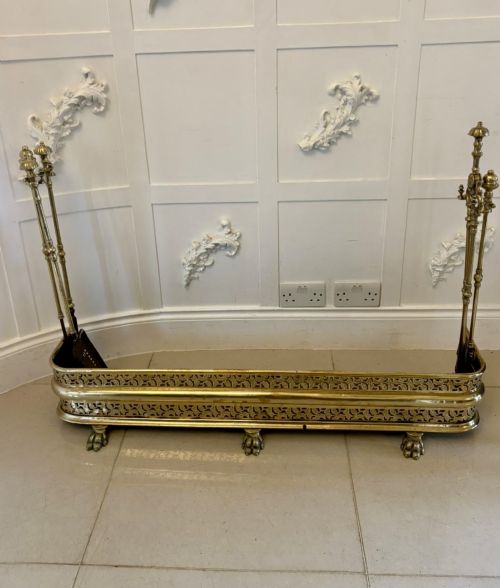
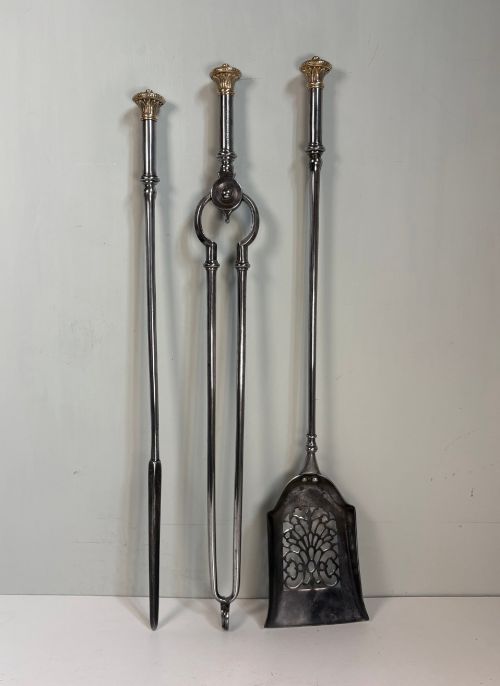
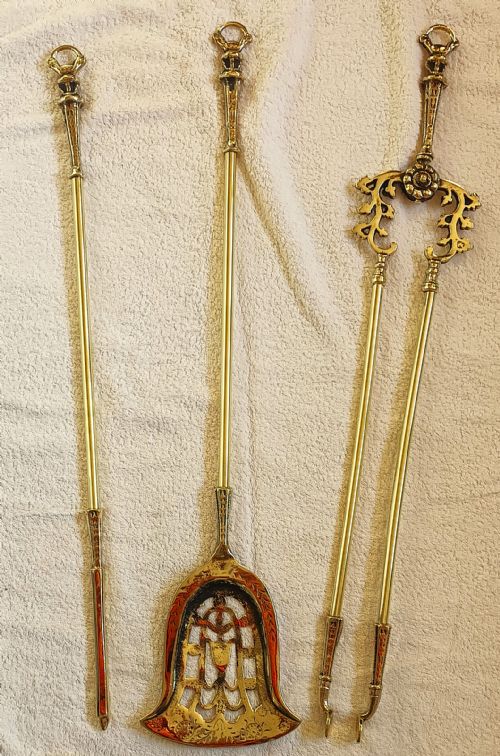
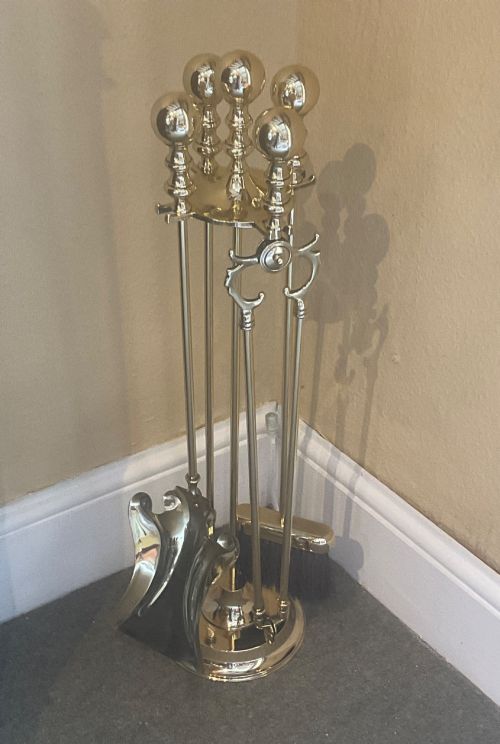
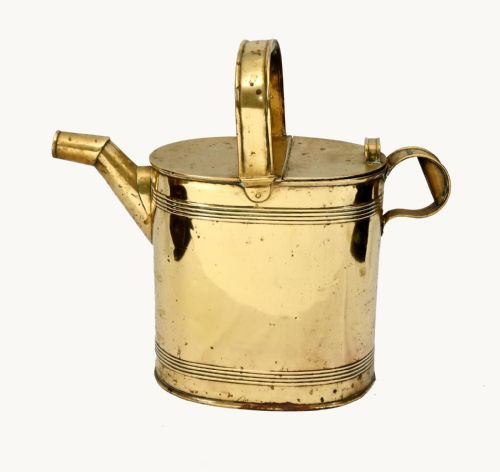
The most frequent finds on this page are matched or composite sets of fire irons, including pokers, coal shovels, and tongs, often accompanied by fire dogs or fenders. Watering cans and technical drawing sets also appear, showing the broader application of polished brass and steel in historical households.
Originating largely from traditional English workshops, these items served both utilitarian and decorative roles in the principal rooms of the house. A buyer encounters everything from austere 18th century forms to elaborate late Victorian suites featuring claw and ball designs.
How they were made
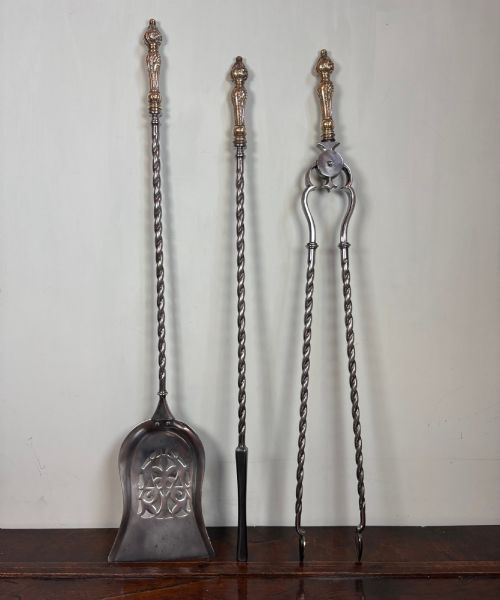
The construction of these pieces relies on the pairing of cast brass, polished brass, and steel, utilising iron for internal strength where rigidity is needed. Handles often display specific working techniques, such as rope twist patterns or starburst motifs cast into the metal.
Makers combined brass with copper, bronze, and mahogany in select items like cased sets and fire fenders, joining disparate elements through riveting and secure fitting. Surfaces were hand-polished to achieve a bright finish that contrasted effectively against darker cast iron grates.
A few surviving brass watering cans remind us that even indoor ferns required proper Victorian hydration.
What varies in quality
Quality in these items is determined by the crispness of the casting and the integrity of the materials, distinguishing sturdy implements from purely decorative replacements. Heavier gauge brass and solid steel shafts indicate pieces built to withstand actual hearth use rather than light display.
The presence of original matching components, such as a complete set of three fire irons with harmonious handles, elevates a suite above mixed or assembled groups. Refined detailing like claw and ball designs or specialised twist handles points to superior workshop production.
James Cartland & Sons
The Polished Brass Tools Glossary
- Companion set
- A matched group of fireside implements, usually comprising a poker, shovel, and tongs, housed on a shared stand or paired with fire dogs. These sets kept hearth maintenance tools organised and accessible.
- Fire irons
- The individual pokers, tongs, and shovels used to tend a coal or wood fire in an open grate. They were frequently forged from steel with decorative brass handles.
- Goffering iron
- A specialised domestic tool heated to shape ruffs, frills, and lace on clothing during the 18th and 19th centuries. The brass variant relied on conduction to maintain heat.
- Fender
- A low metal guard placed around the hearth to contain ash and rolling embers, often manufactured en suite with matching fire tools.
Polished Brass Tools: Frequently Asked Questions
What tools are included in a companion set?
A standard companion set typically includes a poker for adjusting fuel, a shovel for clearing ash, and tongs for handling coal or logs. Many groupings also incorporate a stand or pair of fire dogs.
These pieces were designed to sit beside the fireplace as both functional apparatus and polished display items.
How do I date a set of fire irons?
Dating relies on stylistic clues such as the handle shape, the transition from iron to brass components, and overall manufacturing techniques. Victorian sets often display heavy brass casting, while 18th century examples show simpler forged steel lines.
Comparing the accompanying fender or fire dogs helps confirm the period of the ensemble.
Were these tools meant for daily use?
Most surviving fire irons and companion sets were engineered for active hearth maintenance in period homes. The inclusion of durable steel shafts ensured they could withstand the heat and weight of coal fires.
Over time, many transitioned from utility items to decorative elements within the reception room.
How do I match stray fire tools?
Matching disparate items involves comparing the alloy colour, handle design, and the gauge of the steel shafts. Many period sets found today are assembled matches rather than original factory pairs.
Looking for consistent decorative motifs, such as starburst patterns or rope twists, helps determine if pieces belong together.