

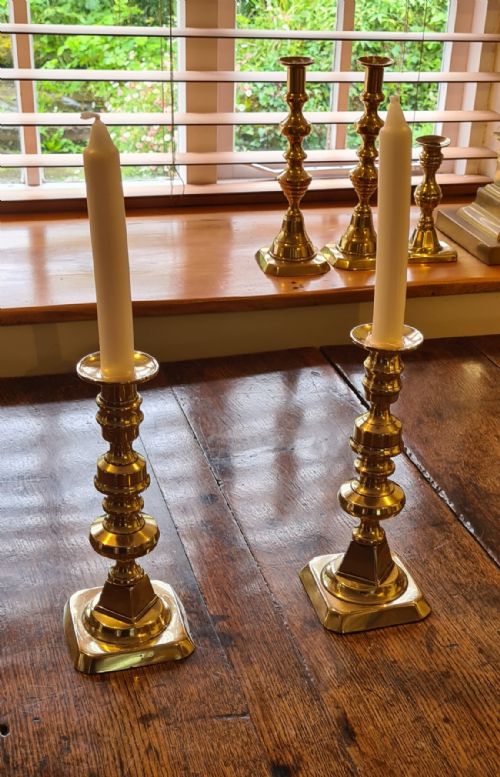
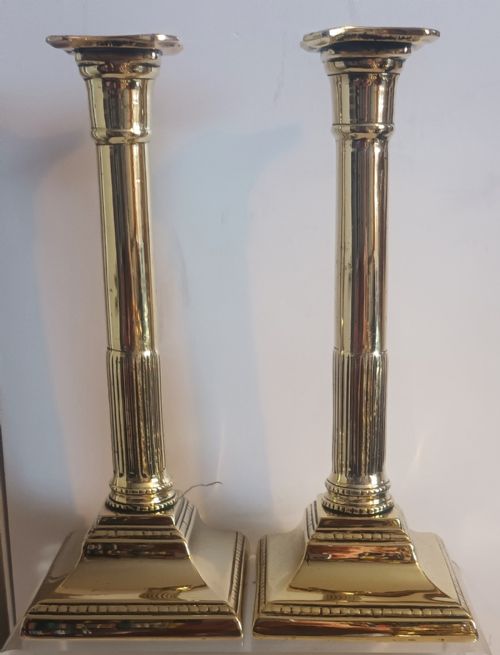
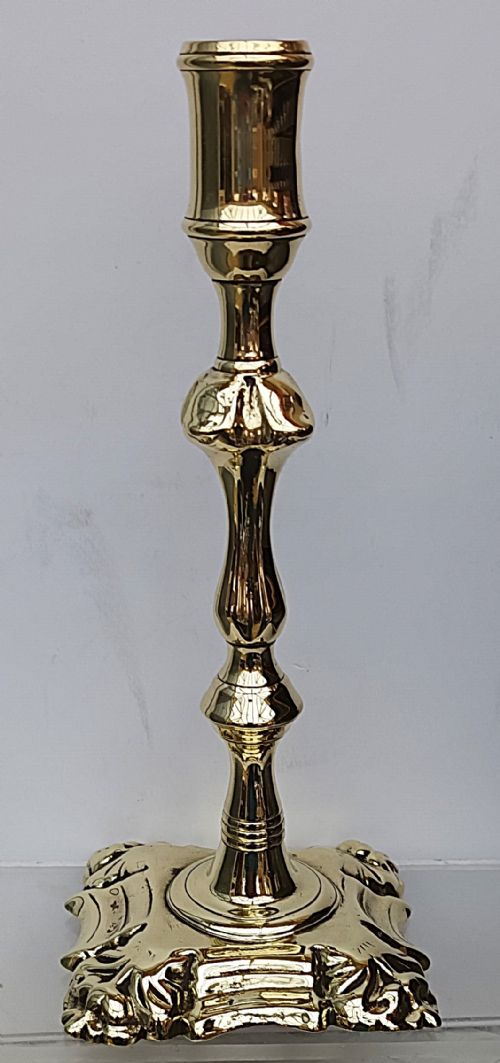
Polished Brass Standing Light
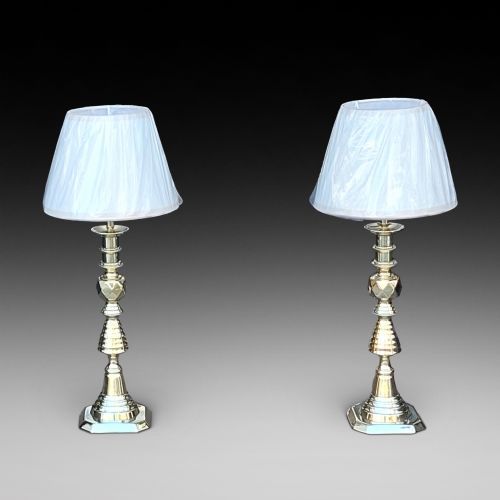
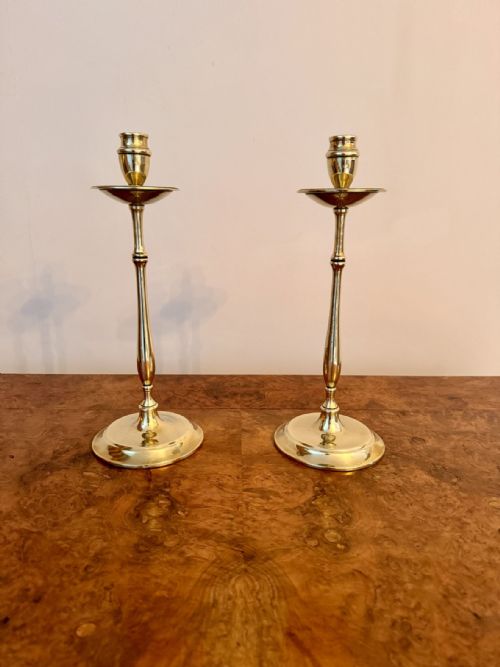
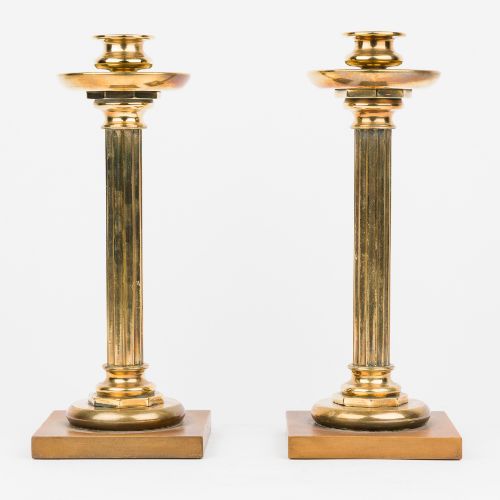
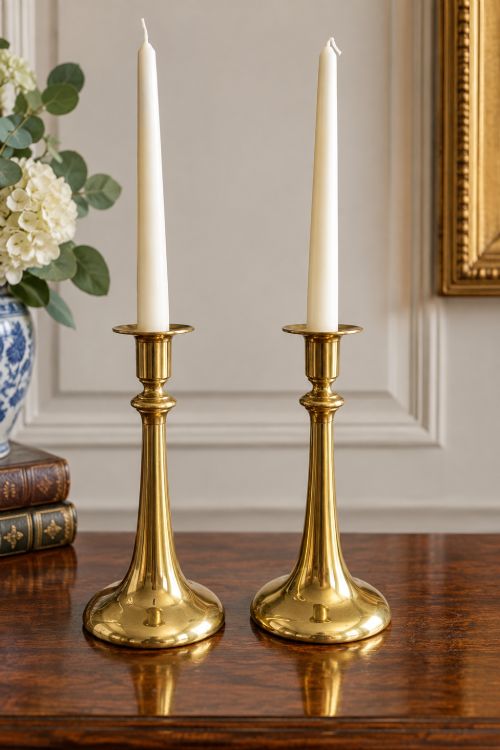
A polished brass standing light brings warmth and height to a room through lasting metalwork.
Polished Brass Standing Light
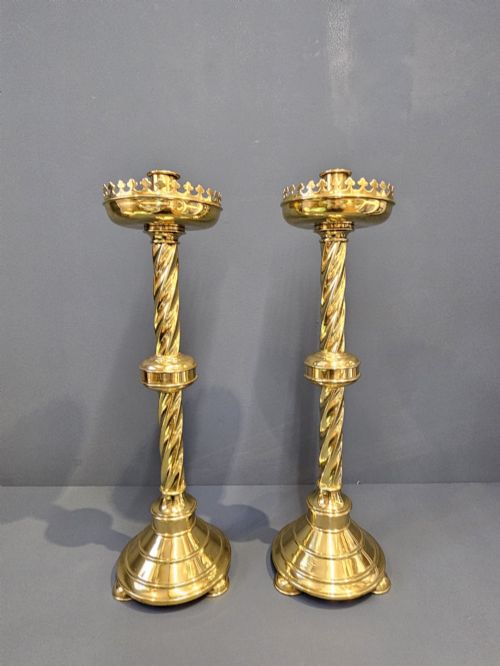
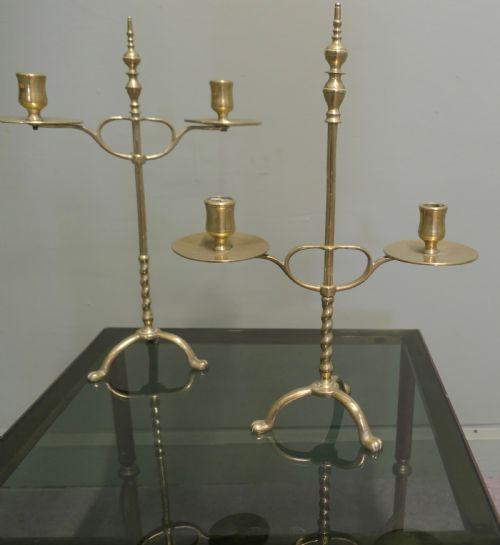
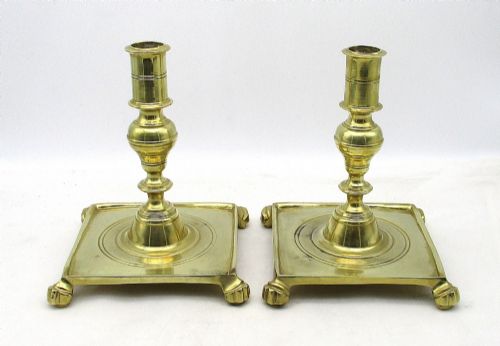
When you search for a polished brass standing light, you encounter tall floor lamps, standard lamps, and substantial church candlesticks designed to elevate a light source from the floor. The examples available here span centuries of design, with Victorian and Edwardian standard uplighters alongside tall pricket holders forming the main portion of the selection.
Makers and workshops adapted these standing forms across distinct aesthetic movements, producing pieces that range from simple tavern lighting to elaborate Arts and Crafts and Art Nouveau designs. The heavy proportions of these floor-standing pieces suit placement in corners or beside seating areas where traditional illumination is required.
How they were made
Makers utilised solid brass, bronze, and iron, often combining metals to achieve stability in tall floor-standing shafts and heavy bases. Seamed and cast construction methods allowed workshops to produce both slender twisted stems and monumental ecclesiastical standards.
Surface finishes relied on polishing the base metal to a bright shine, while certain designs incorporated fitted bases or adjustable mechanisms for practical daily use.
Current listings feature pieces spanning the 18th, 19th, and early 20th centuries, executed primarily in brass, bronze, and iron.
What varies in quality
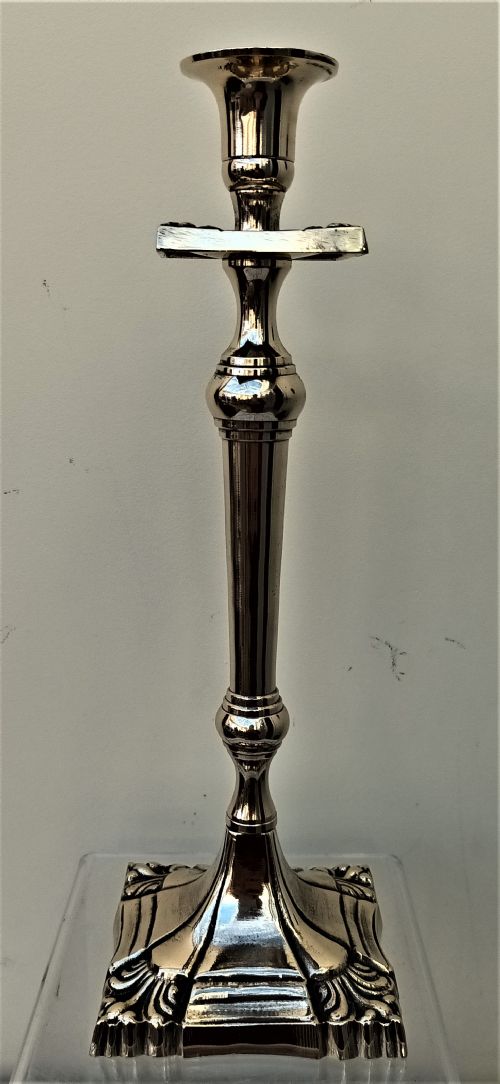
The distinction between standard production and finer pieces rests in the weight of the metal and the crispness of the cast details, such as twisted stems or moulded bases. Heavier gauge brass and solid construction provide the structural integrity needed for tall floor lamps and church candlesticks.
Proportion and decorative restraint set the better examples apart, where decorative elements like those seen in Art Nouveau or Gothic Revival pieces complement the overall form rather than clutter it.
Frederick J Smith & Co·Wm Tonks & Sons·Hinks
The Polished Brass Standing Light Glossary
- Pricket
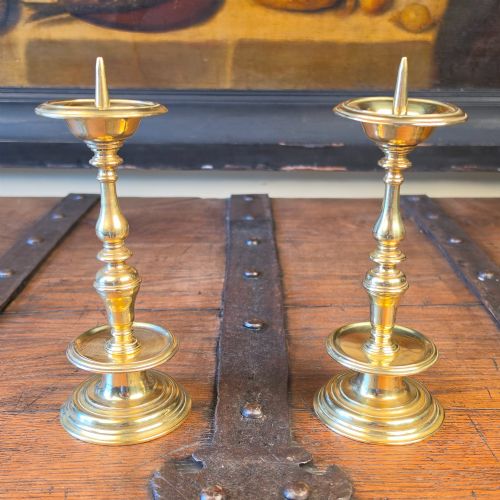
- A candlestick featuring a sharp central spike designed to secure a large candle, commonly found on church pieces. This form is typical of ecclesiastical lighting from the 18th and 19th centuries.
- Standard lamp
- A tall floor-standing lighting fixture designed to hold an oil burner or electric bulb at an elevated level. These pieces often feature heavy weighted bases for stability.
- Ejector
- A mechanical internal slide mechanism fitted inside a candlestick stem to push out the remaining candle stub. This practical device became popular during the Victorian period.
- Uplighter
- A lamp designed to direct illumination upwards toward the ceiling rather than downwards. These standard lamps appeared in brass during the early 20th century.
- Tavern candlestick
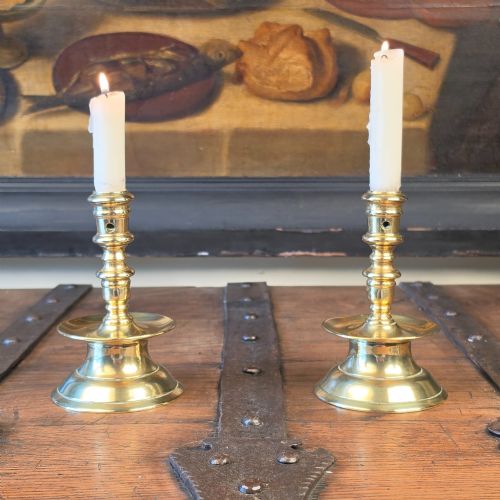
- A sturdy, heavy-based brass lighting form built for commercial use in public houses. Their robust construction helps prevent tipping on communal tables.
Polished Brass Standing Light: Frequently Asked Questions
How do I light a standard lamp?
Floor standing lighting relies on a stable base to support the vertical shaft safely.
Position the piece away from heavy traffic areas to maintain stability.
Where should I place a church candlestick?
These tall pieces suit corners or flanking positions where their height creates visual balance.
Ensure the surface is level before placing heavy brass items.
How do I clean polished brass?
Use a soft cloth to remove dust and maintain the bright surface finish.
Avoid abrasive cleaners that might damage the historical metal.
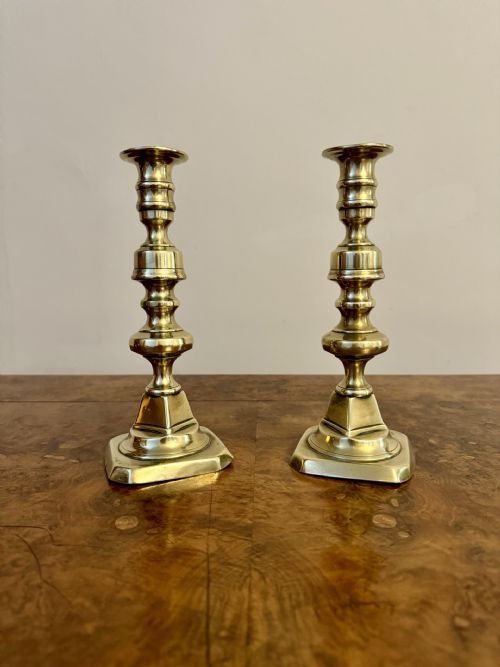
What is a King of Diamonds candlestick?
This name refers to a specific traditional Victorian pattern found on heavy brass candlesticks.
The nomenclature links the design to distinct regional manufacturing styles.