

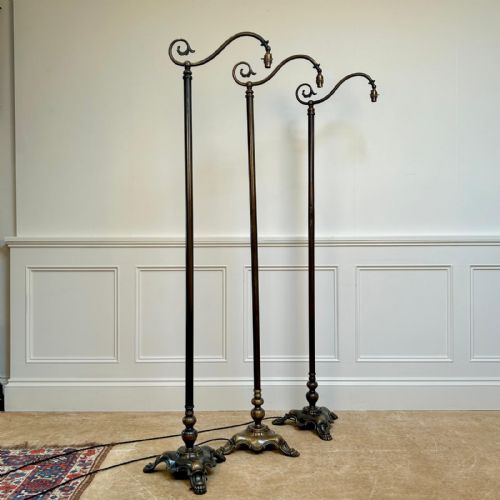
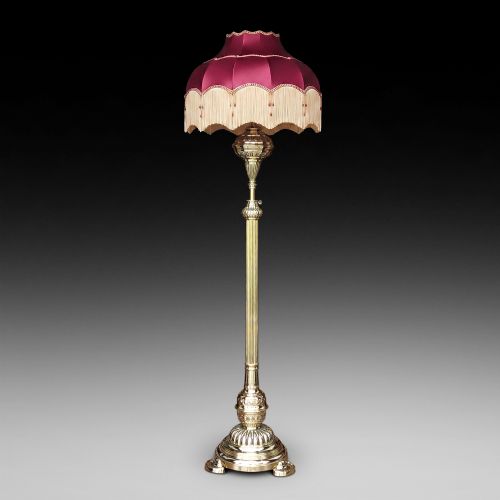
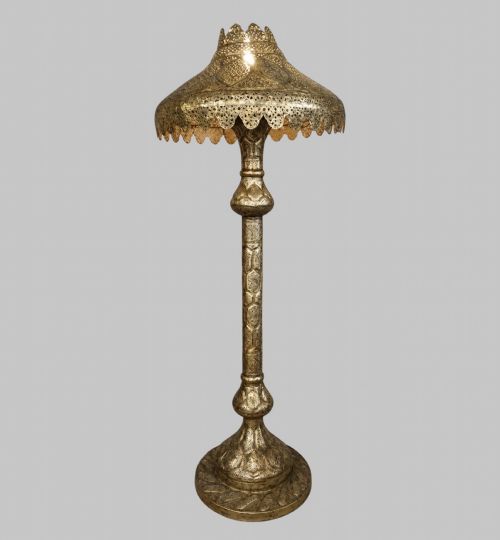
Brass Floor Standard Lamp
These heavy brass floor standard lamp designs bring purposeful height and adjustable warmth to a room, rooted in nineteenth and early twentieth-century engineering.
Brass Floor Standard Lamp
A brass floor standard lamp provides elevated ambient lighting through a vertical metal column supported by a weighted base. When searching this phrase, you encounter tall upright fixtures designed to stand beside seating areas or illuminate corners without crowding surface space.
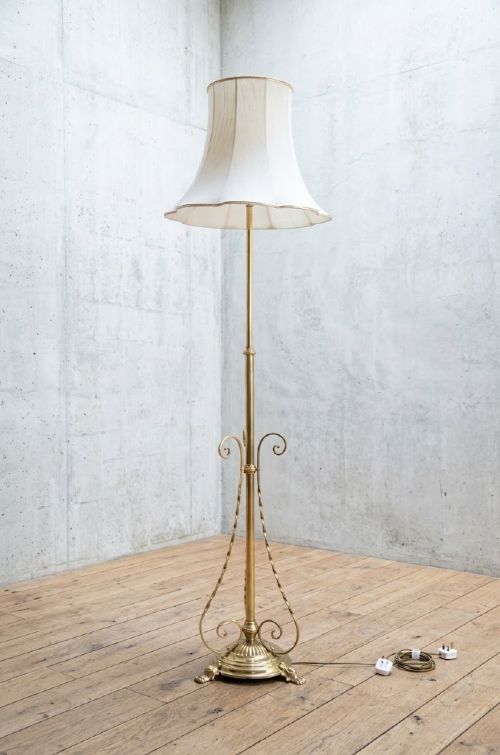
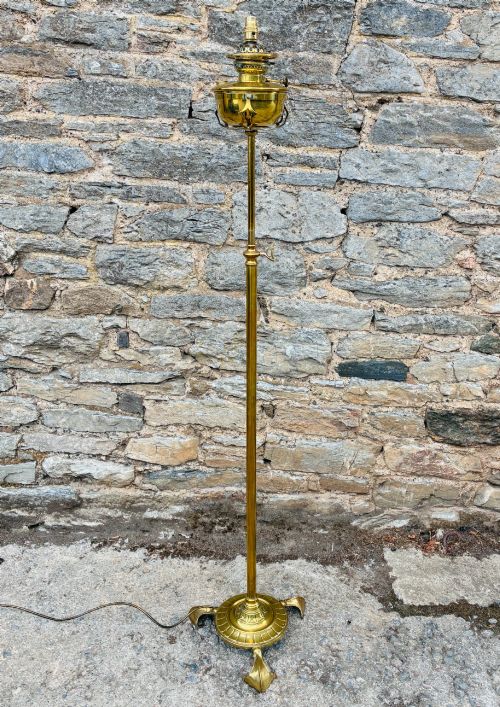
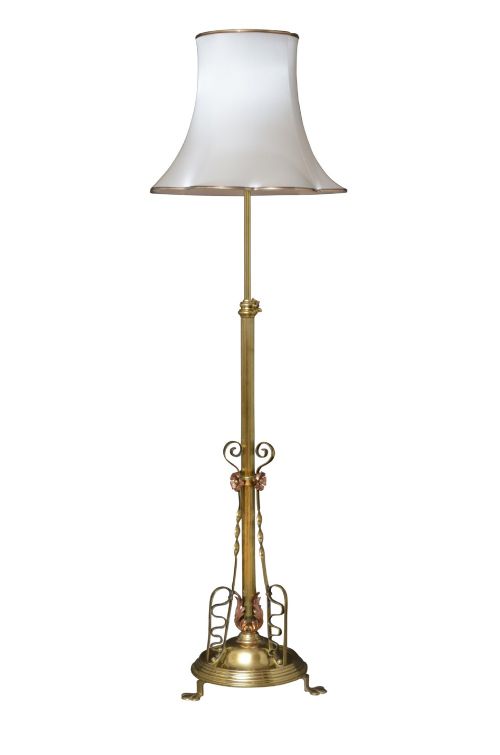
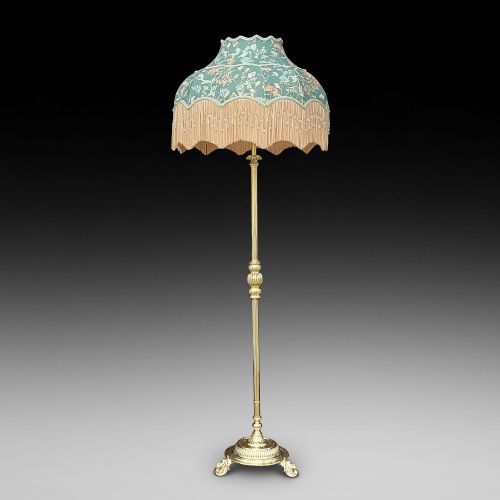
The versions most commonly met on this page span the Victorian, Edwardian and Art Nouveau periods, alongside later twentieth-century interpretations. Many started life as oil lamps before conversion to electricity, retaining their original telescopic mechanisms for raising and lowering the light source.
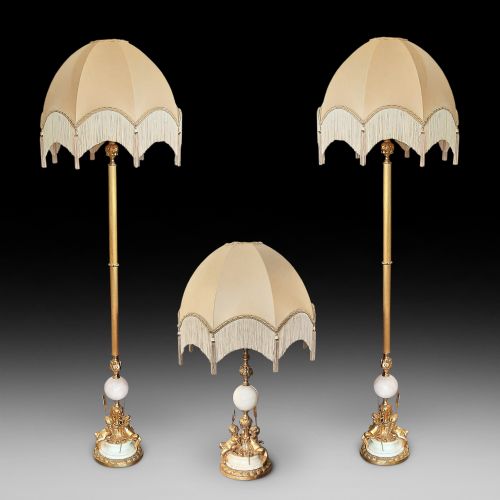
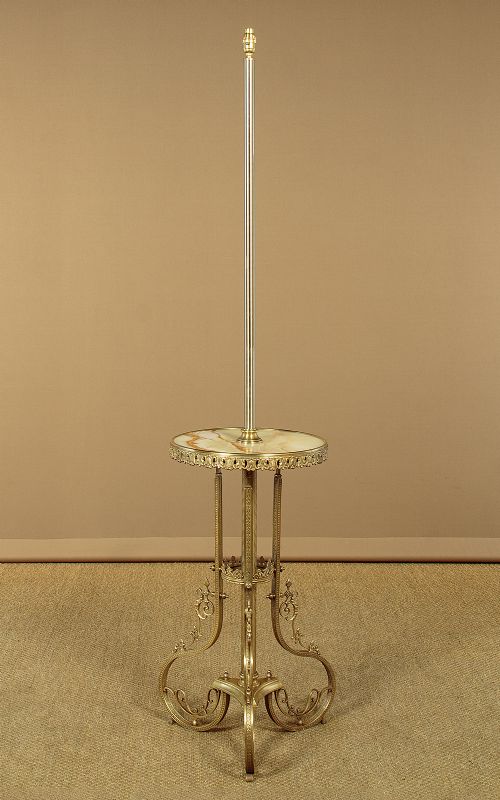
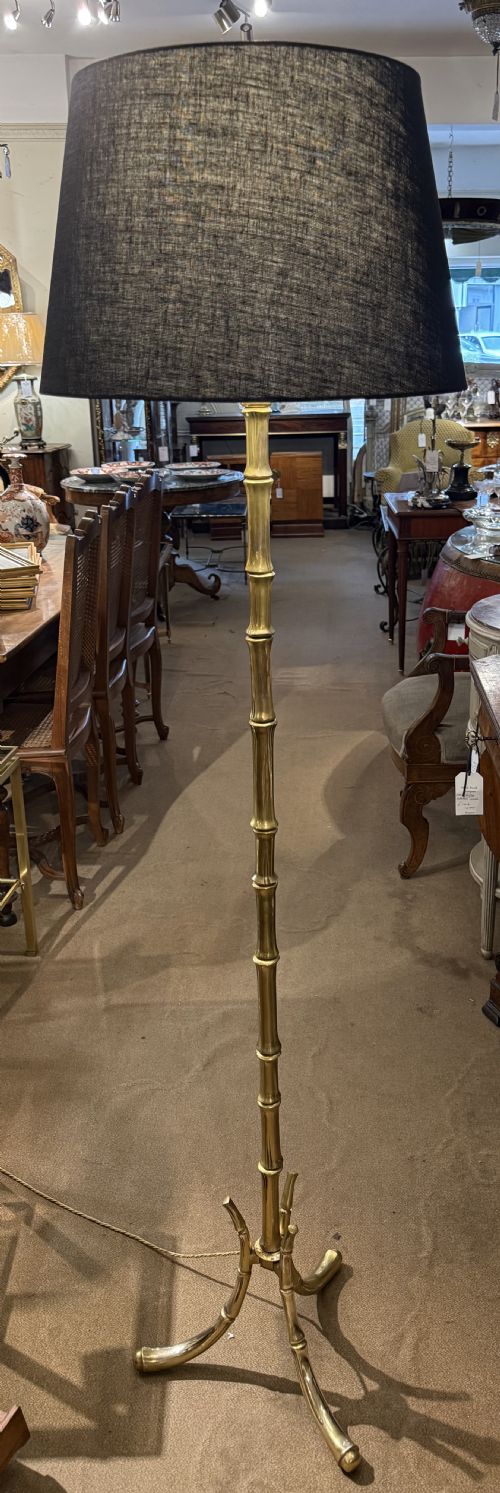
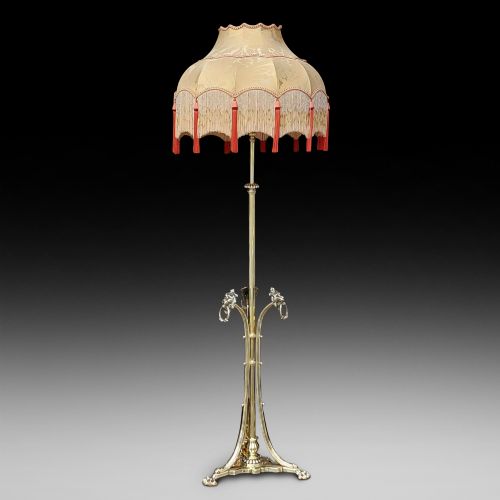
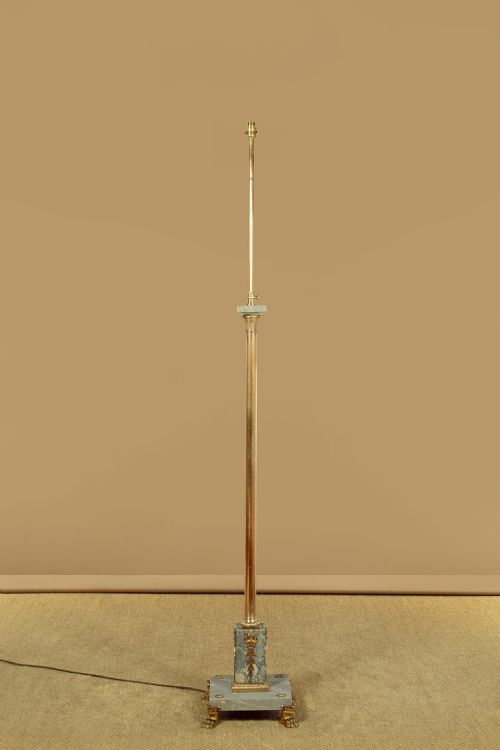
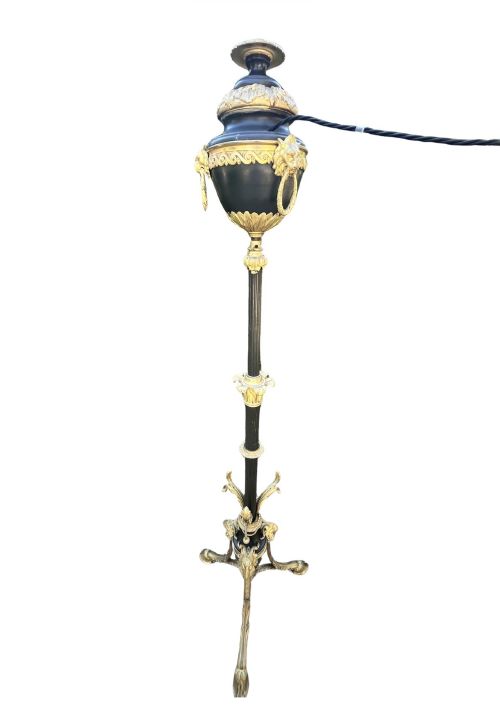
Makers often drew on classical vocabulary, producing fluted Corinthian columns, heavy tripod bases, and slender standards in polished or patinated brass. Examples range from plain utilitarian shafts to elaborate French revival designs incorporating copper, glass fonts and scrolling arms.
How they were made
Makers constructed these tall standards primarily from cast and spun brass, often combined with heavy iron interior weights or marble bases to ensure stability at height. Copper, silver plate, and occasional mahogany or ebonised wood accents provided textural contrast along the shafts.
Telescopic function relied on sliding inner tubes secured by thumbscrews, allowing the height of the oil font or electric socket to be adjusted by hand. Corinthian capitals and ornate bases were cast in sections before being chased, threaded, and bolted together around a central steel rod.
Several heavy standards arrived bearing the scars of conversion, having spent decades holding oil fonts before adapting to modern electricity.
What varies in quality
Quality rests in the gauge of the metal and the precision of the mechanical joints. Heavy, thick-walled brass castings and smoothly operating telescopic screw mechanisms distinguish workshop pieces from lighter, mass-produced alternatives.
Proportion and casting crispness mark the difference between standard production and fine execution. Sharply defined acanthus leaves on a Corinthian capital or well-balanced tripod legs show a higher level of foundational design than flat, indistinct surface ornament.
Hinks of B'ham·R. W. Winfield·Maison Bagues
The Brass Floor Standard Lamp Glossary
- Telescopic
- A multi-section stem designed to extend vertically and alter the overall height of the lamp. This mechanism often uses a thumbscrew or internal ratchet.
- Corinthian column
- A vertical support featuring an ornate capital decorated with carved acanthus leaves and scrolls. It mimics classical architectural orders popular in Victorian and Edwardian design.
- Bouillotte
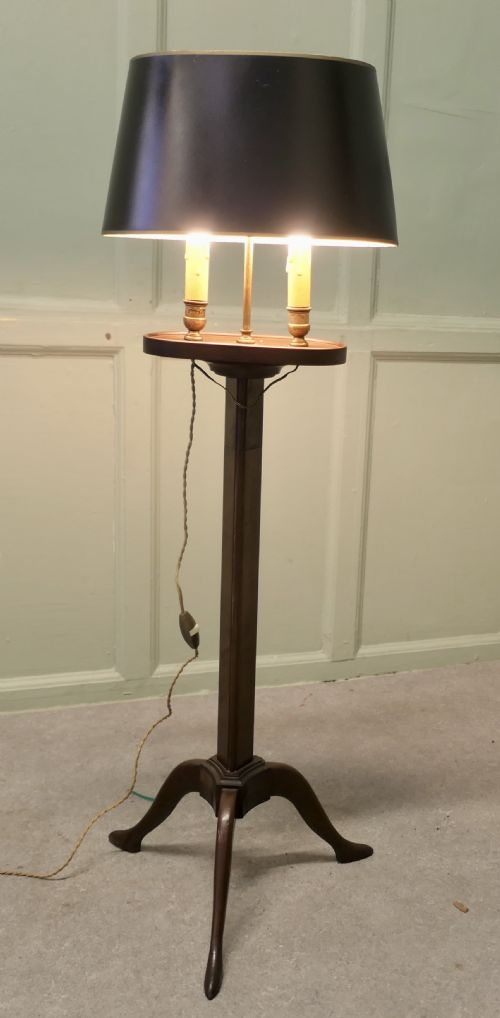
- A multi-armed lamp style originally intended for card playing tables. These fixtures typically feature adjustable candles or bulb sockets arranged around a central column.
- Tripod base
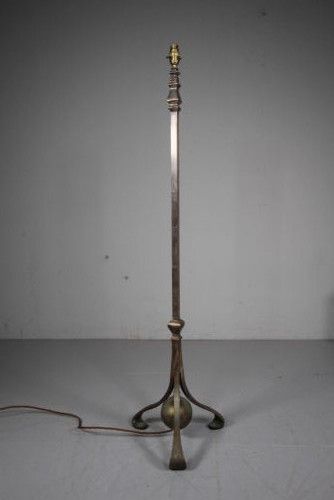
- A three-legged support structure designed to distribute weight evenly across the floor. It offers stability for tall, slender standards.
- Rise and fall
- An alternative term for a telescopic adjustment system. It allows the height of the burner or bulb to be repositioned on demand.
Brass Floor Standard Lamp: Frequently Asked Questions
Can I convert an oil lamp back?
Many surviving examples began as oil lamps before receiving electrical wiring during twentieth-century renovations. Reversing this conversion requires removing modern internal fittings and sourcing a matching period burner and glass font.
Consider whether you intend to use the piece for daily illumination or purely as a decorative object. Rewiring modern electrical components inside a vintage frame remains the most practical path for everyday living.
How do I clean patinated brass?
Dust the standard regularly with a dry cloth to prevent grime accumulation in the cast crevices and fluted columns. Avoid aggressive chemical polishes that strip away historical surface darkening and leave the metal unnaturally bright.
An application of microcrystalline wax helps protect exposed brass surfaces from oxidation and fingerprints. Treat copper accents and patinated iron bases with equal care to preserve their original tone.
How do I date an antique standard?
Examine the construction methods, base weights, and switch types used along the shaft and plug. Victorian and Edwardian pieces frequently display heavy cast brass components, threaded fittings, and distinct maker stamps on the collar or weighted base.
Stylistic cues such as Art Nouveau whiplash curves or Neoclassical Corinthian capitals provide reliable clues to the decade of manufacture. Compare the wiring aperture and interior threading against known period production standards.