






Polished Brass Altar Lights
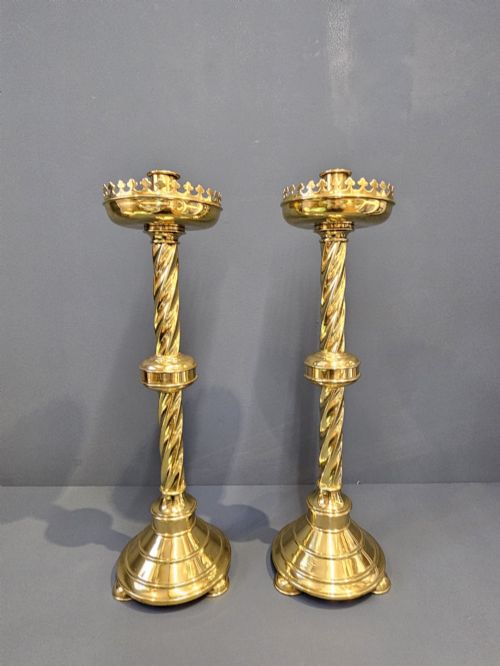
Polished brass altar lights bring warm metallic reflection and ecclesiastical gravity into a room, formed mostly of Victorian church candlesticks.
Polished Brass Altar Lights
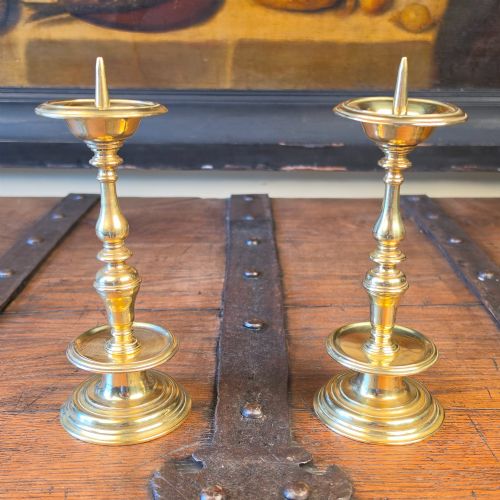
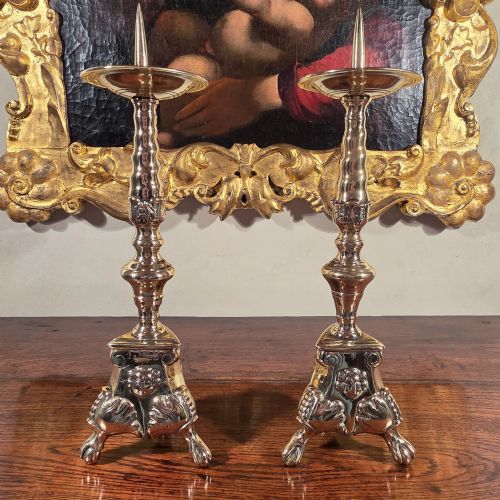
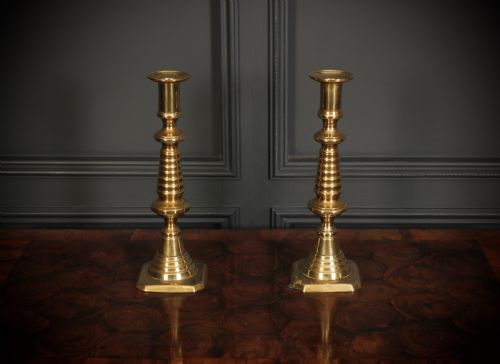
Polished brass altar lights encompass tall ecclesiastical candlesticks and pricket sticks designed for churches, dating primarily from the Victorian era alongside examples styled after earlier centuries. Buyers searching for polished brass altar lights encounter substantial pairs designed for altars, frequently featuring significant height and solid metal construction.
The selection ranges from 18th century style pieces and French designs to robust Gothic Revival forms. Most items appearing here are Victorian church candlesticks, often found in matched pairs or occasional sets of four.
How they were made
Makers utilised cast and turned brass, sometimes combining the metal with hardwood components or enamel detailing to create structured vertical forms. Individual elements were cast in sections before being threaded or joined together to form the complete shaft and base.
Surface finishing involved thorough polishing to highlight the warm metallic sheen of the brass, while pricket versions incorporated a sharp metal spike at the top to secure large wax candles.
Some heavy pricket sticks weigh enough to double as sturdy doorstops if retirement from the altar ever beckons.
What varies in quality
Quality rests in the proportional balance of the turned components and the sheer weight of the cast brass used in the construction. Heavier pairs with substantial bases display superior stability and more crisply defined architectural mouldings along the stem.
The sophistication of the casting and turning work separates standard utilitarian examples from finer pieces. Better specimens exhibit careful hand-finishing on the joints and balanced proportions that maintain visual harmony at significant heights.
T Thomason & Co
The Polished Brass Altar Lights Glossary
- Pricket
- A candlestick featuring a vertical metal spike on the drip pan to impale the wax candle. This form is traditional for heavy church altars.
- Gothic Revival
- An architectural and decorative style popular during the Victorian period. It reinterprets medieval pointed arches and structural motifs in metalwork.
- Ecclesiastical
- Relating to the Christian Church or its clergy. Items described thus were originally made for use in places of worship.
- Turned
- Shaped on a lathe by rotating the metal or wood against a cutting tool. This technique creates the symmetrical rings and baluster profiles on the stem.
Polished Brass Altar Lights: Frequently Asked Questions
How do I clean polished brass?
Clean polished brass gently using a soft cloth and mild soapy water to remove dust without stripping the protective finish. Avoid harsh abrasive cleaners that can scratch the metal surface.
Allow the pieces to dry completely after wiping. Regular dusting preserves the bright reflection of the polished metal.
Are these candlesticks original church items?
Many examples on this page originated in ecclesiastical settings, designed specifically for use on church altars during the Victorian period and surrounding decades. Their robust construction and height reflect this purposeful origin.
Other pieces adopt earlier 17th or 18th century styles while dating to the 19th century. Examining the turning and base construction helps determine the precise era of manufacture.
How do I use pricket candlesticks safely?
Pricket candlesticks require candles with a pre-drilled base or wide diameter to sit securely upon the central metal spike. Ensure the spike is firmly embedded in the wax before lighting.
Place the candlestick on a stable, heat-resistant surface away from drafts. Monitor the burning candle to prevent wax overflow onto the brass.
What is the difference between a candlestick and an altar light?
Altar lights generally refer to taller, heavier candlesticks built for ceremonial use on church altars rather than domestic dining tables. They often incorporate wider weighted bases to support substantial candle heights.
These pieces frequently feature pricket tops rather than sockets. Their grand scale distinguishes them from everyday domestic lighting.