
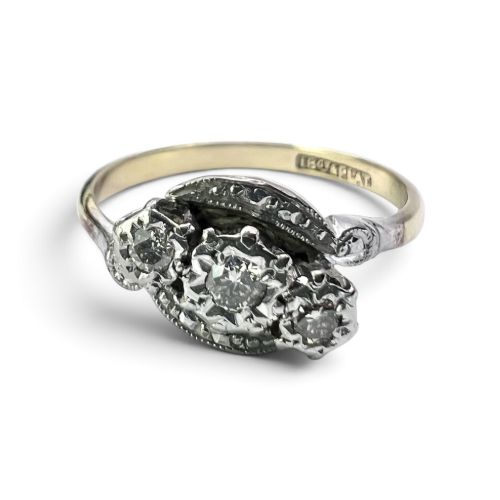
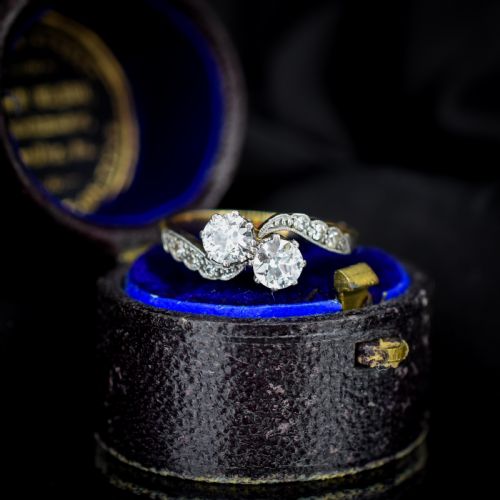
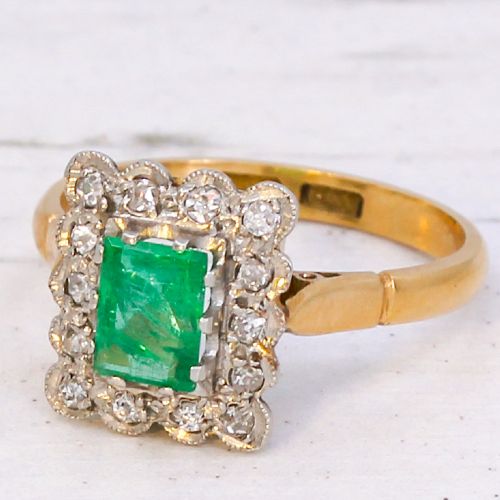
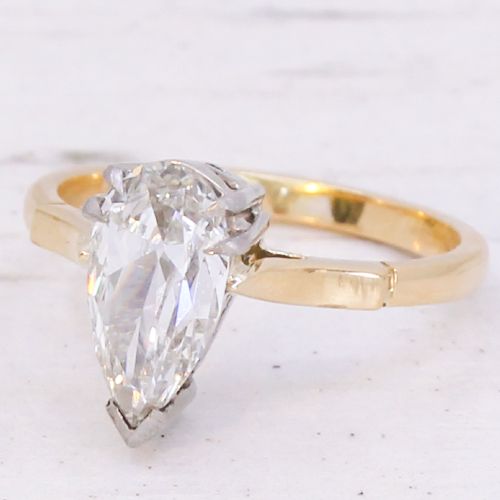
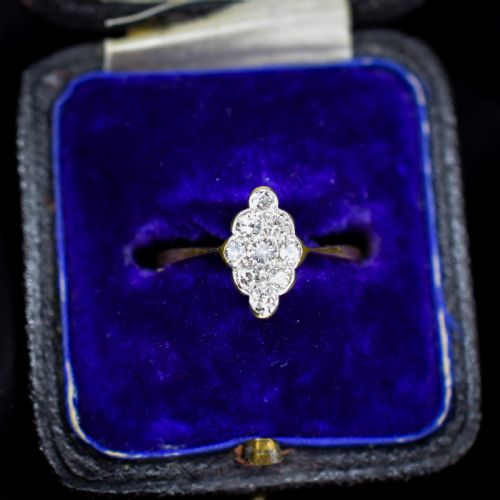
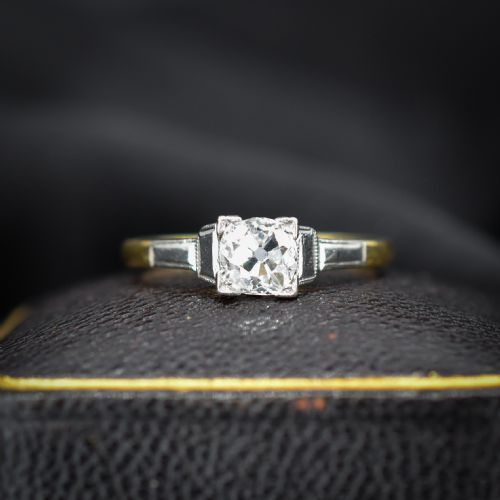
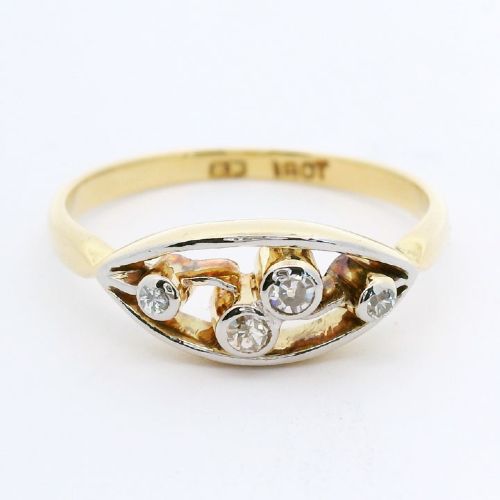
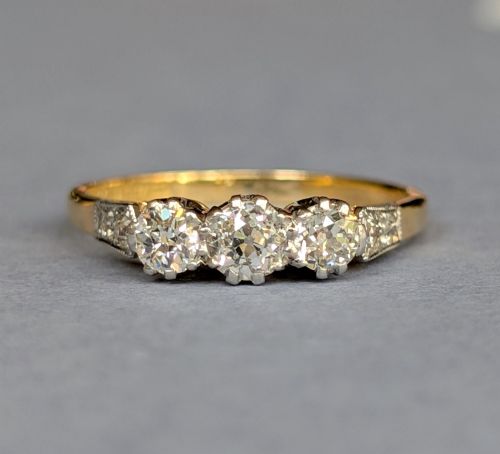

Platinum Yellow Gold Ring
A platinum yellow gold ring brings together the warmth of traditional metal and the brilliant, durable white setting that defined early twentieth-century design.
Platinum Yellow Gold Ring
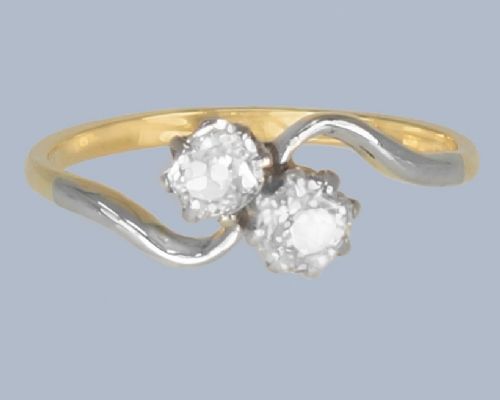
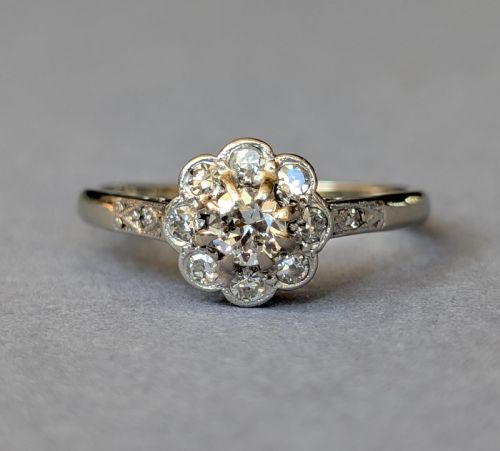
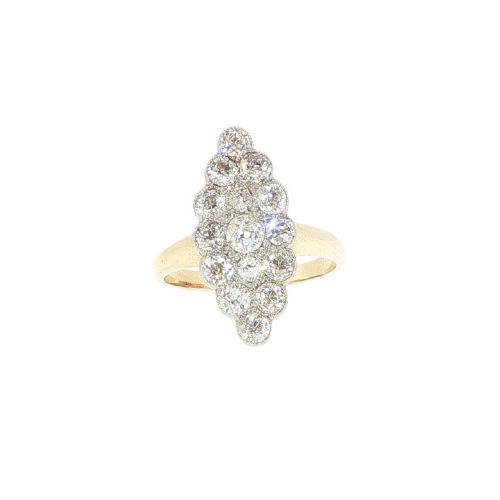
When searching for a platinum yellow gold ring, buyers typically encounter pieces originating from the Edwardian era through to the Art Deco and Mid-Century periods. The selection spans engagement rings, cluster designs, and multi-stone configurations such as trilogy and toi et moi styles.
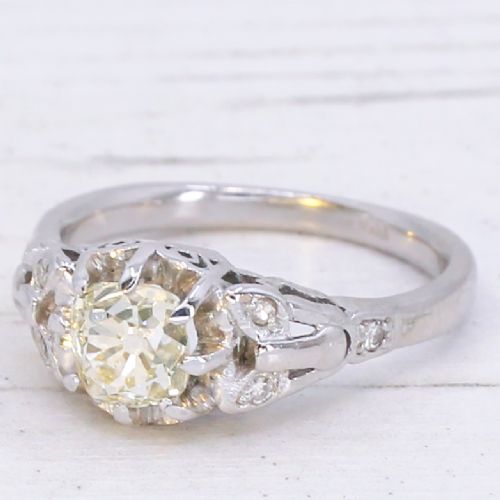
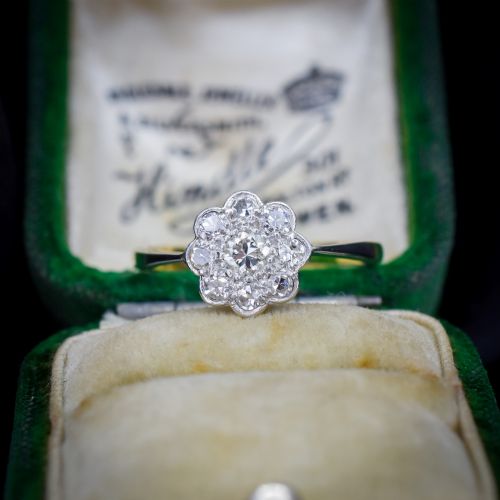
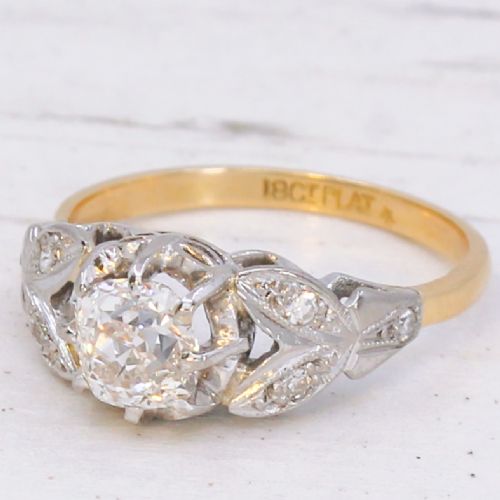
The most common forms on this page pair an eighteen-carat yellow gold shank with a platinum setting heads. This dual-metal construction allowed jewellers to secure diamonds and coloured gemstones in bright, silvery metal while retaining a warm gold band.
Materials and Construction
The fabrication of these pieces relies on combining platinum with eighteen-carat yellow gold. Platinum gained widespread favour in jewellery manufacturing during the Edwardian period due to its exceptional tensile strength, which permitted delicate, lace-like claw and millegrain settings without adding heavy bulk.
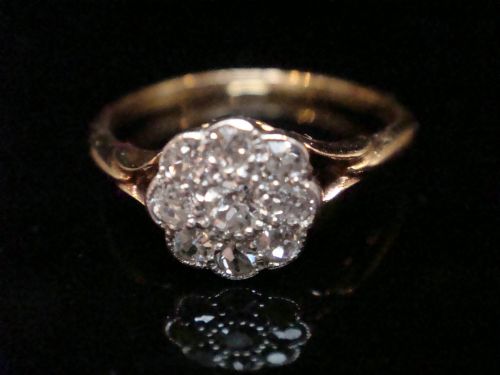
Diamonds set into these rings are predominantly hand-cut old European cuts, old mine cuts, and transitional cuts. These stones are complemented by occasional sapphires, emeralds, and rubies, secured into mounts shaped by period hand-working techniques.
Evaluating Quality
Quality in these rings is determined by the precision of the metalwork and the condition of the settings. Fine examples exhibit crisp millegrain edges, secure claw work that holds stones firmly without excessive metal, and minimal wear to the underlying gold shank.
The optical qualities of the central gemstones also dictate the standing of a piece. Well-matched stone sizes, clean diamond clarity grades, and original unpolished settings elevate certain items above standard production.
The Platinum Yellow Gold Ring Glossary
- Millegrain
- A decorative technique featuring a row of tiny raised metal beads along the edges of a setting. It was extensively utilised in Edwardian and Art Deco jewellery to soften hard lines.
- Toi Et Moi
- French for you and me, describing a ring featuring two main side-by-side gemstones representing two entwined lives. This style often appears in twist configurations.
- Old European Cut
- An early form of brilliant-cut diamond characterised by a small table, high crown, and open culet. These stones display distinctive hand-faceted light patterns.
- Trilogy Ring
- A ring set with three principal stones symbolising the past, present, and future. They frequently combine old cut diamonds in graduated sizes.
- Navette
- A boat-shaped gemstone arrangement that tapers to sharp points at either end. This elongated silhouette covers the finger and was popular in Edwardian cluster designs.
Platinum Yellow Gold Ring: Frequently Asked Questions
How do I care for a platinum yellow gold ring?
Maintain the piece by cleaning it gently in warm soapy water with a soft brush to remove everyday oils. Avoid harsh chemical dips that can harm softer gemstones mounted alongside the diamonds.
Take the ring to a professional jeweller periodically to inspect the platinum claws and ensure the stones remain secure in their settings.
Can these rings be resized easily?
Resizing depends largely on the construction of the band and the extent of any shoulder ornamentation. Because the shank is typically eighteen-carat yellow gold, a standard jeweller can usually adjust the diameter without disturbing the platinum head.
Intricate settings featuring channel-set stones along the shoulders require careful evaluation by an experienced specialist to prevent structural damage.
What is the difference between Edwardian and Art Deco styles?
Edwardian designs lean towards delicate, garland-inspired motifs with airy openwork and lacy platinum wirework. They emulate royal ornamentation and soft floral aesthetics.
Art Deco pieces shift towards geometric symmetry, sharp angles, and structured cluster patterns. They embrace strong lines and high-contrast gemstone pairings.
Are old cut diamonds different from modern stones?
Old cut diamonds are shaped by hand rather than precise modern machinery, resulting in unique facet patterns and deeper pavilions. These historical cuts catch candle or gaslight particularly well, offering a softer glow.
Every old cut stone possesses minor asymmetries that confirm its period origin and manual craftsmanship.