
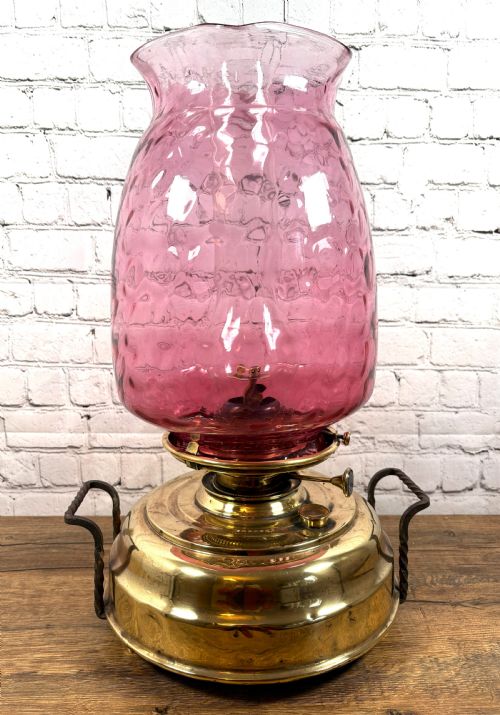


Pink Victorian Oil Lamp
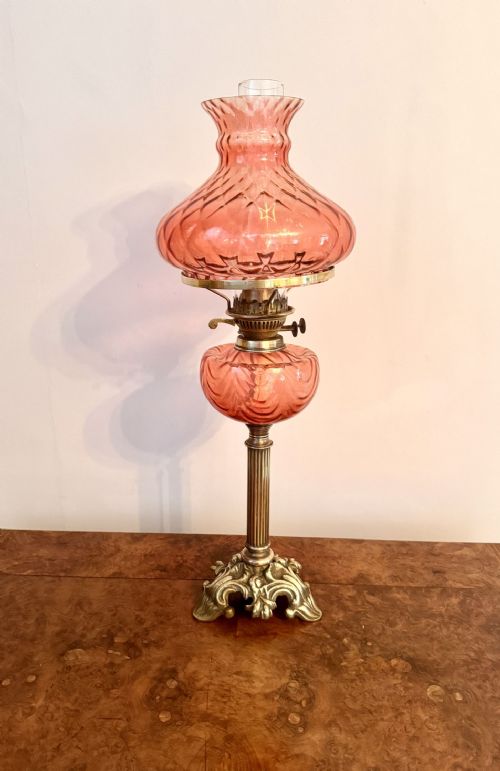
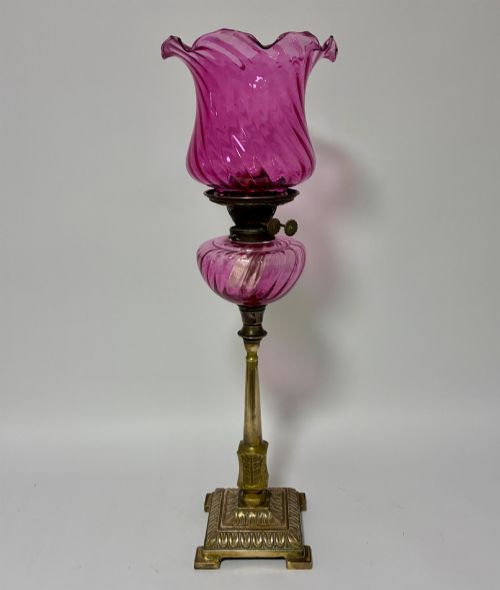
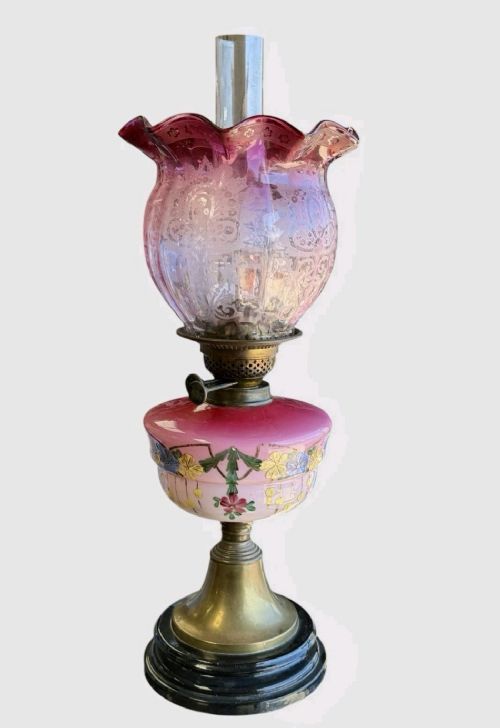
These pink victorian oil lamp pieces bring soft colour and period weight to a room, combining brass columns with tinted glass fonts.
Pink Victorian Oil Lamp
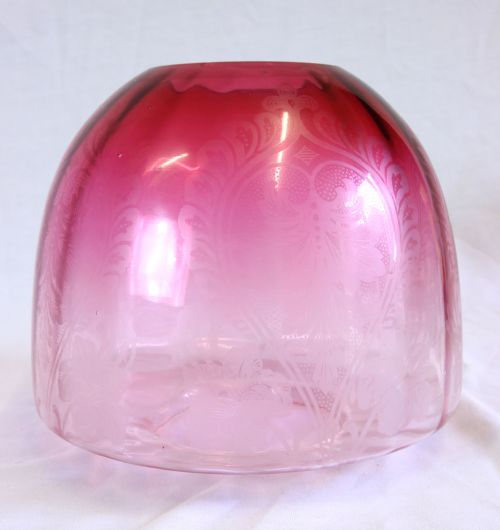
A pink victorian oil lamp brings together nineteenth-century lighting forms with tinted glass vessels in shades of rose, satin pink, and cranberry. These pieces appear across the Victorian era, alongside related examples from the Edwardian years and the early twentieth century.
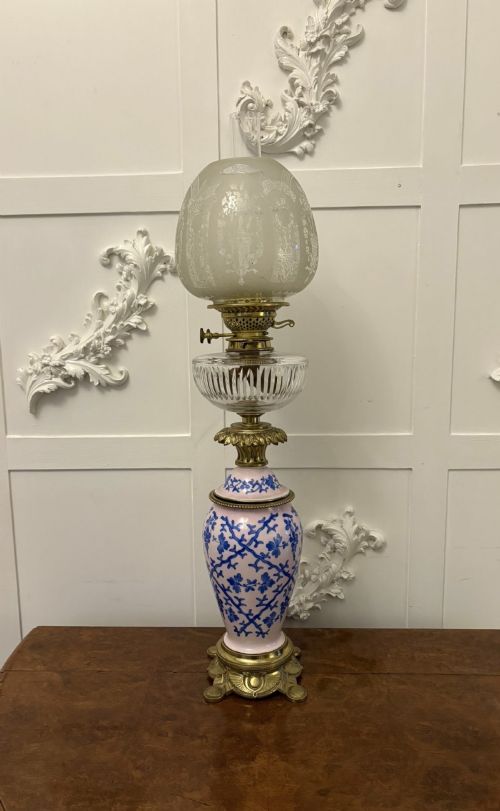
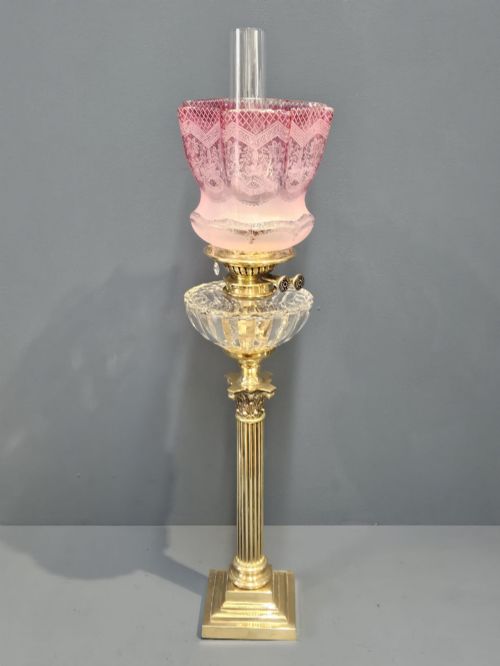
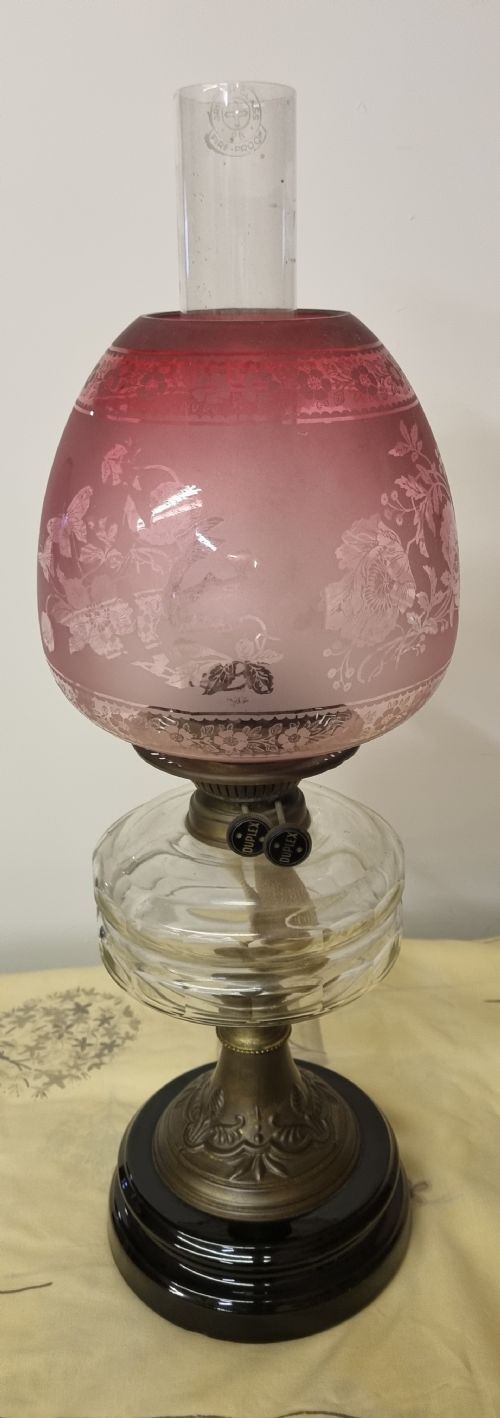
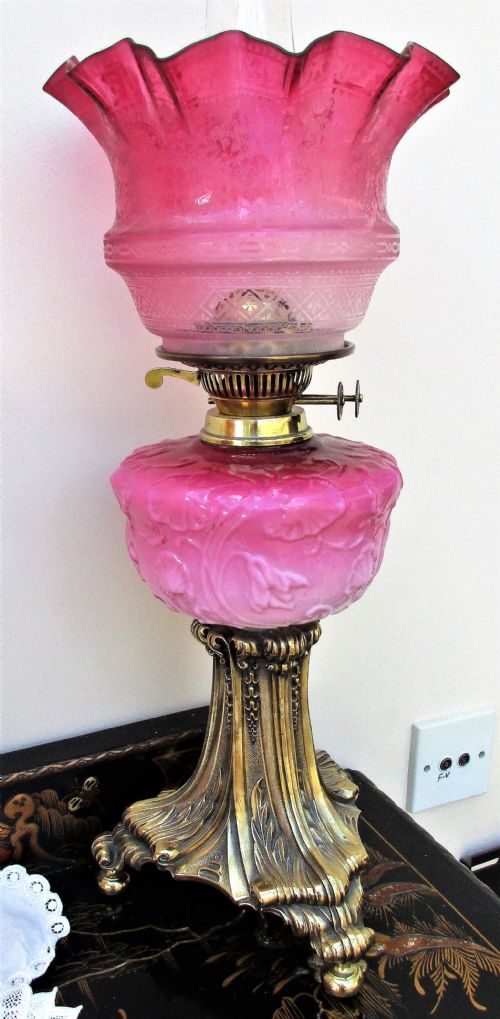
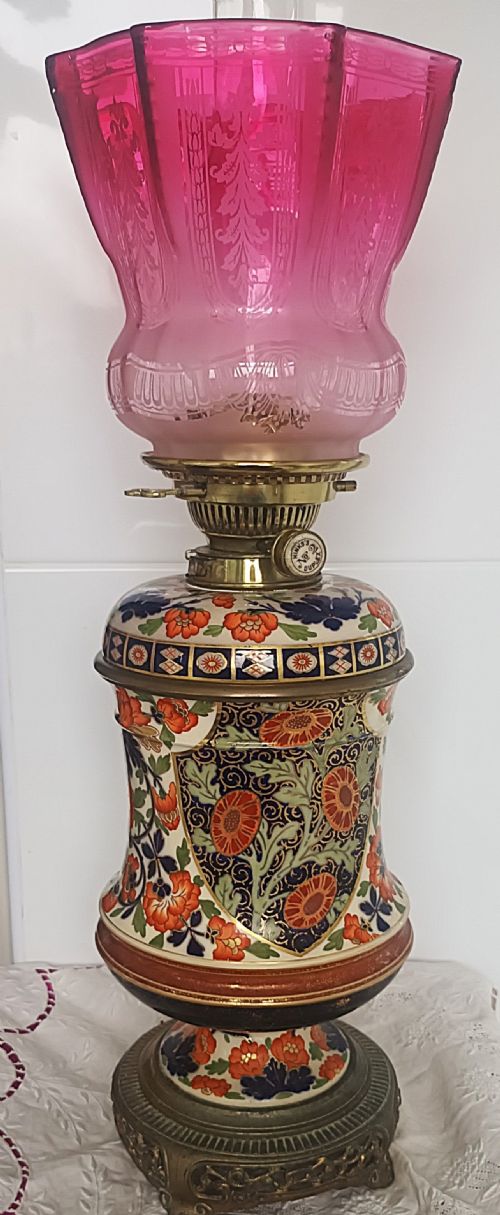
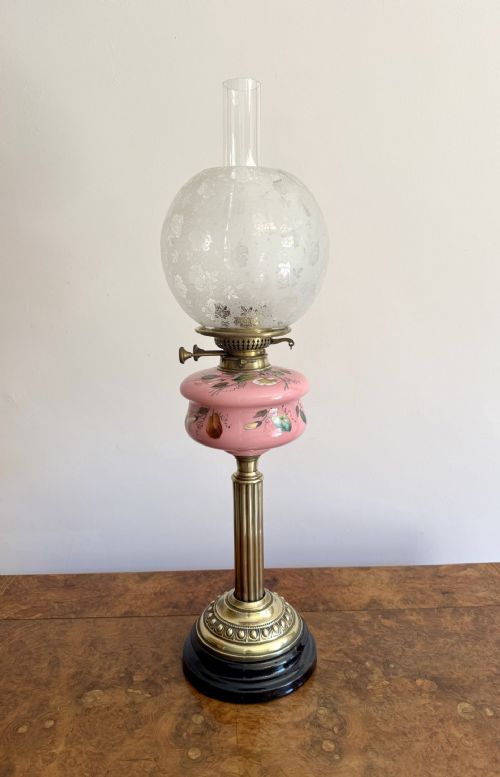
The domestic lighting found here spans several distinct formats, including table lamps with ceramic or glass fonts, tall standard lamps, and hanging lamps complete with shades. Brass columns and bronze mounts support fonts rendered in opaque glass, porcelain, and crystal.
Makers and regional workshops in England and Germany produced these items using combinations of metalwork and blown or moulded glass. Collectors encounter standard column designs alongside more elaborate figurative models and painted porcelain bodies.
Factors of quality
The distinction between standard domestic lighting and finer production lies in the weight of the brass casting and the crispness of reeded or Corinthian column details. Superior examples feature heavier metal mounts, well-finished bronze cold-painting, and intact gilt highlights on the glass.
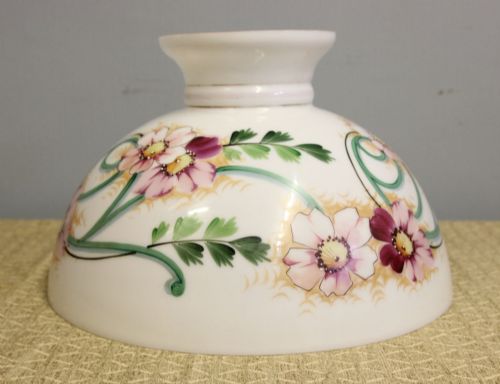
Glass quality varies from simple moulded vessels to cased satin glass and finely hand-painted cranberry shades with frilled rims. The presence of named burner mechanisms, such as those by Hinks, indicates higher-tier manufacture.
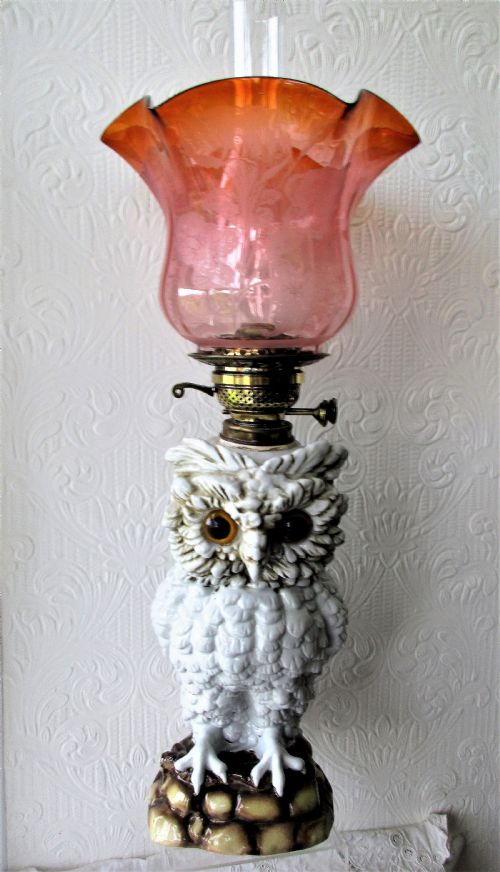
Among the brass columns and glass fonts sits a porcelain owl lamp with wide eyes, watching over the nineteenth-century parlour.
Hinks·Taylor Tunnicliff·Sitzendorf
The Pink Victorian Oil Lamp Glossary
- Font
- The oil reservoir of the lamp, typically formed from glass, porcelain, or ceramic and mounted above the base.
- Cranberry glass
- A rich red-pink glass created by adding gold chloride to the molten batch during manufacture.
- Standard lamp
- A tall floor-standing lamp designed to provide ambient room lighting.
- Opaline glass
- A pale, translucent white or tinted glass that diffuses light softly through the body of the shade or font.
- Cold painted
- A technique where bronze or metal figures received enamel or oil paint decoration without a final high-temperature kiln firing.
Pink Victorian Oil Lamp: Frequently Asked Questions
How do I date a Victorian oil lamp?
Dating relies on stylistic markers such as column designs, burner patents, and glass manufacturing techniques characteristic of the nineteenth century.
Evidence from these listings shows examples spanning from the mid-nineteenth century through to the early twentieth century.
Can these antique lamps still burn oil?
Most buyers wire these pieces for electricity to use them safely as table or standard lamps in modern rooms.
Retaining the original burner mechanism alongside a conversion preserves the historic character of the metalwork.
Where were these lamps placed originally?
Table lamps sat on side tables and desks in nineteenth-century sitting rooms to provide focused task and ambient light.
Tall standard and floor lamps stood in corners or beside seating areas to illuminate larger parlours.