



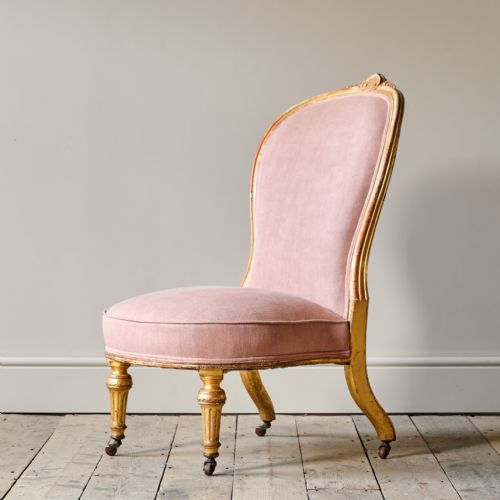

Pink Upholstered Bedroom Chairs
Pink upholstered bedroom chairs are low-slung seats designed for dressing rooms and chambers, offering compact comfort paired with ornamental woodwork.
Pink Upholstered Bedroom Chairs
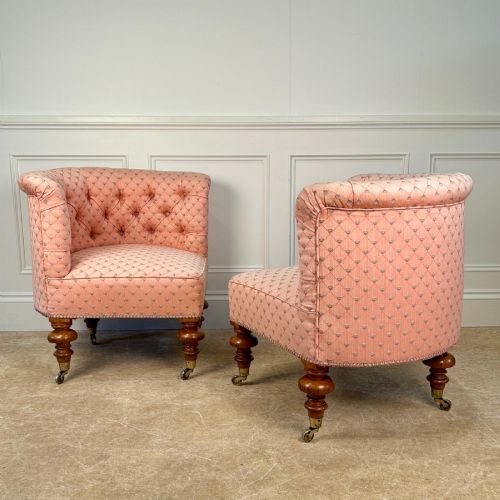
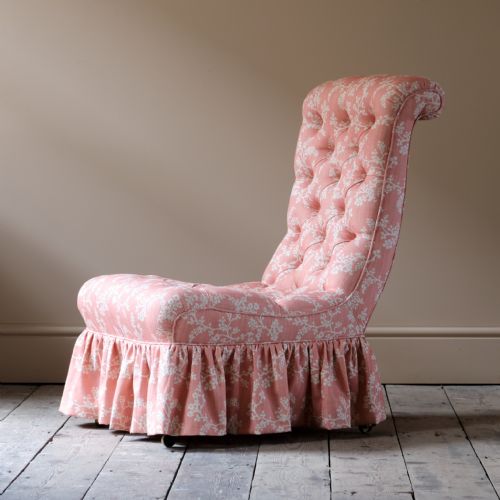
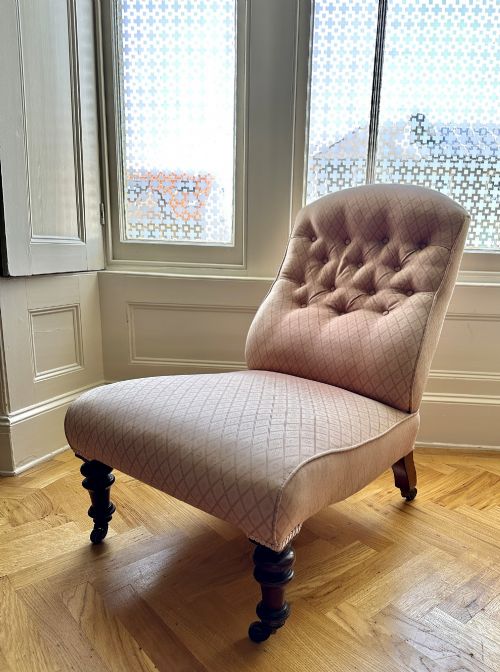
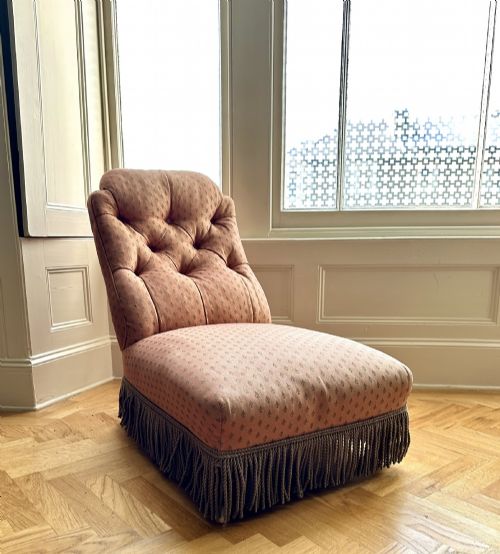
When you search for pink upholstered bedroom chairs, you encounter a selection spanning the nineteenth century and the Edwardian era, predominantly featuring Victorian walnut and mahogany frames. These pieces include low slipper chairs, nursing chairs designed with low seats for tending to infants, and small balloon back armchairs.
Makers such as Gillows and Hindley and Sons appear alongside French Napoleon III gilt salon chairs and Sheraton Revival inlaid side chairs. The forms range from simple corner chairs to heavily carved ladies chairs with button backs and scroll arms.
How they were made
Frames are constructed from timbers including walnut, mahogany, oak, rosewood, maple, and giltwood, often shaped with carved detailing or inlaid decoration. Joinery techniques of the period anchor these structural woods securely before the application of springs and stuffing.
Upholstery relies on traditional textiles, velvet, fabric, and brass tacks or fringe trim to finish the edges. Buttoning is frequently employed across the backrests to secure the internal padding and create a gathered texture.
What varies in quality
The refinement of the timber carving and the elegance of the frame proportions dictate the baseline standard of each chair. Finer examples display crisp hand-carving on walnut or mahogany frames and well-balanced structural lines.
The integrity of the frame construction and the execution of the upholstery work, whether original or restored, determine the enduring appeal. Subtle details such as turned legs, brass castors, and precise buttoning distinguish superior pieces from standard workshop output.
Gillows·Hindley and Sons·Lamb of Manchester
The Pink Upholstered Bedroom Chairs Glossary
- Slipper chair
- A low-framed bedroom chair originally designed for ladies to sit upon while dressing. These seats sit close to the floor and usually lack arms.
- Nursing chair
- A low-seated chair traditionally used for feeding babies or tending to children. They often feature high buttoned backs and carved wooden frames.
- Balloon back
- An open backrest shaped in a continuous oval curve resembling a balloon. This form is common in Victorian walnut and mahogany chairs.
- Bergere chair
- An enclosed upholstered armchair featuring exposed wooden framing and woven cane or fabric sides. French examples from the nineteenth century are frequently encountered.
- Giltwood
- Timber coated with a thin layer of gold leaf or gilt paint. It is typically found on decorative salon and occasional chairs.
Pink Upholstered Bedroom Chairs: Frequently Asked Questions
What is a nursing chair?
A nursing chair is a low-seated Victorian chair designed to allow comfortable positioning while tending to infants. They typically feature an upright, buttoned back and slender wooden legs.
These pieces were kept in bedrooms and dressing rooms rather than formal reception rooms, reflecting their domestic function.
How do I identify a Victorian bedroom chair?
Victorian bedroom chairs are generally identified by timber choices such as walnut and mahogany, combined with characteristic forms like balloon backs and low seats. Stylistic markers include carved ornament, buttoned upholstery, and turned wooden legs.
Dates cluster around the nineteenth century, ranging from the 1850s through to the late Victorian period.
Where were these chairs used historically?
These seating pieces were designed specifically for private chambers, boudoirs, and dressing rooms. Their compact dimensions suited smaller private spaces.
They served functional roles for dressing, resting, or nursing, rather than formal entertaining.
What is the difference between a slipper chair and a side chair?
A slipper chair sits particularly low to the floor and is constructed without arms to facilitate dressing. A side chair stands higher on standard legs and is designed for general placement around a room.
Both forms appear frequently in nineteenth-century walnut and mahogany frames.