
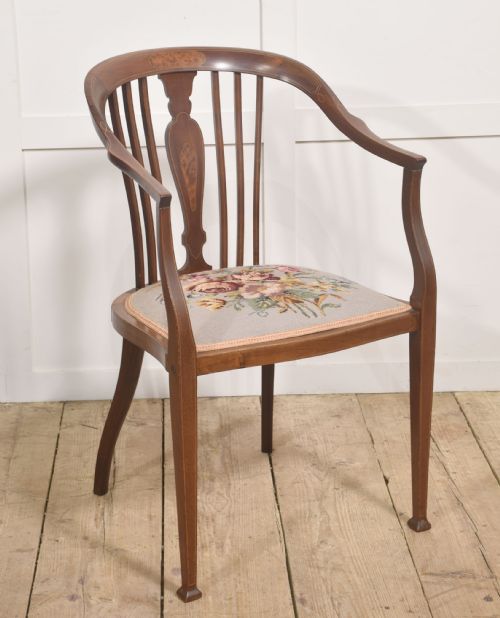


Inlaid Occasional Chairs
These inlaid occasional chairs bring decorative woodwork and practical seating together, mostly appearing from the Edwardian period in mahogany and satinwood.
Inlaid Occasional Chairs
Inlaid occasional chairs are light, decorative seating forms designed for bedrooms, parlours and drawing rooms rather than heavy dining use. When you search for inlaid occasional chairs, you encounter a selection spanning the late nineteenth century through to the early twentieth century, with Edwardian examples dominating the choice.
The assortment on this page includes salon chairs, corner chairs, tub chairs, elbow chairs and nursing chairs alongside standard occasional forms. Mahogany forms the primary framework for these pieces, frequently enriched with satinwood, marquetry or string inlay that traces the crest rails and splats.
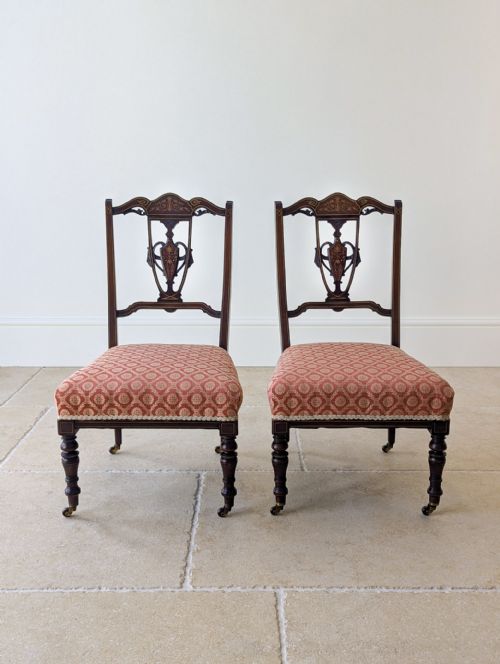
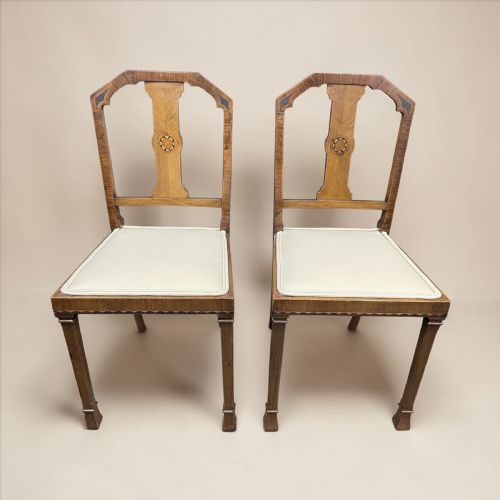
While Victorian and nineteenth-century variants appear with richer, heavier frames, the typical piece you meet here is an Edwardian mahogany creation featuring delicate floral or geometric wood inlay. These chairs functioned as movable accents in domestic interiors, intended to be shifted easily to wherever an extra seat was required.
How they were made
Makers constructed these chairs primarily from solid mahogany or rosewood, sometimes utilising beech or walnut for specific frame components. Timber selection dictated the structural strength of the chair, while contrasting light veneers like satinwood provided the material for detailed surface ornamentation.
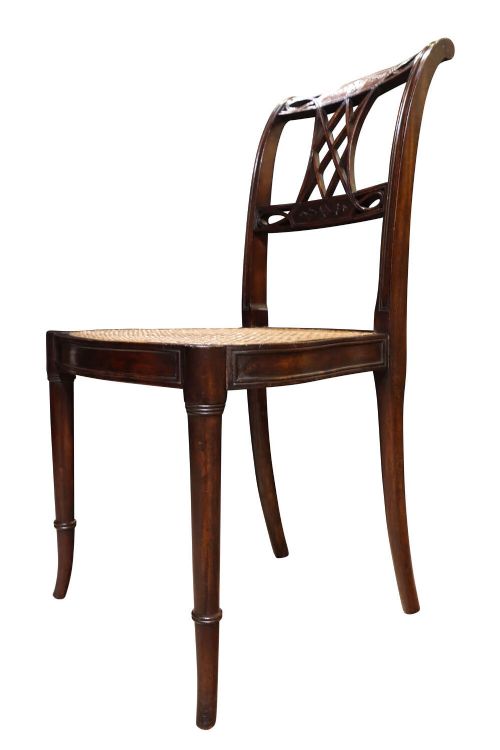
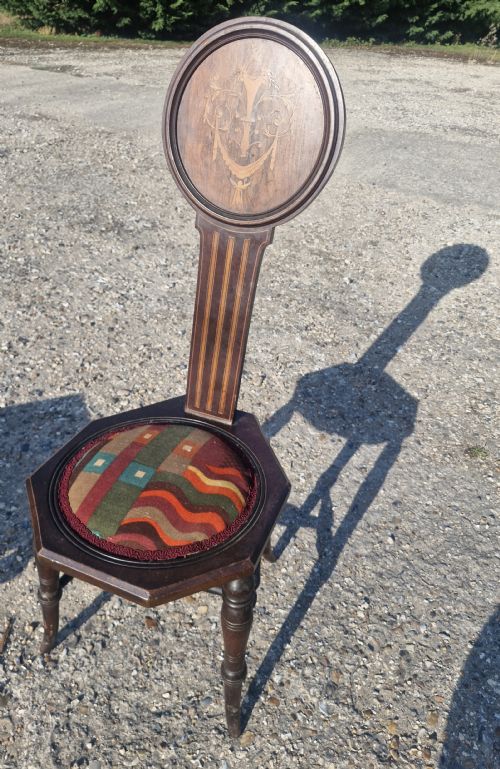
Wood inlay and marquetry techniques defined the decorative program, where fine pieces of contrasting timber or stringing were set flush into recessed channels within the primary wood. Upholstery, cane seating and velvet or fabric pads were then integrated into the frames, completing pieces designed for lightness and visual appeal.
Edwardian pieces represent the largest share of available chairs, supplemented by Victorian and nineteenth-century variants.
What varies in quality
Quality in these chairs rests upon the crispness of the timber inlay and the architectural integrity of the frame joints. Superior examples display precise, tightly fitted marquetry and fine stringing that follows the natural contours of the mahogany or rosewood without gaps or filler.
The distinction between standard and exceptional pieces also lies in the elegance of the woodwork, from slender turned legs to finely shaped splats and elbows. Heavier, clumsier frames lack the refined proportions that elevate a simple bedroom chair to a distinguished salon piece.
Jenks & Wood
The Inlaid Occasional Chairs Glossary
- Inlay
- The technique of inserting pieces of contrasting material into a depressed wooden surface to form a decorative pattern. This defines the primary visual characteristic of these chairs.
- Marquetry
- An elaborate form of inlay that creates pictorial or floral designs using various tinted wood veneers. It appears frequently on Edwardian salon chairs.
- Sheraton Revival
- A late nineteenth and early twentieth century style inspired by eighteenth-century designer Thomas Sheraton. These pieces often feature delicate mahogany frames with satinwood inlay.
- Salon Chair
- A light, decorative chair intended for formal entertaining in a drawing room or parlour. They sacrifice heavy comfort for elegant proportions and ornamentation.
- Corner Chair
- A seat designed to fit diagonally into the corner of a room, featuring a semicircular back rail supported on turned pillars. Several Edwardian examples employ this configuration.
- Tub Chair
- An upholstered seating form where the back and arms form a continuous, curved enclosure. They provide a more enclosed, supportive seat than standard open salon chairs.
Inlaid Occasional Chairs: Frequently Asked Questions
Where were these chairs used?
These chairs served as light, movable seating in bedrooms, parlours and drawing rooms rather than principal dining spaces.
Their portable nature allowed owners to reposition them easily around the room for conversation or reading.
How do I spot Edwardian examples?
Edwardian pieces typically combine lightweight mahogany frames with bright satinwood stringing and floral marquetry.
They lean towards refined, slender proportions inspired by earlier eighteenth-century neoclassical designs.
Are cane seats original?
Cane seating appears frequently on bedroom and occasional chairs from the early twentieth century.
Many retain their original woven cane panels, though some have undergone careful re-caning to maintain structural integrity.
What is string inlay?
String inlay involves embedding very thin strips of light-coloured wood into dark mahogany surfaces.
This technique creates delicate linear borders that outline the legs, rails and back splats of the chair.