
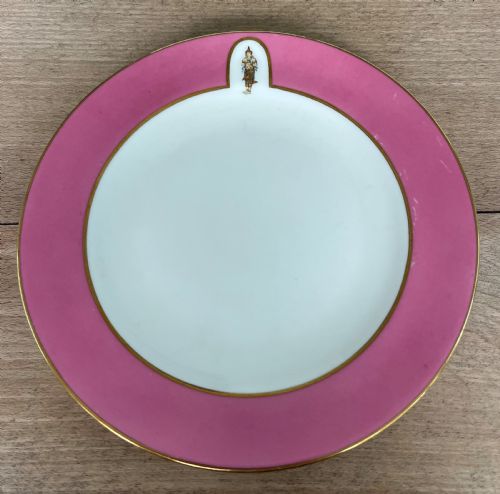


Pink Porcelain Plate
A pink porcelain plate brings rich colour and refined artistry to a table, combining delicate ceramic bodies with vibrant pink grounds.
What these pieces are
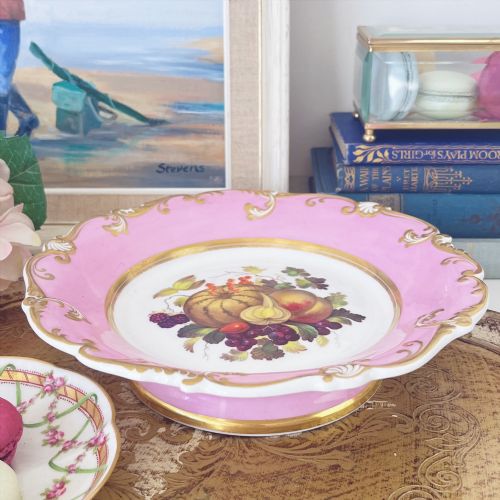
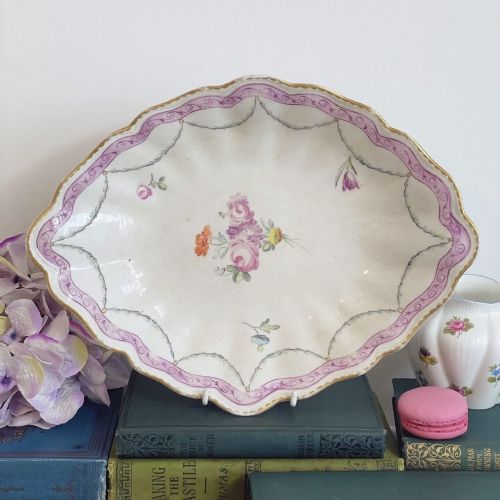
A pink porcelain plate is a decorative or functional ceramic piece defined by its distinct pink ground or painted highlights. Collectors searching for a pink porcelain plate encounter cabinet plates, dessert plates, and side plates spanning several historical periods and origins.
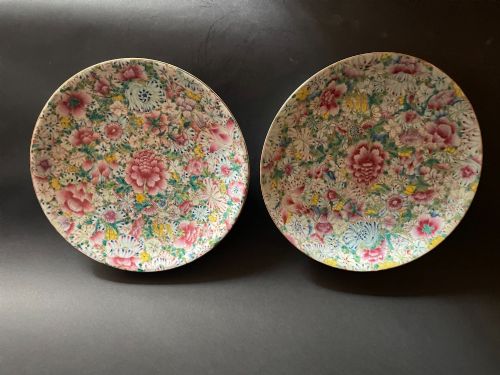
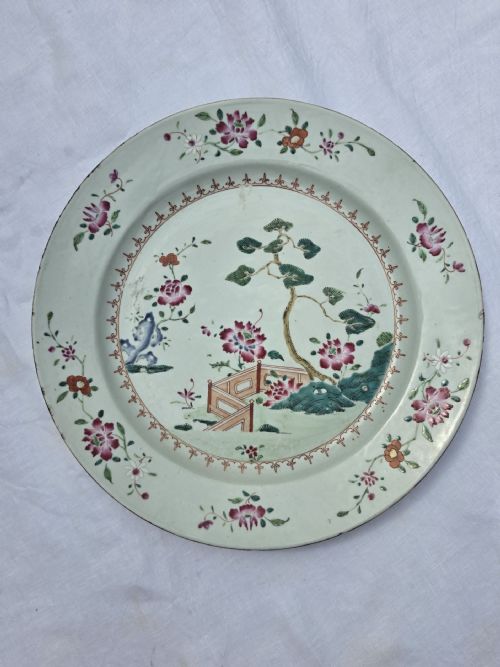
The selections available here include English factory productions, French cabinet pieces, and Chinese export wares. Formats range from simple side plates to elaborate landscape dessert plates and royal commissions.
Victorian and Edwardian examples sit alongside Regency designs and pieces from around eighteen hundred. Many feature intricate hand-painted floral motifs, birds, or raised gilding upon their pink surfaces.
How they were made
Makers constructed these items from fine porcelain bodies, applying enamel paint and ground colours by hand. Artisans utilised gold leaf and heavy gilding to accent borders, rims, and central scenes.
Techniques recorded in the pieces include specialist application such as pate sur pate and pearl jewelling. Painters worked in the manner of established ceramic artists to render birds, flowers, and landscapes onto the pink glaze.
Retail Price Guide 2026
Typical UK retail prices for pink porcelain plate, calculated from the Sellingantiques database of over a million retail prices indexed since 2003. This retail price guide relies exclusively on Sellingantiques data; no external sources or auction records are used, so the figures do not describe the wider market.
Periods represented span the Regency, Victorian, and Edwardian eras alongside pieces dated around eighteen hundred and eighteen eighty.
What varies in quality
Quality rests upon the fineness of the porcelain body and the complexity of the hand-painted decoration. Pieces featuring detailed bird studies, intricate gilding, or specialist techniques like pate sur pate sit at the upper end of the range.
The prestige of the maker and the provenance of the commission elevate certain items above standard domestic wares. Simpler floral patterns on standard cabinet plates represent a different tier of production compared to bespoke royal orders.
Cauldon Ltd·Thomas Martin Randall·Minton·H and R Daniel
The Pink Porcelain Plate Glossary
- Cabinet plate
- A decorative ceramic plate intended for display in a cabinet rather than for dining use. These pieces often feature elaborate painted scenes and rich gilding.
- Pate sur pate
- A method of porcelain decoration where wet white slip is built up in layers upon a coloured ground to create a low relief cameo effect.
- Pearl jewelling
- An ornamental technique involving raised dots of enamel that simulate pearls upon a ceramic surface.
- Gilding
- The application of gold leaf or gold paint to highlight rims, handles, and decorative borders.
- Famille rose
- A Chinese ceramic palette characterised by opaque pink enamels introduced during the Qing dynasty.
Frequently Asked Questions
What is a pink porcelain plate used for?
These pieces served various functions ranging from daily dining to formal dessert service and cabinet display.
Finer examples with rich gilding and delicate paintings were frequently kept in glazed furniture to be admired by guests.
How do I date a pink porcelain plate?
Dating relies upon identifying factory marks, decorative styles, and the specific shade of the pink ground.
Victorian and Regency pieces often exhibit distinct floral painting styles and border treatments that correspond to known manufacturing periods.
Are these plates safe for daily dining?
Most antique cabinet plates and decorative ceramics are unsuited for modern dishwasher use or heavy everyday dining.
Hand-painted enamels and delicate gold leaf require careful gentle cleaning by hand to preserve the surface.
What does pink ground mean?
A pink ground refers to the foundational pink colour applied across the surface or border of the ceramic body.
This coloured background acts as a contrasting field for painted birds, flowers, or gilt scrollwork.