


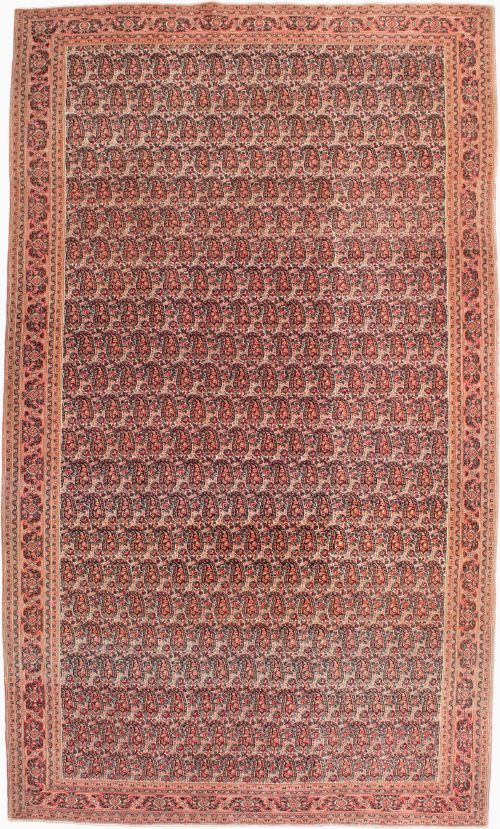


Pink Oriental Carpet
A pink oriental carpet brings warmth and colour to a room through traditional Persian and Turkish weaving.
Pink Oriental Carpet
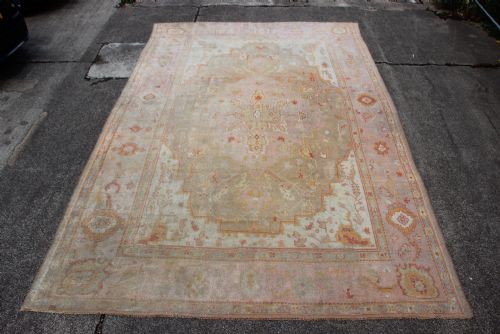
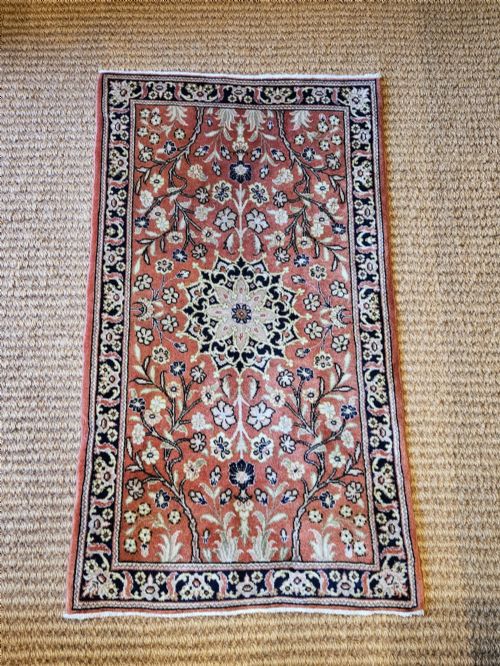
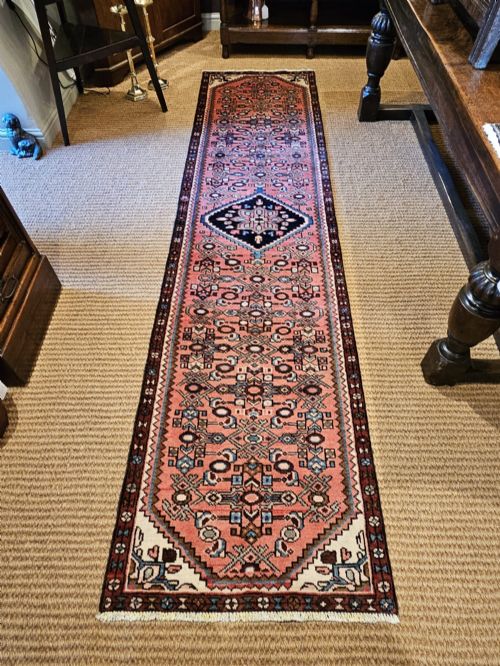
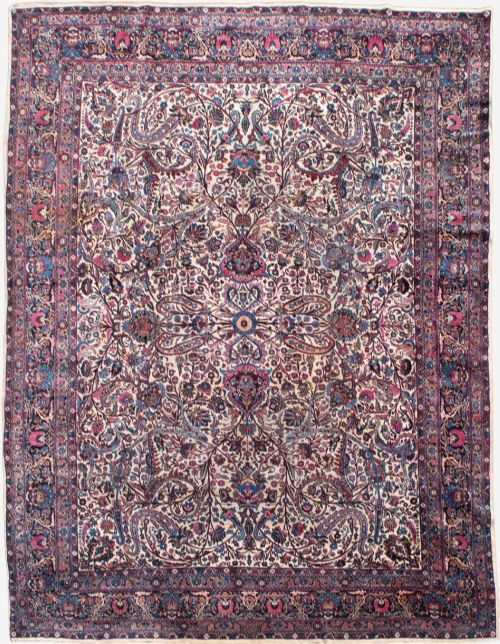
A pink oriental carpet encompasses various room-sized floor coverings, area rugs, runners, and hearth-sized pieces originating from the nineteenth and early twentieth centuries. These textiles span traditional Persian, Ottoman, Anatolian, and Caucasian styles, including regional workshops from Kirman, Ushak, Heriz, and Sarouk. Buyers encounter large room carpets as well as smaller tribal formats.
The prevalent form on this page combines a soft pink ground with traditional botanical or geometric motifs. Pieces date from the late nineteenth century through the early decades of the twentieth century, reflecting standard village and city workshops from Persia, Turkey, India, and China.
Materials and construction
These floor coverings utilise wool and cotton as primary structural and pile materials. Hand-woven techniques produce dense foundations designed for heavy foot traffic while maintaining pliable handling.
Dyes yield specific ground shades, notably the scarce pink ground seen in Turkish Oushak productions alongside various regional wool qualities.
A solitary willow tree design quietly branches across an early twentieth-century pink ground, offering shade beneath wool boughs.
Assessing quality in floor coverings
Quality rests in the precision of the hand-weaving, the integrity of the wool foundation, and the balance of the natural colour palette. Finer examples display intricate knot density and clear pictorial designs such as willow trees or prayer niches.
Wear alters the appearance significantly, distinguishing even patination from heavy structural loss. A distressed surface alters the visual weight of the pink ground without compromising the underlying fabric.
The Pink Oriental Carpet Glossary
- Oushak
- A traditional Turkish carpet style originating from the town of Usak, known for large-scale floral designs and soft colour palettes. These pieces often feature a distinctive pink or pale ground.
- Kirman
- A Persian weaving tradition from the south-central region, recognised for detailed floral compositions and fine wool pile. Lavar Kirman refers to a specific sub-style within this group.
- Runner
- A long, narrow carpet format suited for hallways, corridors, and stairs. These pieces measure significantly longer than they are wide.
- Heriz
- A style from north-western Persia characterised by bold geometric medallions and robust structural wool. Bakshiash pieces share regional characteristics from the same weaving district.
- Prayer rug
- A small format textile featuring a mihrab or niche design used historically for private devotion. Originating largely from Anatolia and Persia, these pieces focus pattern towards a specific direction.
Pink Oriental Carpet: Frequently Asked Questions
How do I clean a wool carpet?
Professional washing is recommended for antique wool textiles to preserve natural lanolin and prevent dye migration. Regular gentle vacuuming without a beater bar removes surface dust safely.
Avoid harsh chemical agents and excessive moisture, which weaken the cotton foundations and alter the pale pink tones.
Where were these rugs made?
Production centres span traditional weaving regions in Persia and Turkey, with occasional examples from India, China, and the Caucasus. Specific towns like Ushak, Kirman, Hamadan, and Sarouk generated distinct regional styles.
Village workshops utilised local wool and tribal motifs, whereas city looms produced finer, detailed botanical compositions.
What does distressed mean?
Distressed describes antique floor coverings that exhibit age-related wear, fading, or low pile across the surface. This condition results from decades of use in country houses and residential settings.
Many buyers appreciate this softened texture because it mutes bright colours and integrates smoothly into contemporary interiors.
Are these pieces hand-woven?
Every listed piece is a hand-woven textile created on traditional upright or horizontal looms using wool and cotton. Artisans tied individual knots by hand over centuries-old regional patterns.
This manual construction method ensures that no two carpets share identical knot counts or precise measurements.