
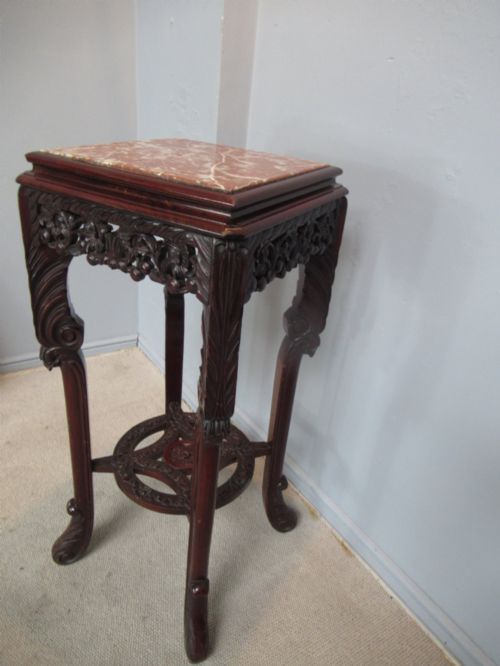
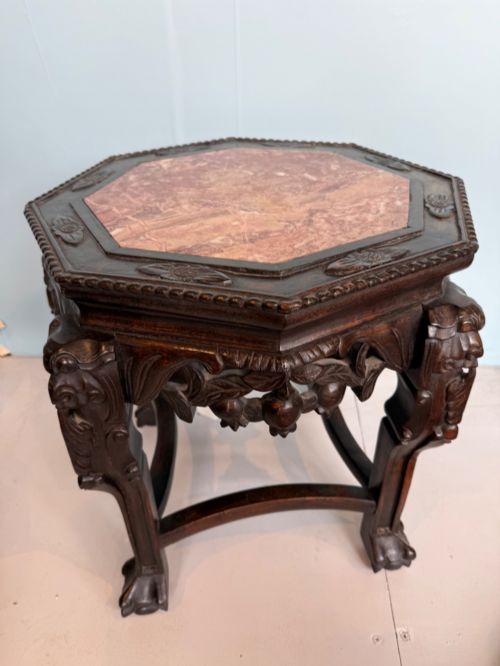
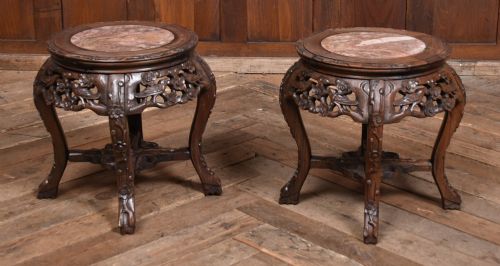
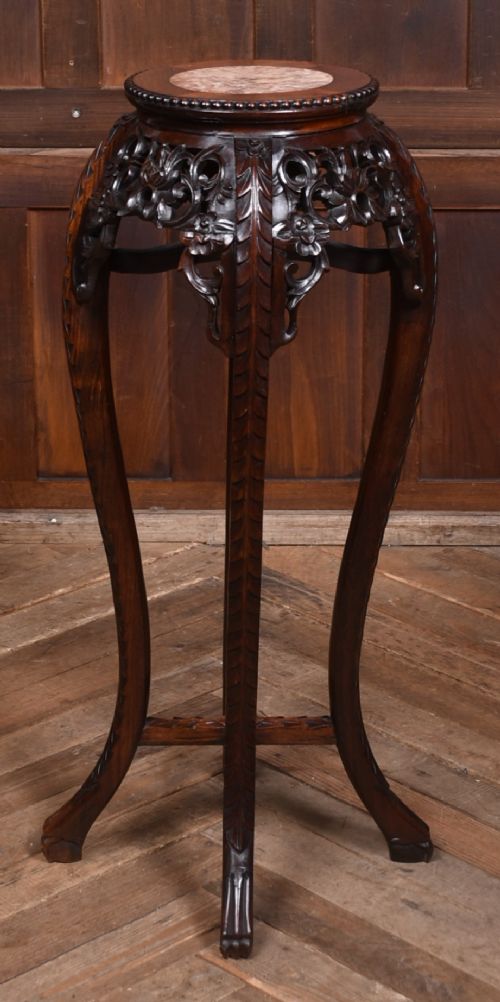


Pink Marble Plant Pedestal
A pink marble plant pedestal holds an urn, vase, or planter with the quiet presence of nineteenth-century craftsmanship.
Pink Marble Plant Pedestal
A pink marble plant pedestal serves to elevate decorative jardinieres and heavy vases within a room. These pieces range from compact occasional tables to substantial urn stands designed for display.
The selections encountered on this page predominantly originate from nineteenth-century Chinese export workshops, alongside Victorian English interpretations. Makers utilised exotic hardwoods to frame inset rouge and pink marble surfaces.
Buyers select these stands to introduce contrasting stone and carved timber into a domestic interior. Their forms function equally well as lamp tables or independent sculptural objects.
Materials and construction methods
The primary construction relies upon dense timbers such as rosewood and ebonised hardwood, joined to support heavy stone inserts. Artisans carved intricate floral and geometric motifs directly into the wooden frames.
Rouge and pink marble slabs were precisely cut and inset into the wooden tops to provide a smooth, durable surface. This combination of carved wood and polished stone typifies the export standard of the period.
Object forms span plant stands, jardiniere supports, urn stands, and occasional side tables designed with inset stone surfaces.
Assessing quality and craftsmanship
The depth and clarity of the wood carving distinguish finer examples from simpler production. Crisp execution in floral or pierced motifs indicates skilled workshop output.
The integration of the marble insert into the wooden frame reveals the maker's precision. A well-fitted stone with consistent pink or rouge veining elevates the overall balance of the stand.
The Pink Marble Plant Pedestal Glossary
- Rouge marble
- A deep red or pink variety of limestone with contrasting veining. It provides a durable and colourful inset surface for nineteenth-century stands.
- Jardiniere stand
- A tall piece of furniture designed specifically to support a heavy plant container. These stands protect interior floors and elevate greenery to eye level.
- Ebonised hardwood
- Timber treated with a chemical or pigment finish to resemble ebony. This technique was favoured by Victorian makers seeking a dark, uniform surface.
- Chinese export
- Goods manufactured in China specifically for Western markets during the nineteenth century. These items combined traditional regional carving with European furniture forms.
- Meiji period
- The era in Japanese history spanning from eighteen sixty-eight to nineteen twelve. Pieces from this time often feature meticulous woodworking and refined decorative detailing.
Pink Marble Plant Pedestal: Frequently Asked Questions
What is a pink marble plant pedestal used for?
These pieces function primarily as elevated platforms for heavy ceramic planters, vases, and decorative urns. They lift foliage and ornament away from the floor to create distinct focal points within a room.
Beyond botanical display, buyers frequently utilise them as occasional tables for lamps or small sculptures. Their sturdy marble tops safely accommodate items that require a stable, heat-resistant surface.
Are these pedestals strong enough for heavy plants?
The dense hardwoods and inset stone construction provide exceptional load-bearing strength. Nineteenth-century craftsmen built these stands specifically to support heavy ceramic jardinieres filled with soil.
While robust, it remains sensible to centre the weight of any large vessel evenly on the marble top. The sturdy frame ensures stability under significant vertical pressure.
How do I distinguish Chinese export stands from Victorian pieces?
Chinese export stands typically feature dense tropical hardwoods like rosewood alongside intricate, deep-relief floral carvings. Their joinery and ornamental motifs reflect traditional Qing Dynasty design aesthetics.
Victorian English examples often utilise ebonised timber or local hardwoods styled with European decorative vernacular. Examining the wood species and carving style usually clarifies the origin.