





Pink Glazed Statuette
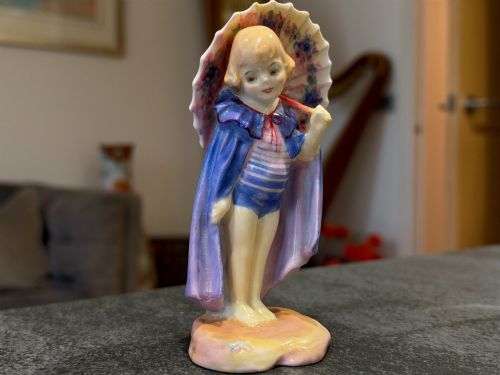
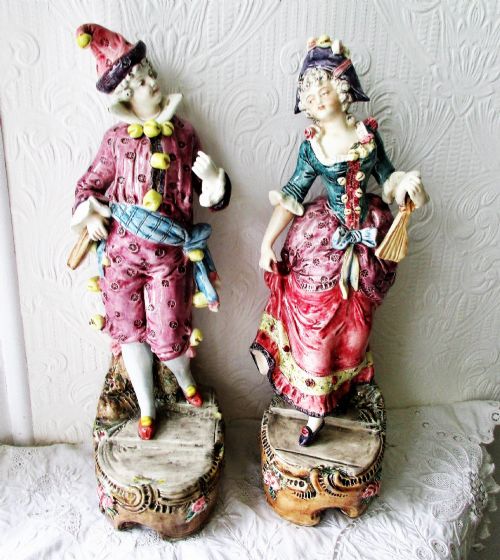
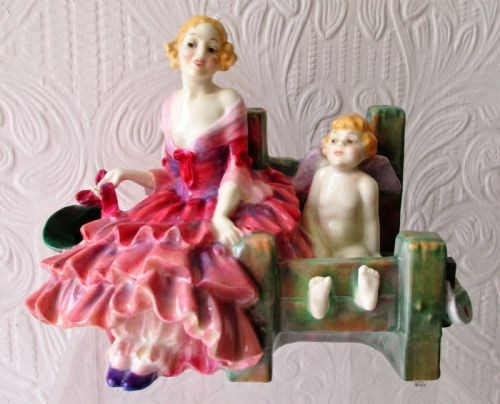
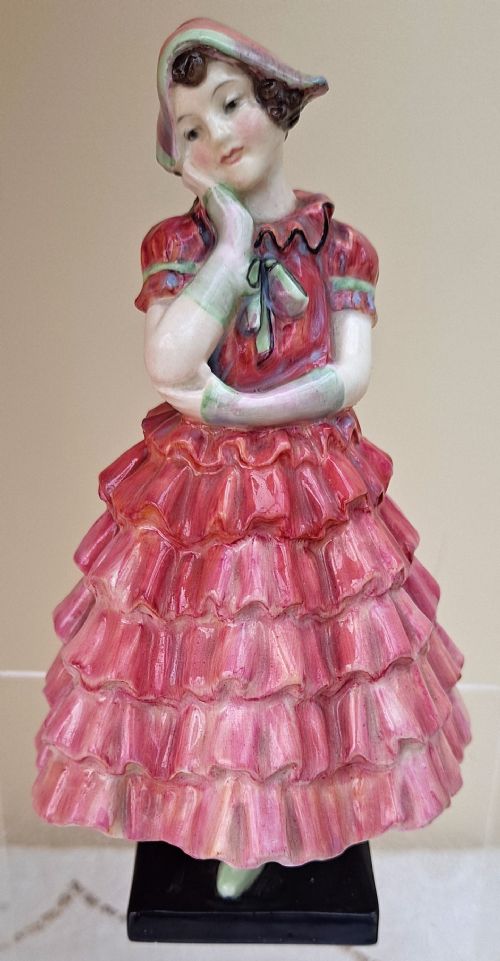
These pink glazed statuette examples bring sculptural charm and character to a room, offering finely modelled figures shaped across the Victorian and Art Deco eras.
Pink Glazed Statuette
When you search for a pink glazed statuette, you are looking at decorative porcelain and earthenware figures shaped into human subjects, including ladies, children, and dancers. These sculptural pieces take the form of individual figurines and paired ornaments designed to display on mantelpieces, tables, and cabinets.
The versions you are most likely to meet on this page hail from the Victorian period and the nineteen-thirties, reflecting distinct shifts in taste and domestic decoration. Victorian examples lean towards ornate revival styles, whilst pieces from nineteen thirty favour sleek Art Deco lines and expressive character studies.
How they were made
Potters shaped these statuettes from fine materials including bone china, porcelain, earthenware, and parian porcelain. Artisans applied coloured ceramic glazes and enamel highlights to accentuate the sculptural details and garments of each figure.
Pink Glazed Statuette Retail Price Guide 2026
Typical asking prices for pink glazed statuette among the pieces listed under this phrase on Sellingantiques today, from the lower quarter to the upper quarter. They describe what is for sale here now, not the wider market.
Listings feature porcelain and earthenware materials alongside parian bodies, spanning the Victorian period and nineteen thirty.
What varies in quality
The finesse of the modelling marks the difference between standard production and superior craftsmanship, evident in the crispness of hands, facial expressions, and clothing folds. Softer details and blurred edges often indicate secondary moulds or heavier glazing that obscures the underlying work.
The application of the pink glaze and enamel decoration also dictates worth, as precise hand-painted touches command attention compared to uniform flat dipping. Artisans who maintained tight control over their kilns achieved even surfaces and vibrant colours that endure without dulling.
Royal Doulton·Royal Dux·Royal Worcester·Copeland
The Pink Glazed Statuette Glossary
- Bone China
- A type of soft-paste porcelain incorporating bone ash, known for its high strength, chip resistance, and milky translucency. This body allowed makers to form delicate limbs and thin garments.
- Parian Porcelain
- A biscuit porcelain named after Parian marble due to its smooth, fine-grained texture resembling carved stone. Copeland utilised this material to produce unglazed or partially tinted sculptural figures.
- Majolica
- A type of earthenware coated with an opaque tin glaze and painted with metallic oxide colours. Royal Worcester applied this technique to produce brightly decorated nineteenth-century figures.
- Earthenware
- A porous pottery body fired at lower temperatures than porcelain, requiring a vitreous glaze to ensure impermeability. French makers shaped this material into decorative carnival figures.
- Bisque
- Unglazed porcelain fired once to create a matte, porous finish with a texture like marble. Makers often combined bisque components with glossy glazed elements to contrast surfaces.
Pink Glazed Statuette: Frequently Asked Questions
What periods do these statuettes represent?
These figures predominantly date from the Victorian era and the nineteen-thirties, spanning both ornate nineteenth-century revival aesthetics and streamlined Art Deco forms.
The listings bridge the gap between mid-Victorian decorative subjects and interwar porcelain character studies.
How were these figures displayed originally?
Owners placed these decorative statuettes on drawing room mantelpieces, side tables, and enclosed display cabinets where visitors could admire their modelling and colour.
Pairs were often arranged symmetrically on either side of a fireplace or mirror to balance formal interior schemes.
How do I identify Art Deco examples?
Art Deco statuettes feature stylized human forms, such as nude female figures and dancers, with simplified geometric lines and clean contours characteristic of nineteen-thirty design.
These pieces typically showcase smoother glazes and modern subject matter compared to ornate nineteenth-century counterparts.
What materials make up these figurines?
The pieces on this page utilise a variety of ceramic bodies including bone china, standard porcelain, earthenware, and parian porcelain.
Surfaces are finished with ceramic glazes, enamels, or left in a matte bisque state depending on the manufacturer and the desired aesthetic.