




.jpg)
Pink Dress Oil Portrait
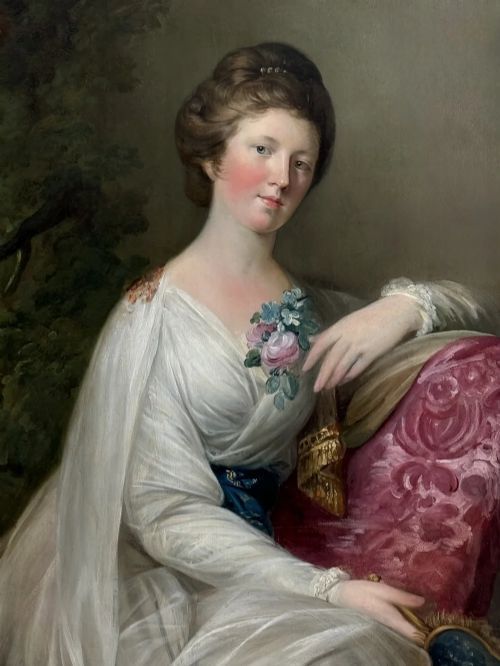
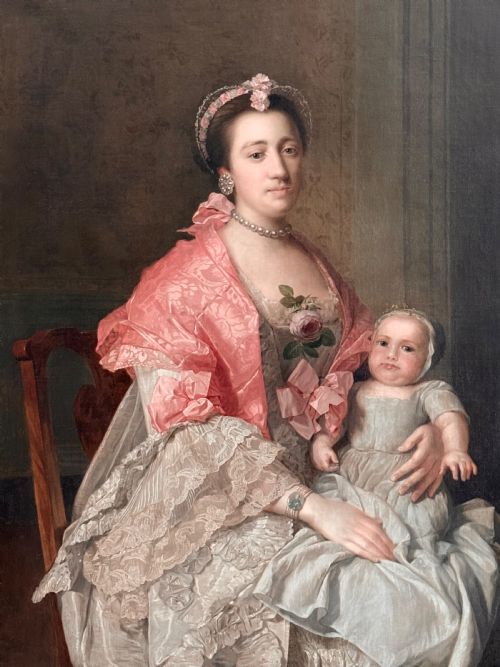
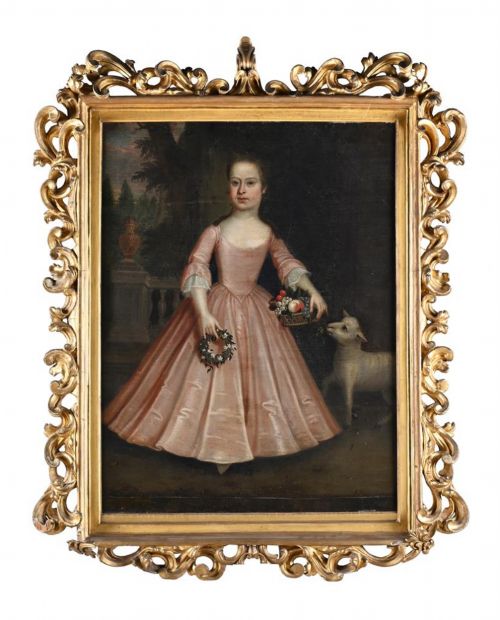
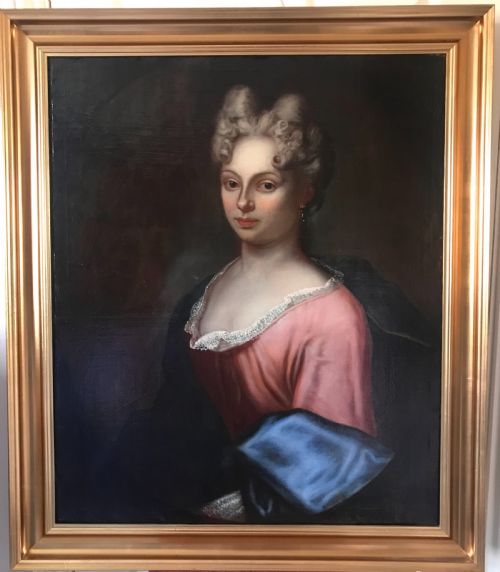
A pink dress oil portrait captures the shifting tones of fashion and portraiture across centuries, offering buyers a window into personal history and classical painting traditions.
Pink Dress Oil Portrait
When searching for a pink dress oil portrait, collectors encounter fine art spanning from the seventeenth century through to the early twentieth century. These works depict subjects ranging from aristocratic ladies in silk gowns to children and modern figures, capturing garments rendered in various shades of pink.
The pieces appearing on this page predominantly take the form of oil paintings on canvas, frequently housed in period frames of wood or gilded wood. Origins stretch from English country houses and continental studios to naive school representations and formal portrait commissions.
Subjects include named sitters such as Henrietta Fordyce, Elizabeth Curteis, and Sarah Churchill, alongside anonymous sitters styled as classical figures or observed in everyday moments. Styles encompass Georgian, Victorian, Baroque, Art Deco, and British Impressionism.
How They Were Made
Painters relied on oil paint applied to stretched canvas, building up layers of pigment to capture the texture of fabrics like silk, satin, and wool. Pigments yielded diverse tones of pink, from deep mantles to delicate dressing gowns.
Canvases were mounted on wooden stretchers and housed in carved and gilded wooden frames finished with gold leaf. These frames often match the period of the painting, providing structural support and aesthetic completion to the artwork.
Materials recorded across the archive include oil paint, canvas, giltwood, and wood, spanning seventeenth to twentieth-century British and European schools.
What Varies in Quality
The distinction between works rests upon the skill of the brushwork, the accuracy of facial expression and anatomy, and the handling of fabric folds and light. Master works from established circles or named hands demonstrate sophisticated depth in the depiction of textiles.
Preservation of the original canvas and paint layer dictates desirability, alongside the presence of period-appropriate carved and gilded wood frames. Works retaining their original stretcher bars and unlined canvas sit at the upper end of the range.
George Willison·Sir Allan Ramsay·George Knapton·Robert Byng·Alfred Seifert·Francis Alleyne·Nathaniel Hone·Sir Peter Lely·Harry John Pearson·Franz Xaver Winterhalter·Michael Dahl·John Theodore Heins·Henry Pickering·Gwen John·Sir Godfrey Kneller
The Pink Dress Oil Portrait Glossary
- Oil on canvas
- A painting technique using pigments bound in a drying oil medium applied to a woven fabric support. This method allowed artists to achieve rich colour saturation and subtle blending.
- Giltwood
- Wood carved and coated with gold leaf or gold paint, commonly used for traditional picture frames. It provides a reflective, ornate border that enhances the artwork within.
- Georgian
- A stylistic period spanning the reigns of the British monarchs George I through George IV, characterised by classical restraint and elegance in portraiture. Works from this era often feature structured compositions and detailed costume rendering.
- Circle of
- A designation indicating an artist worked closely within the sphere or direct influence of a master, rather than being the master themselves. These pieces reflect the dominant techniques and aesthetic of a celebrated painter's workshop.
- Naive school
- Art created by self-taught or informally trained painters who prioritized direct expression over formal academic rules. These portraits are distinguished by charming perspective and unpretentious characterisation.
Pink Dress Oil Portrait: Frequently Asked Questions
How do I date a pink dress portrait?
Dating relies primarily on the cut and style of the pink dress depicted, alongside the hairstyle and framing materials. Portrait conventions and canvas preparation methods also offer clues to the decade of creation.
Comparison with documented works by the same artist or school helps narrow the timeline further. Written inscriptions on the reverse of the canvas often record the sitter's identity and date.
Who are the typical subjects of these paintings?
Subjects range from aristocracy and gentry depicted in formal attire to children, literary figures, and women in domestic settings. Many sitters are identified by name through archival records or inscriptions on the canvas.
Others represent anonymous individuals styled as classical goddesses or captured in candid moments of daily life. Each portrait preserves the likeness and social standing of the individual at a specific moment in time.
How should I care for an oil on canvas painting?
Protect the artwork from direct sunlight, extreme temperature fluctuations, and high humidity to prevent canvas warping and paint cracking. Dust the surface and frame gently with a soft, dry brush without applying pressure.
Avoid using liquid cleaners or touching the painted surface directly with bare hands. Professional conservation assessments should be sought if structural repairs to the canvas or frame become necessary.
What is the difference between circle of and manner of?
Circle of indicates an artist who worked closely in the direct environment or workshop of a master painter. These works share the technical proficiency and stylistic traits of the named master.
Manner of denotes a later work executed in the general style of an artist without a direct personal connection. Such pieces reflect the aesthetic influence of a well-known hand from a subsequent generation.