
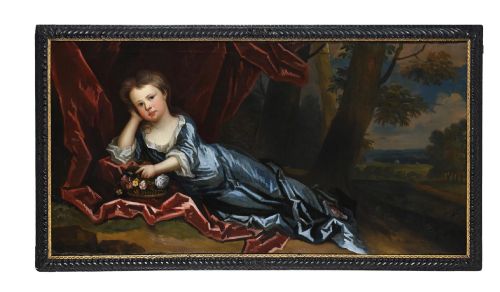
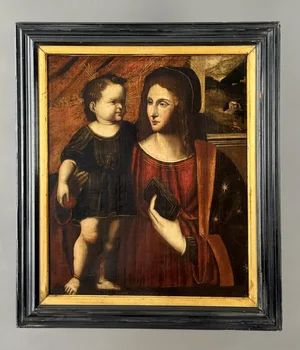

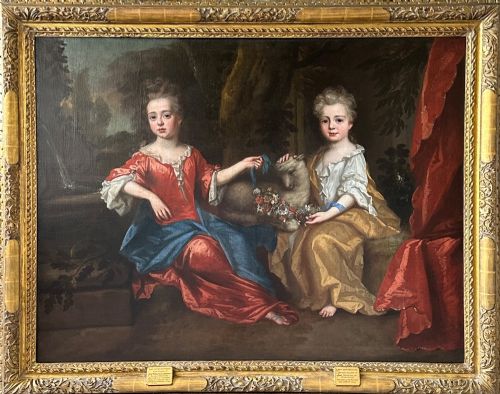
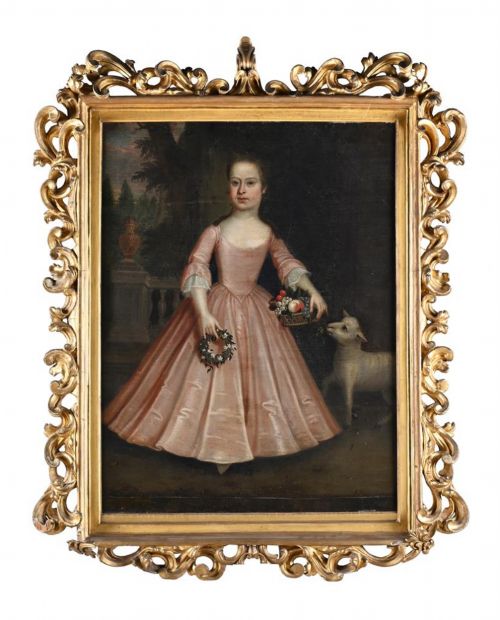


Old Master Style Child Portrait
An old master style child portrait brings the weight and stillness of centuries past into a room through oil and canvas.
Old Master Style Child Portrait
An old master style child portrait captures youth through the lens of historical painting traditions, ranging from the sixteenth century to the eighteenth century. These works frequently depict subjects such as young boys, royal children, and holy figures including the Virgin and Child or the Holy Family.
The pieces appearing here include direct portraits like the depiction of King William III as a boy alongside religious compositions executed after masters like Raphael, Correggio, and Murillo. Such works bridge formal portraiture and devotional art, often carrying the influence of Italian Renaissance, Baroque, and Georgian aesthetics.
Buyers encounter canvases originating from various European schools, including Northern European and Italian traditions. These paintings offer a direct connection to historical portraiture conventions, presenting youthful subjects with the solemnity typical of earlier centuries.
Materials and Techniques
These works rely primarily on oil on canvas, providing a rich medium that allows for deep shadow and gradual tonal shifts. Supporting structures commonly involve wood frames finished with gesso and highlighted with gold leaf or giltwood.
The application of paint reflects historic studio practices, where followers and circle painters worked after established compositions or directly from life. Pigments were layered over canvas to build depth, characteristic of seventeenth century and eighteenth century painting techniques.
Several portraits feature small dogs keeping a watchful guard beside their young human companions through the centuries.
Distinctions in Quality
Quality rests in the handling of facial expression and anatomical proportion, where master hands achieve a lifelike presence in the subject. Lesser works can appear stiff or formulaic in their adherence to period styles.
The integrity of the canvas and the preservation of the original paint layers dictate the visual impact of the piece. Fine works retain their tonal depth without excessive modern intervention, while frames of period giltwood complement the painting above mere decorative housing.
Charles D’Agar·James Maubert·Francesco Solimena·Robert Byng
The Old Master Style Child Portrait Glossary
- Oil on canvas
- A painting medium where pigments are suspended in drying oils and applied to a woven fabric support. This combination allows for subtle blending and rich colour depth.
- Giltwood
- Wood carved and covered with a thin layer of gold leaf or gold paint. It frequently frames historical oil paintings to enhance their presence.
- Baroque
- A European artistic style spanning the seventeenth and eighteenth centuries characterised by drama, deep shadow, and rich ornamentation. It influences many portrait and religious compositions of the era.
- Gesso
- A paint mixture consisting of a neutral binder mixed with chalk, gypsum, or pigment. It prepares wooden panels and frames before gilding or painting.
- Circle of
- A term used in art history to indicate an artist working closely alongside a master, absorbing their style and technique. These works share the aesthetic values of the principal hand.
Old Master Style Child Portrait: Frequently Asked Questions
What defines an old master style child portrait?
These works are historical oil paintings depicting children or religious youths, executed in the manner of sixteenth to eighteenth century European traditions. They reflect the formal posture and serious expressions common in portraits of past eras.
Subjects range from named historical figures and young aristocrats to sacred figures after major painters like Raphael and Murillo.
How should I hang an oil painting?
Position the canvas away from direct sunlight and steady heat sources to protect both the oil pigments and the wooden stretcher frames. Stable room temperatures prevent the canvas and gesso from cracking over time.
Ensure the wall fixings can support the combined weight of the painting and its substantial giltwood or wooden frame.
How do I distinguish a period frame?
Period frames often utilise carved wood finished with gesso and gold leaf, showing subtle wear consistent with age. The construction details at the corners and the patina of the gilding reveal its historical manufacture.
Matching a frame to the era of the canvas enhances the visual authenticity of the artwork.
What does after a master mean?
This attribution indicates that a later artist or follower painted the work by studying or copying an established composition by a prominent painter. Such pieces were common practice in historical workshops for training and reproduction.
These paintings capture the artistic style and iconography of the original master while bearing the hand of a different creator.