



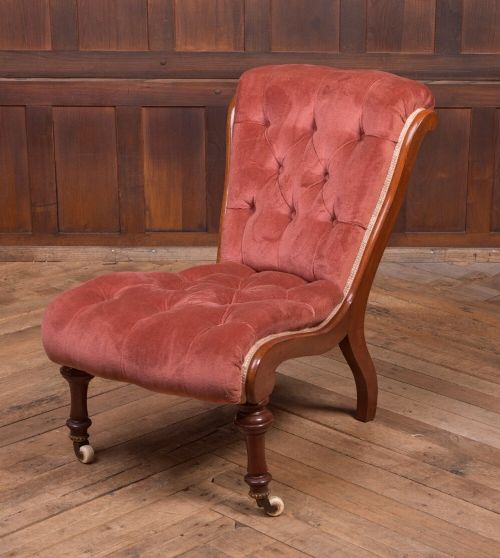


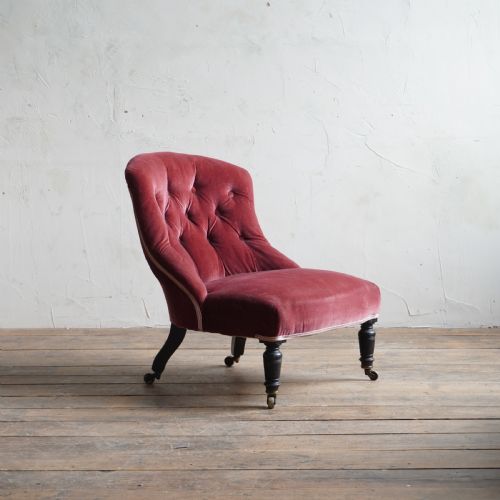


Pink Buttoned Slipper Chair
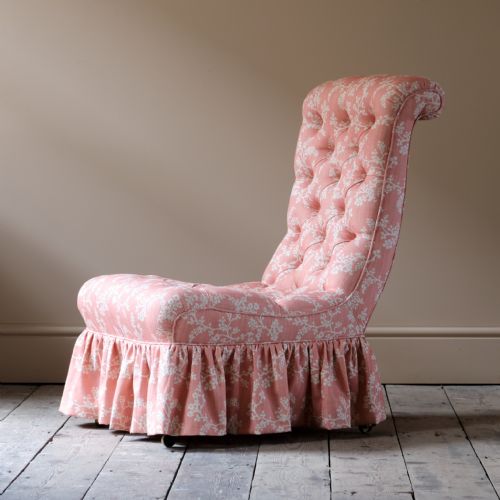
A pink buttoned slipper chair brings low, compact seating and Victorian character to a bedroom.
Pink Buttoned Slipper Chair
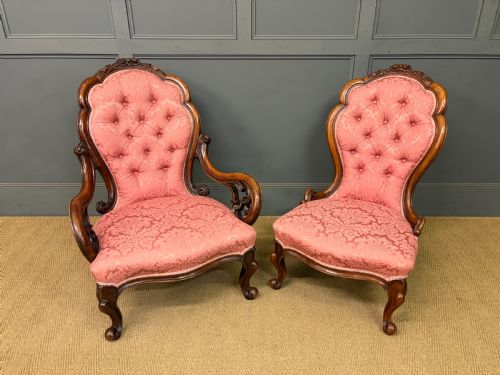
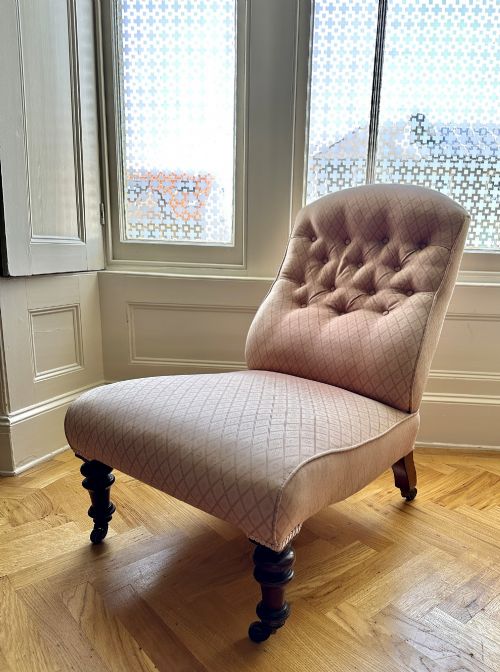
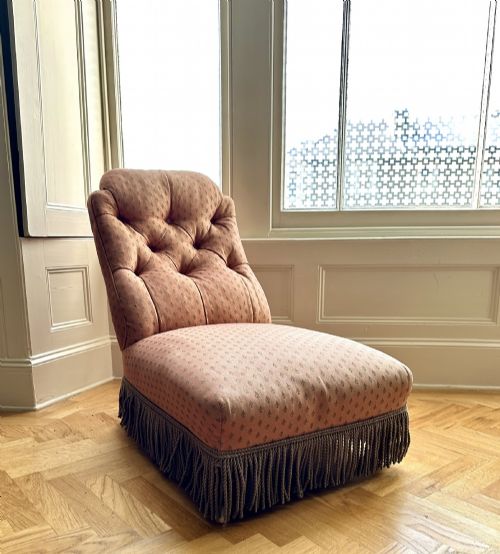
A pink buttoned slipper chair is a low-slung seating form designed historically for dressing rooms and bedrooms, appearing across the nineteenth century and the Edwardian period in forms such as nursing chairs, dressing table chairs, and occasional chairs. These pieces sit close to the floor to allow comfortable dressing and feature characteristic buttoned back upholstery.
The selections available here showcase walnut and mahogany frames, often supported on timber legs with brass castors. Forms range from spoonback and balloon back silhouettes to low armless profiles.
Makers such as Gillows and Holland and Sons contributed to this tradition, producing refined bedroom seating that survives in Victorian and late Victorian styles.
Materials and construction
Frames are built predominantly from solid walnut and mahogany timbers, providing robust structural skeletons for upholstered seating. Wood carvers shaped these timbers into curved balloon backs and spoonbacks, while joiners secured the low frames.
Upholstery relies on traditional textile fabrics and velvet covering buttoned padding. Brass castors are frequently fitted to the feet of these chairs to allow smooth mobility across carpets and wooden floors.
The listings here span the nineteenth century, featuring Victorian and Edwardian periods with walnut, mahogany, and brass materials.
Judging quality in these chairs
The fineness of the timber framing and the precision of the wood carving distinguish exceptional examples from standard production. Elaborate shaping on walnut and mahogany frames indicates higher workshop standards.
The execution of the buttoned upholstery and the integrity of the underlying textile work define the refinement of the piece. Original upholstery and substantial timber frames command greater appreciation among collectors.
Gillows·Holland and Sons
The Pink Buttoned Slipper Chair Glossary
- Button back
- An upholstery technique where depressions are formed in the padding by pulling thread tightly through the textile and securing it with buttons. This creates a distinctive quilted pattern across the backrest.
- Nursing chair
- A low-seated Victorian chair originally designed to allow a mother to feed an infant comfortably. These pieces typically feature an armless silhouette to accommodate bulky garments.
- Spoonback
- A chair back shaped in the concave contour of a spoon to support the human spine. This style is frequently encountered on mid-nineteenth-century upholstered seating.
- Castor
- A small wheel mounted on a swivel attached to the foot of a chair leg. Brass examples are common on nineteenth-century bedroom seating for ease of movement.
Pink Buttoned Slipper Chair: Frequently Asked Questions
What is a pink buttoned slipper chair used for?
These low chairs were traditionally placed in nineteenth-century bedrooms and dressing rooms for sitting down to put on shoes or garments. Their compact proportions and low seats suited private domestic spaces.
Today they function effectively as bedroom accent chairs or occasional seating in living spaces where height should be kept minimal.
Are these chairs comfortable for daily sitting?
The low seat and padded buttoned back provide a supportive, upright seating posture designed for brief periods of resting or dressing. They lack the deep recline of modern armchairs.
Their compact scale makes them ideal for corners or vanity tables rather than extended lounging.
What wood was used for these frames?
Walnut and mahogany are the primary timber materials found in the framing of these nineteenth-century seats. Woodturners and carvers utilised these hardwoods for their strength and ability to hold intricate shapes.
Timber supports are occasionally paired with brass castors and iron framework components hidden beneath the upholstery.