


Vintage Damask Fireside Chair
A vintage damask fireside chair brings period presence and heavy textile warmth to a room, offering deep seats built for comfort by the hearth.
Vintage Damask Fireside Chair
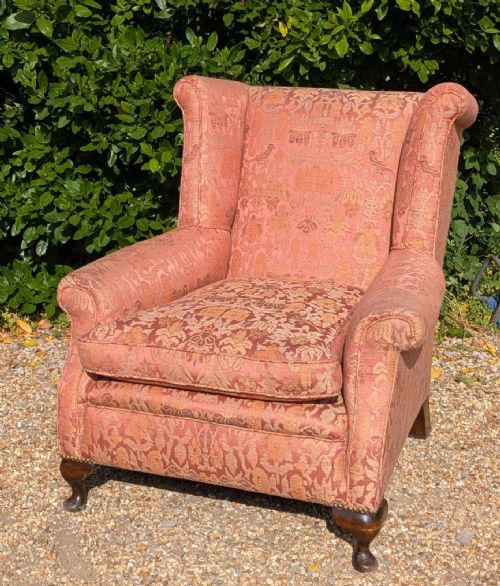
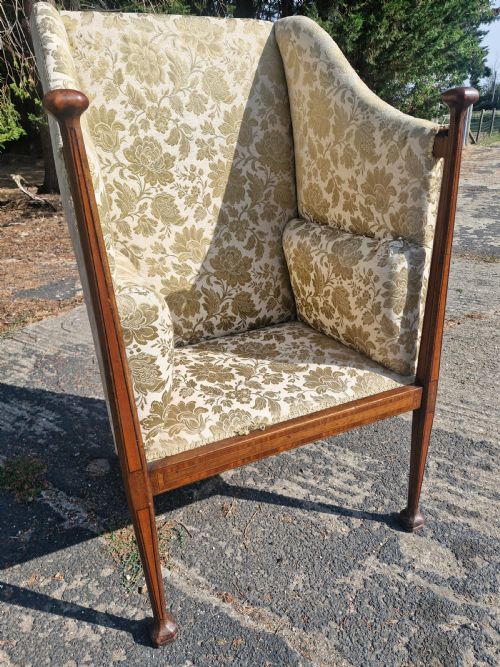
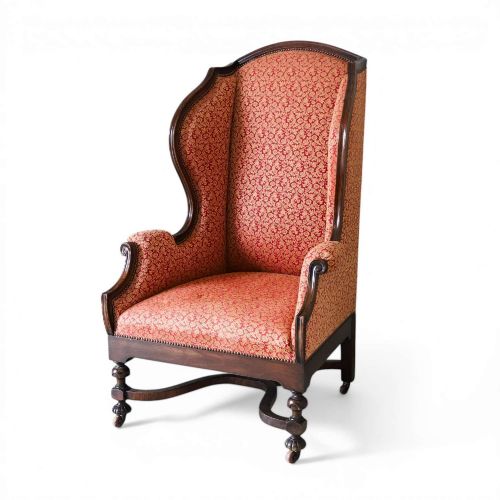
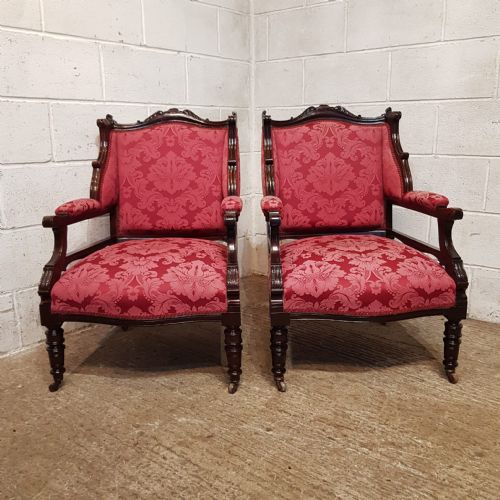
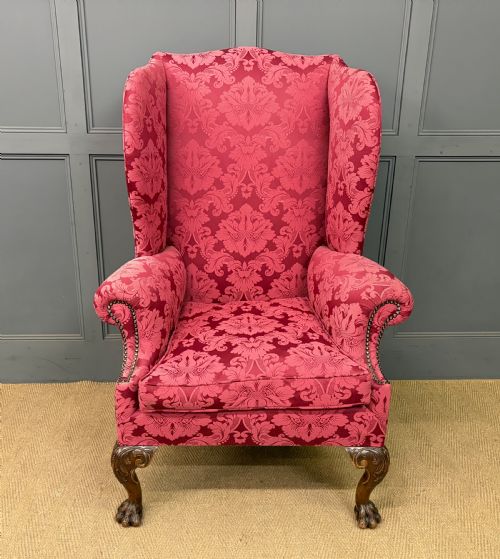
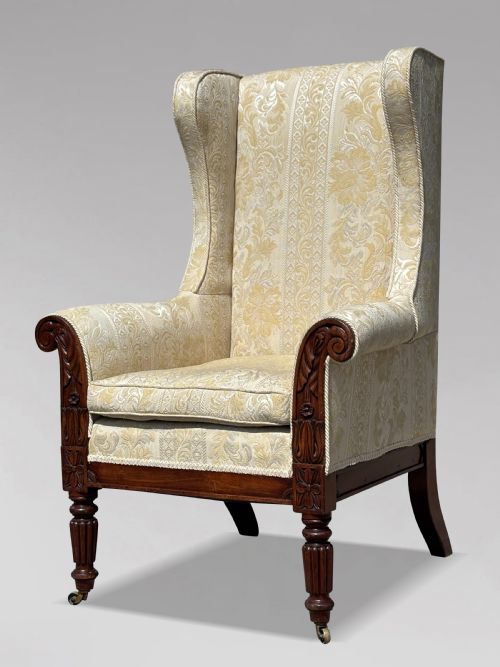
A vintage damask fireside chair unites substantial wood frames with patterned woven textiles, appearing across styles from Victorian and Edwardian to Art Nouveau and revival forms. Buyers seeking a vintage damask fireside chair encounter deep wing backs, low nursing seats, and library armchairs designed to block draughts and support long hours by the fire.
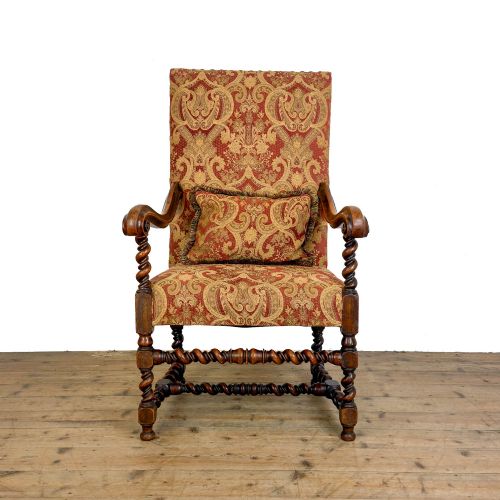
The selection ranges from nineteenth-century walnut and mahogany structures to early twentieth-century examples upholstered in rich fabrics. Makers utilised exposed polished hardwood frames alongside fully upholstered barrel backs and spoon backs to suit varying domestic interiors.
Materials and construction methods
Frames rely primarily on solid mahogany, walnut, oak, and other hardwoods, joined with traditional framing techniques to support heavy daily use. Turnings, brass castors, and inlaid details frequently finish the structural woodwork.
Upholstery relies on fabric and damask textile over supportive stuffing, with feather filling appearing in select twentieth-century examples to ensure resilience and comfort.
Feather fillings in 1930s armchairs ensure that every afternoon nap comes with a slight, comforting sigh from the cushions.
Distinctions in quality and execution
Quality rests in the precision of the timber framing, the integrity of the joinery, and the weight and weave of the textile covering. Superior pieces display carefully carved woodwork, robust springing, and well-balanced proportions that maintain their shape over decades.
The distinction between standard commercial seating and finer examples lies in the selection of cabinet timbers, such as figured walnut or dense mahogany, paired with meticulous hand-finishing on the frame and upholstery.
Harrods London
The Vintage Damask Fireside Chair Glossary
- Damask
- A reversible figured fabric woven on a jacquard loom, traditionally featuring floral or geometric patterns that catch the light through contrasting matte and glossy threads.
- Wingback
- An armchair featuring protective side panels designed to shield the sitter from draughts and retain heat from an open fireplace.
- Nursing chair
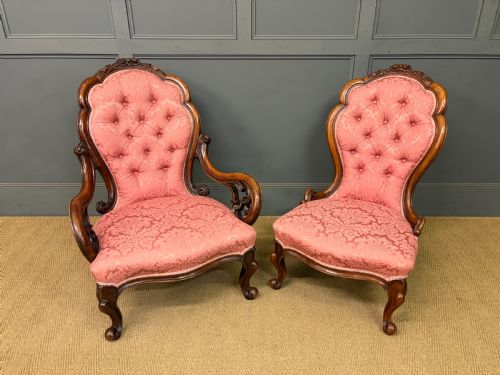
- A low-seated Victorian chair originally designed for nurseries, allowing comfortable access to infants near a hearth.
- Spoon back
- An upholstered chair back shaped in a concave oval resembling the bowl of a spoon, characteristic of mid-nineteenth-century seating.
- Barrel back
- A semicircular chair design where the back and arms form a continuous curved enclosure around the sitter.
Vintage Damask Fireside Chair: Frequently Asked Questions
How do I identify a Victorian fireside chair?
Victorian fireside chairs often feature button tufting, heavy walnut or mahogany frames, and distinct Victorian or revival styling such as spoon backs or nursing heights.
Examining the turnings, timber density, and upholstery tacking helps distinguish mid-to-late nineteenth-century work from later twentieth-century reproductions.
What is a wingback armchair used for?
Wingback chairs were historically positioned near fireplaces to trap heat within the enclosed wings and protect the occupant from cold draughts.
Today they serve as statement reading chairs that anchor a room with traditional height and proportion.
How do I care for damask upholstery?
Damask textile benefits from regular, gentle vacuuming with a soft brush attachment to remove dust from the woven recesses without snagging the threads.
Professional cleaning is recommended for heavier soil to preserve the sheen and structure of the patterned weave.
What wood types are common in these chairs?
Mahogany and walnut appear frequently across nineteenth-century and Edwardian frames, valued for their strength and rich grain patterns. Oak and general hardwoods also support simpler or regional chair forms.
Exposed timber is typically polished or oiled to highlight the natural grain of the wood.