


Mid Victorian Occasional Chair
A mid victorian occasional chair is a compact, decorative seat built for the parlour or salon, prized for its elegant timber frame and graceful silhouette.
Mid Victorian Occasional Chair
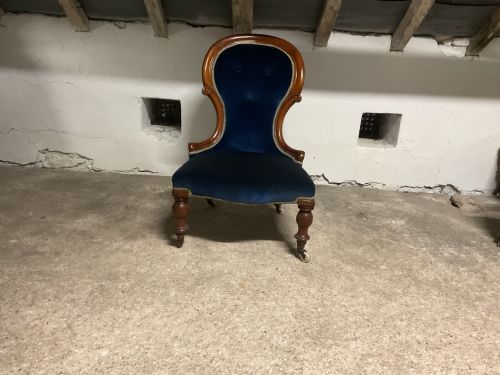
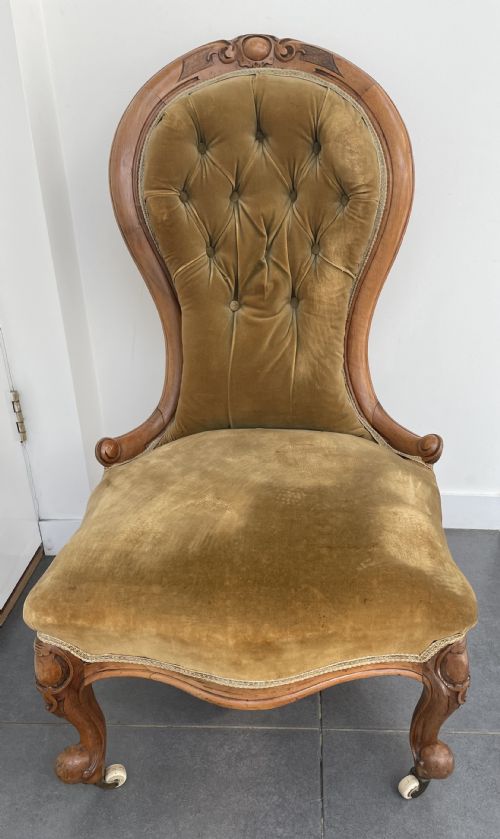
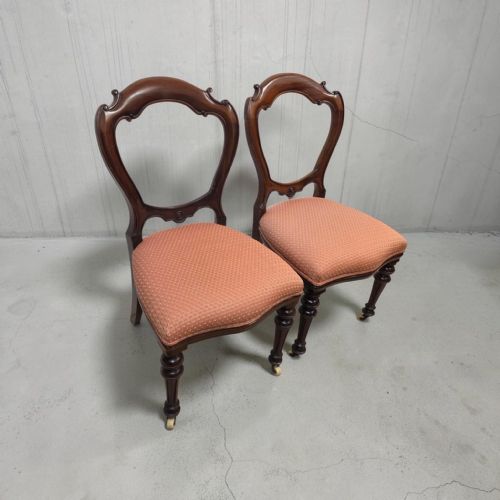
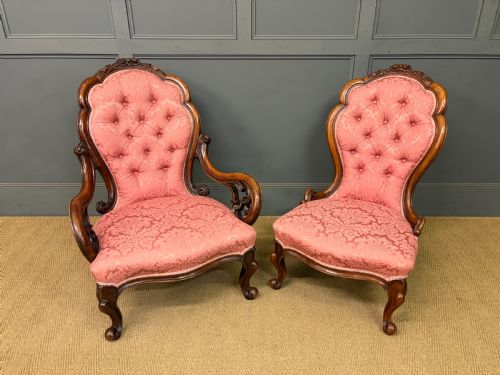
When you search for a mid victorian occasional chair, you encounter a variety of intimate seating designed during the nineteenth century. These forms include side chairs, nursing chairs, salon chairs, and slipper chairs, often featuring balloon backs or upholstered seats.
The pieces listed on this page span the Victorian period, with dates centred around 1850, 1860, and 1870. Walnut and mahogany predominate among the timber frames, alongside examples in rosewood and papier-mache.
You will find single chairs as well as matched pairs and sets of two. Their compact proportions make them suitable as accent chairs in modern interiors while retaining their traditional character.
How they were made
Cabinet makers utilised dense hardwoods such as mahogany and walnut, bending and carving the timber to achieve the characteristic Victorian curves. Rosewood and papier-mache also appear, demonstrating the diverse techniques employed in nineteenth-century workshops.
Upholstery forms an integral part of the construction, utilising materials like velvet and various fabrics supported by brass elements or ceramic castors where appropriate. Carved details adorn the framework, reflecting the Victorian Rococo Revival style seen across the period.
Listings for a mid victorian occasional chair feature walnut, mahogany, rosewood, and papier-mache, spanning the 1850s to the 1870s.
What varies in quality
The refinement of the timber carving distinguishes finer examples from simpler production. Crisp lines on walnut or mahogany frames and deeply moulded balloon backs indicate skilled handwork by the maker.
The integrity of the frame construction and the quality of the timber grain determine the durability and visual appeal. Richly figured rosewood and well-preserved papier-mache demand greater skill in handling, elevating the standing of the piece.
The Mid Victorian Occasional Chair Glossary
- Balloon back
- A chair back shaped in a continuous curve resembling a balloon, characteristic of Victorian seating design.
- Occasional chair
- A movable, decorative seat intended for intermittent use in a reception room or parlour.
- Nursing chair
- A low-seated chair originally designed for comfort while nursing, often upholstered in velvet or fabric.
- Papier-mache
- A composite material made of paper pulp and binder, moulded and lacquered to form rigid chair bodies.
Mid Victorian Occasional Chair: Frequently Asked Questions
What is an occasional chair?
An occasional chair is a light, easily movable seat designed for use when extra seating is needed in a room.
These pieces function well in bedrooms or salons, offering both decorative charm and practical utility.
How do I date a Victorian chair?
Dating relies on timber choices, stylistic shifts, and construction methods recorded across the period. Walnut and rosewood gained prominence alongside mahogany as the nineteenth century progressed.
Details such as carved Victorian Rococo Revival motifs help narrow the decade of manufacture between 1850 and 1870.
Were these chairs used at dining tables?
Most pieces listed under this search are salon, nursing, or occasional chairs rather than primary dining seats. Their lower heights and decorative frames suited sitting in parlours and bedrooms.
Pair and set configurations indicate they were also arranged around sitting rooms for social gatherings.
What woods were used?
Cabinet makers predominantly selected mahogany and walnut for their strength and rich grain. Rosewood and papier-mache also feature in select pieces.
These materials were often carved or polished to highlight the natural qualities of the medium.