

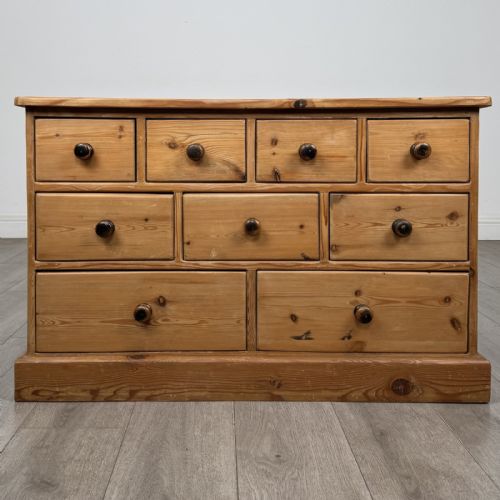
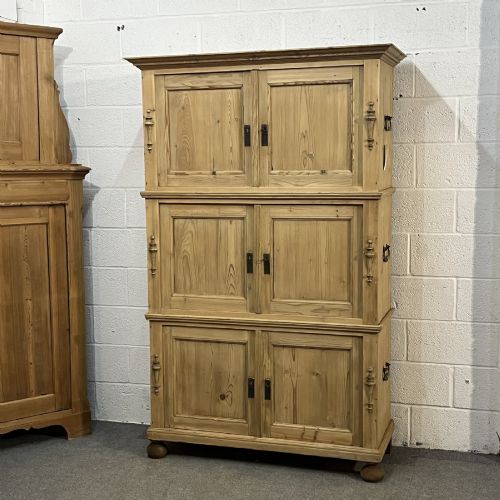
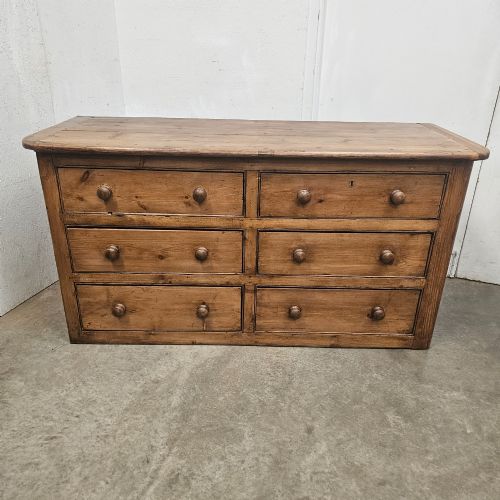
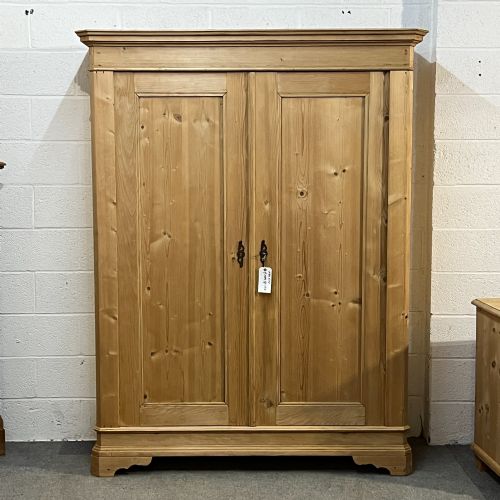
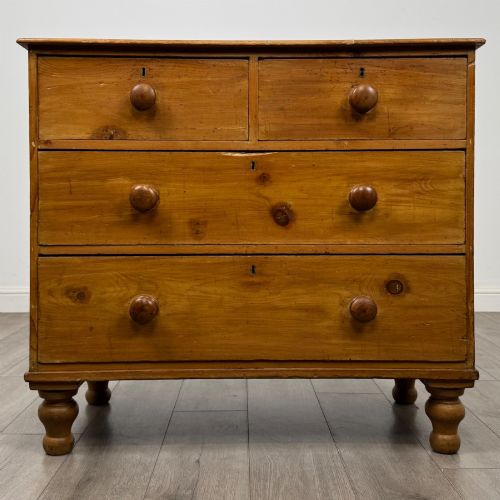
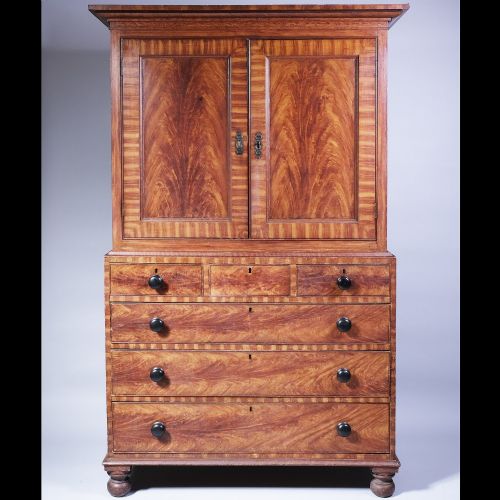
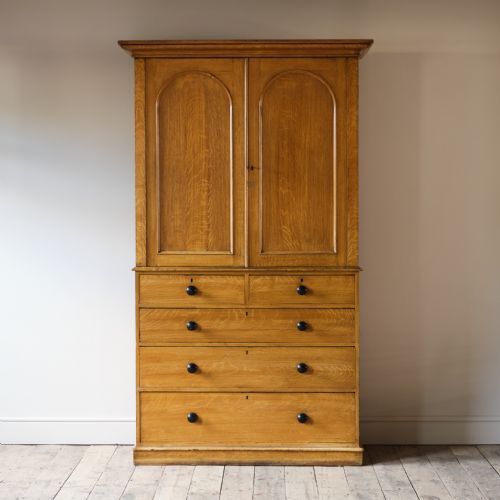
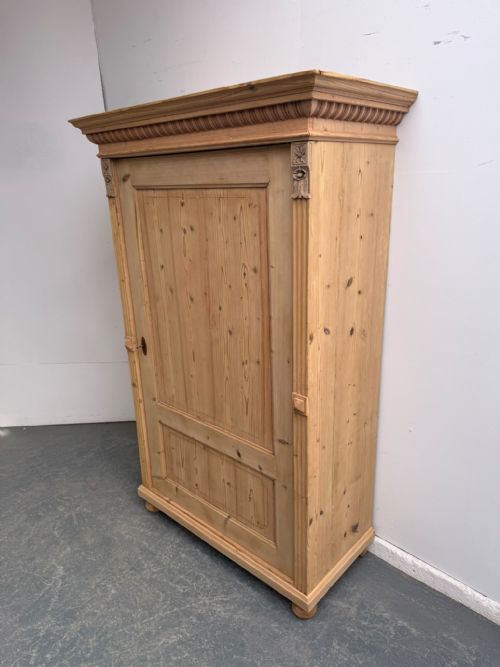

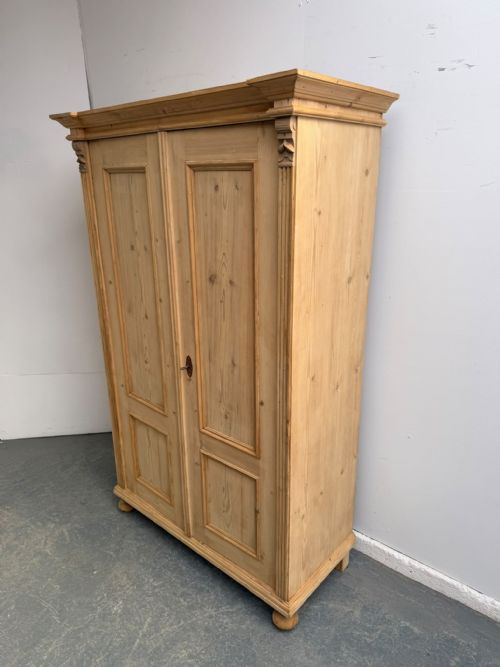
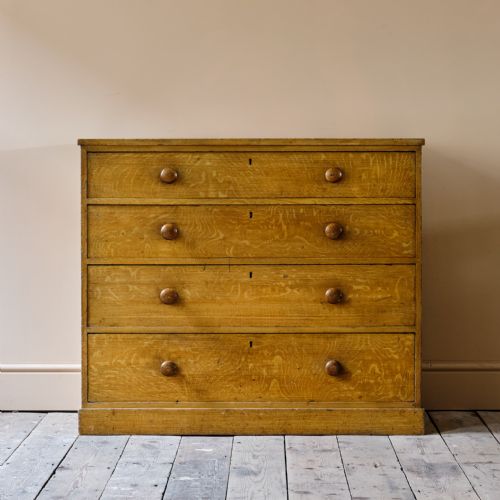


Pine Tallboy Cabinet
These pine tallboy cabinet pieces are tall storage items built from timber to hold clothes, linen and everyday goods while anchoring a room with quiet presence.
Pine Tallboy Cabinet
A pine tallboy cabinet brings together vertical storage forms like chests of drawers, linen presses, wardrobes and cupboards, mostly dating from the Victorian and 19th Century eras alongside Georgian, 1900, 1910, 1920 and 1960 pieces. These tall forms maximise storage without taking up excessive floor space in a bedroom or hallway.
The pieces on this page span several regional traditions, including Swedish Country, French Provincial, Victorian Country and 19th Century Country styles, showing how different makers adapted the vertical cabinet format. Alongside standard cupboards and chests, buyers encounter specialist forms like pharmacy chests, office filing cabinets, watchmakers banks of drawers and secretaire bureaux.
Most items emerge from the Victorian period, often presented in waxed finishes or retaining original paint and scumble paint effects. Whether constructed from standard pine or pitch pine, these tall units serve practical domestic storage needs while displaying the characteristic grain and proportion of their period.
How they were made
Makers constructed these tall units using solid pine and pitch pine, selected for its workability and strength, then fitted them with brass or iron hardware such as hinges, handles and escutcheons. Surfaces were either left bare for waxing or treated with paint, including scumble paint techniques that mimicked more expensive hardwoods.
Construction relied on traditional joinery techniques to handle the height and weight of tall chests and wardrobes, frequently incorporating panelled doors, dovetailed drawer construction and bonnet tops. Many pieces were designed as knockdown wardrobes or modular storage cupboards, allowing large furniture to be transported and assembled on site.
Pine Tallboy Cabinet Retail Price Guide 2026
Typical asking prices for pine tallboy cabinet among the pieces listed under this phrase on Sellingantiques today, from the lower quarter to the upper quarter. They describe what is for sale here now, not the wider market.
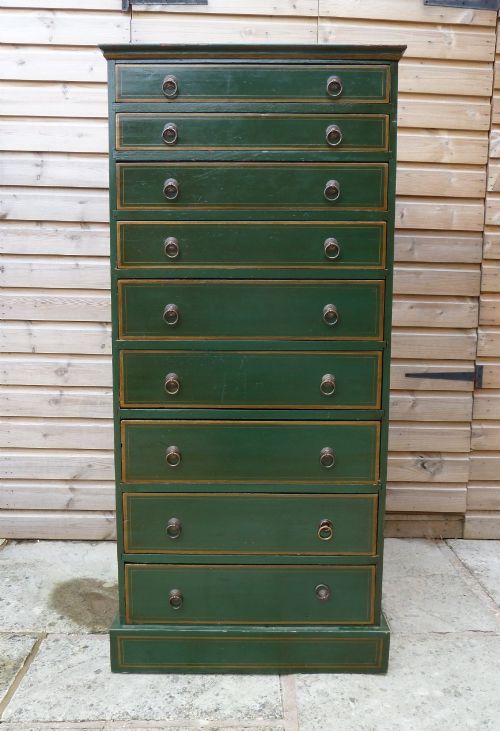
Among the storage pieces hide a watchmakers tall bank of nine drawers and a pharmacy chest designed for tiny apothecary bottles.
What varies in quality
The proportion and balance of the vertical form dictate the visual success of the piece, particularly in bonnet-top designs and multi-drawer pharmacy or watchmakers banks. Well-executed joinery that ensures drawers run smoothly and doors hang true without sagging separates standard utility items from finer examples.
The Pine Tallboy Cabinet Glossary
- Pitch pine
- A dense, resinous softwood sourced mainly from North America, noted for its prominent grain pattern and durability. It was frequently utilised for heavy-use cabinets and chests.
- Scumble paint
- A decorative glazing technique where a translucent layer of darker paint is manipulated over a lighter base coat to simulate wood grain or add texture. This finish appears frequently on 19th-century country cupboards.
- Linen press
- A tall piece of furniture featuring upper doors enclosing shelves for storing textiles, usually paired with drawers in the lower section. Early examples often date from the Georgian and Victorian periods.
- Secretaire
- A cabinet or chest incorporating a pull-down writing slope that conceals small drawers and pigeonholes. It combines desk functionality with tall storage drawers underneath.
- Bonnet top
- An arched or curved upper canopy surmounting a tall cabinet or wardrobe. This architectural feature softens the vertical lines of tall storage furniture.
- Knockdown
- Furniture constructed to be easily dismantled and reassembled using pegged joints or bolts. This design facilitated the transport of large wardrobes up narrow stairs in older buildings.
Pine Tallboy Cabinet: Frequently Asked Questions
What is the difference between a linen press and a wardrobe?
A linen press typically combines upper cupboard storage with drawers below, specifically designed for flat textiles. Wardrobes focus primarily on vertical hanging space for garments.
Both forms make use of the tall vertical footprint seen in these cabinets, though their internal layouts serve different domestic purposes.
How do I care for a waxed pine cabinet?
Apply a traditional beeswax polish sparingly and buff with a soft cloth to maintain the lustre of the wood. Avoid placing the timber near direct heat sources or strong sunlight.
Regular care preserves the natural patina developed over decades of use in country and Victorian interiors.
Are painted finishes on these cabinets original?
Some pieces retain their original or early paint and scumble surface layers, while others have been stripped or prepared for a new coat of wax or paint. Inspecting the surface closely reveals underlying layers and wear patterns.
Original painted finishes add considerable character to country and Victorian storage furniture.
Where were tall pine cabinets used in the home?
These versatile pieces served in bedrooms for clothing, hallways for linens, and sculleries or offices for general storage and filing. Specialised units also functioned in pharmacies and workshops.
Their tall design provided maximum storage capacity while occupying a minimal floor area.