

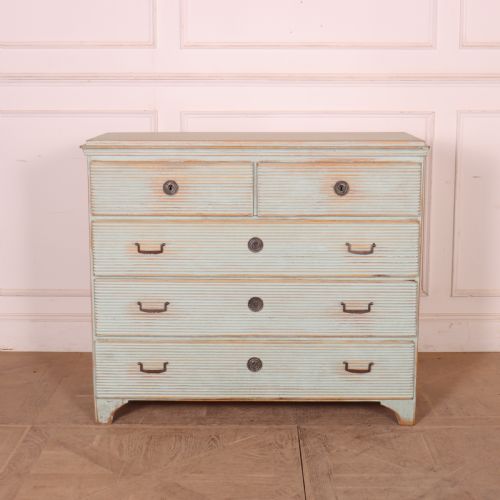
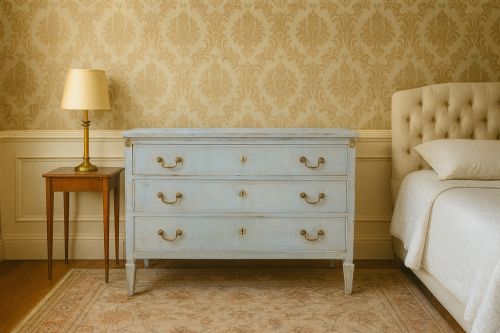


Pine Swedish Dresser
A pine swedish dresser brings robust Scandinavian country utility and painted charm into a room, offering practical storage alongside distinctive regional character.
Pine Swedish Dresser
A pine swedish dresser and its close relatives encompass practical timber storage pieces rooted in Scandinavian country, Gustavian, and folk art traditions. Buyers encounter varied forms ranging from kitchen cabinets and linen cupboards to commodes and chests of drawers.
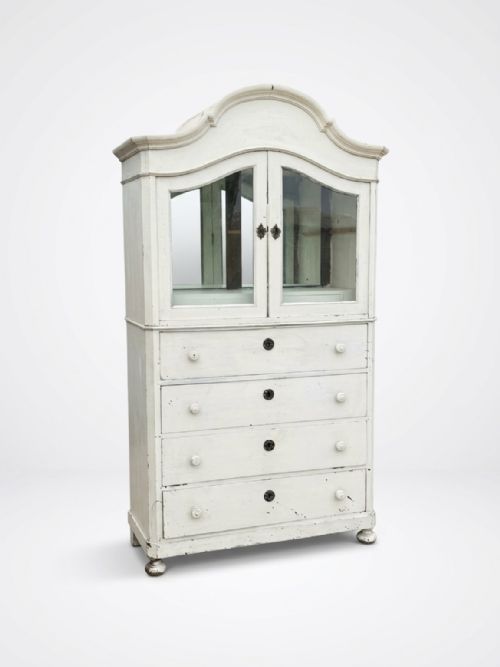
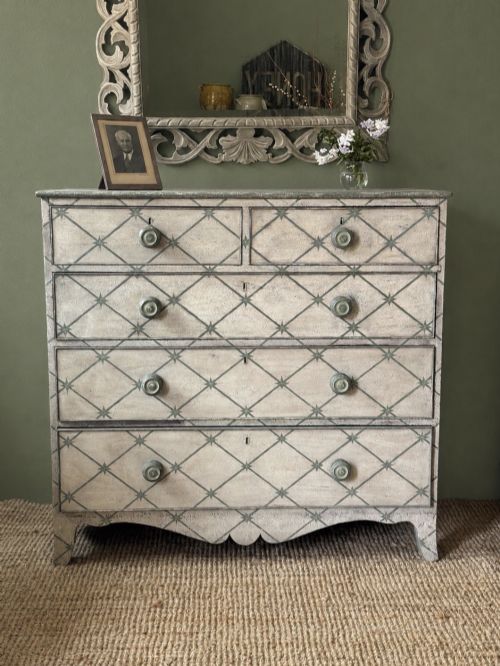
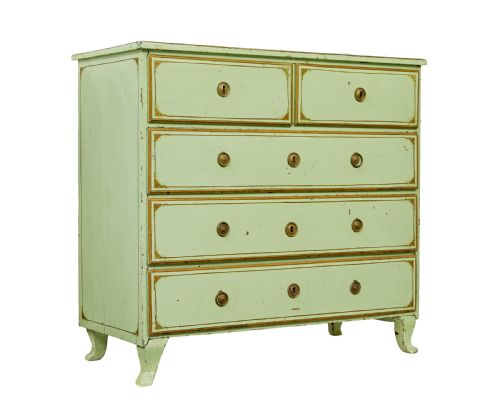
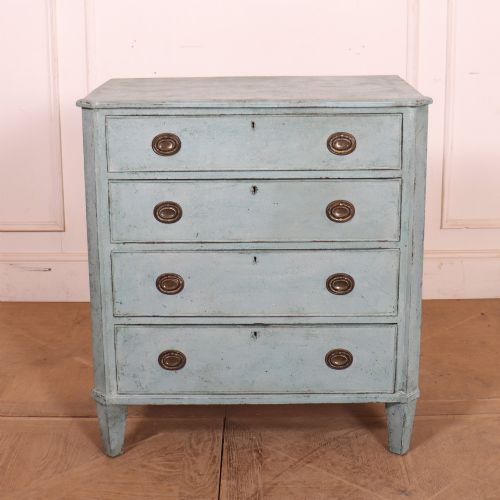
Most examples originate from the nineteenth century, though the selection spans from the mid-eighteenth century through to the 1930s. The prevalent version met on this page is the painted pine chest of drawers or cupboard, often finished with original scraped paint or folk motifs.
Regional variations span styles like Swedish Baroque Revival and Scandinavian Country, executed in native softwoods. These items served domestic storage needs in Nordic homes before finding favour among collectors of regional European furniture.
Judging Quality and Character
The survival of original surface finishes dictates much of the distinction between pieces, particularly where scraped paint reveals authentic historic layers rather than modern intervention. Hand-painted folk art details and fine decorative carvings, such as fluted drawer fronts or bonnet tops, elevate specific examples above plain utility furniture.
Structural integrity combined with undisturbed timber surfaces separates finer cabinetwork from basic domestic items. The presence of period hardware like brass or iron fixtures also contributes to the overall distinction of a piece.
Some nineteenth-century chests feature simulated birch paint, proving that Swedish makers enjoyed a clever timber illusion.
GEMLA FABRIKERS
The Pine Swedish Dresser Glossary
- Gustavian
- The Swedish neoclassical style spanning the late eighteenth and early nineteenth centuries, characterised by restrained symmetry and pale painted finishes.
- Commode
- A low chest of drawers or cabinet designed with legs or a fitted base, commonly found in nineteenth-century Swedish interiors.
- Ragwork
- A decorative paint technique involving rags to apply or pattern the surface finish, creating mottled or textured effects on pine furniture.
- Bonnet top
- An arched or curved upper bonnet or hood section atop a tall cabinet, adding height and architectural presence.
- Scraped paint
- A conservation method where later overpaint is carefully scraped back to expose the original historic paint layers underneath.
Pine Swedish Dresser: Frequently Asked Questions
What is a pine swedish dresser?
A pine swedish dresser is a wooden storage piece originating from Sweden, typically constructed from pine and often finished with painted surfaces.
These items reflect Scandinavian design traditions, ranging from rustic country utility to refined neoclassical Gustavian styles.
How do I date a painted Swedish cabinet?
Dating relies on examining construction methods, timber characteristics, and stylistic traits associated with periods like the eighteenth century or Victorian era.
Surface treatments such as original scraped paint or folk art motifs also provide strong chronological indicators.
Are these pieces usually painted?
Many examples feature painted surfaces, utilising mineral paint, ragwork, simulated birch, or traditional folk art decoration.
Plain pine surfaces also appear, though painted finishes remain a defining characteristic of Scandinavian country furniture.
How were these cupboards used historically?
They served practical domestic storage functions in Nordic households, holding kitchenware, linens, and household goods.
Larger cupboards and dressers acted as central storage fixtures in daily domestic life.