




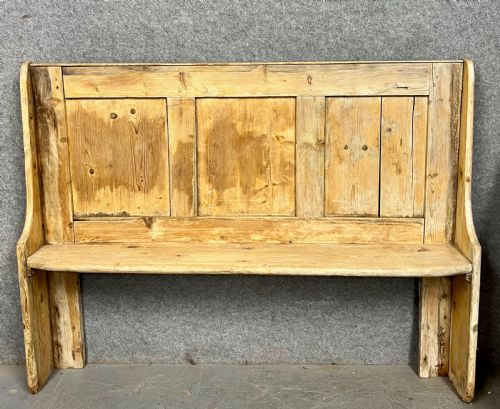


Pine Panelled Bench
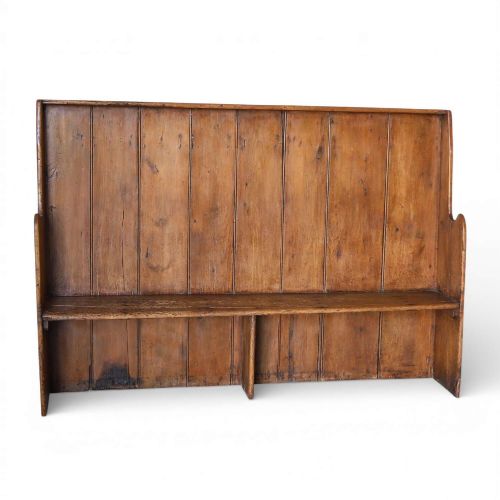
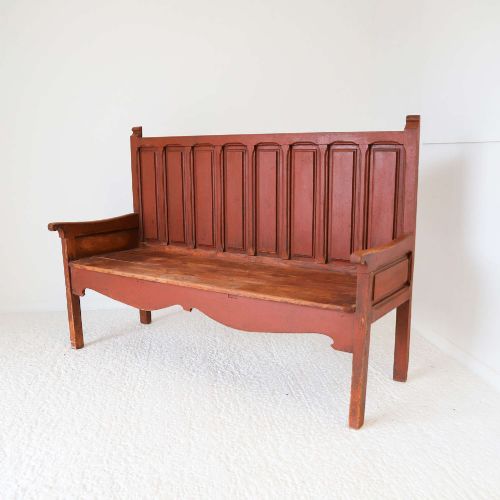
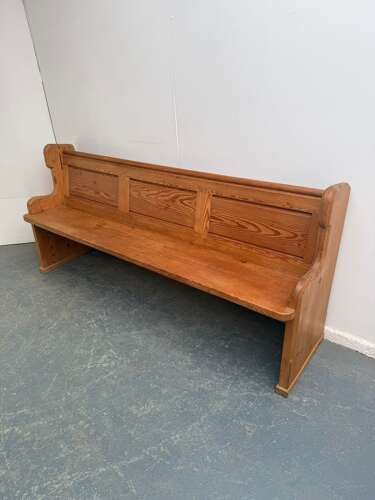
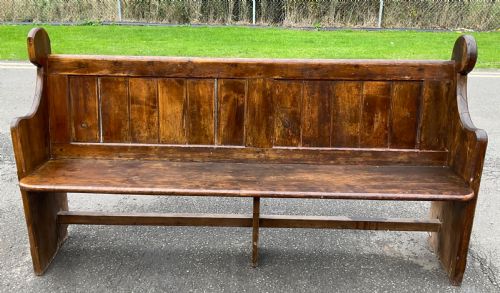
These pine panelled bench examples combine sturdy timber construction with high backs, offering practical seating shaped by centuries of country and institutional use.
Pine Panelled Bench
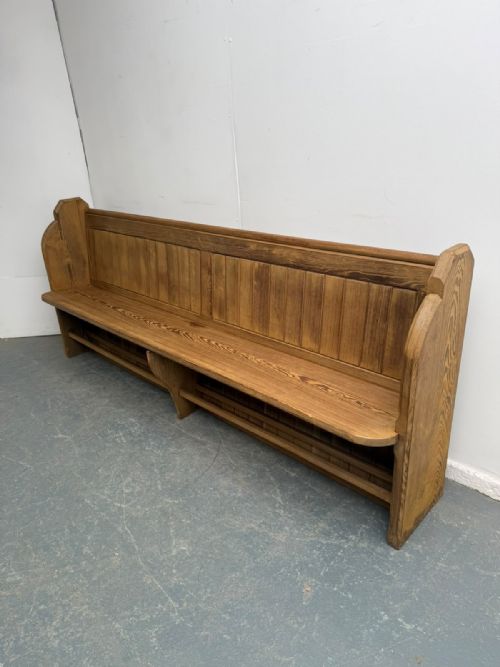
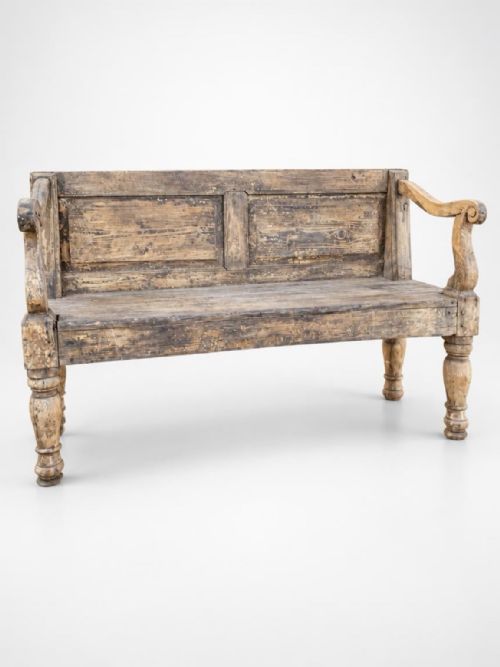
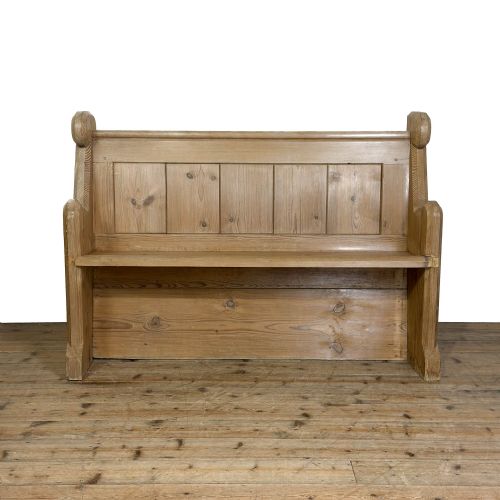
When you search for a pine panelled bench, you are looking at substantial seating forms designed to keep out drafts, ranging from high-back settles to church pews and storage seats. These pieces originate primarily from English, Welsh, French, Spanish, and Hungarian country traditions, spanning the eighteenth century through to the Victorian era and the nineteen-twenties.
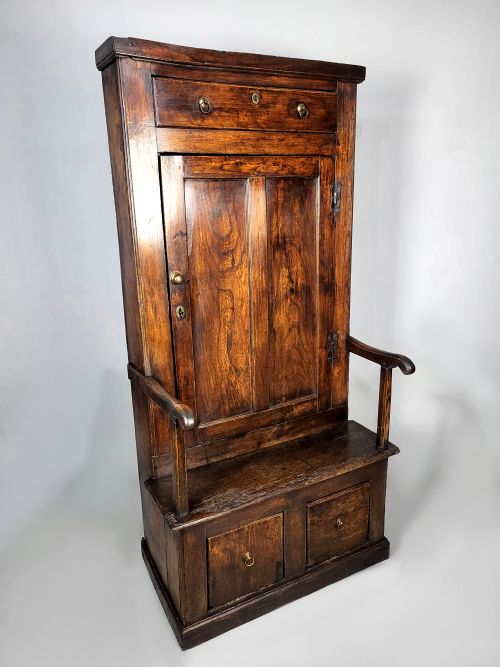
The version you are most likely to meet on this page is the nineteenth-century pine high-back settle or church pew, often featuring panelled construction and finished in wax, original paint, or honey brown patina. Settles with integrated box seats or drawers appear alongside simpler open benches and tavern seating, reflecting both domestic and communal origins.
How they were made
Makers utilised solid pine and pitch pine for the primary structures, combining panelled backs with pegged joints and sturdy timber seats. Wrought iron and brass fixings support operational elements such as drawers or hinges on storage compartments.
Surfaces receive traditional treatments including wax polishes, clear finishes to highlight honey brown patinas, and original painted finishes in muted or grey tones. Carpenters constructed these benches to withstand heavy daily use in homes, chapels, and taverns.
Pine Panelled Bench Retail Price Guide 2026
Typical asking prices for pine panelled bench among the pieces listed under this phrase on Sellingantiques today, from the lower quarter to the upper quarter. They describe what is for sale here now, not the wider market.
Listings feature pine, pitch pine, paint, wrought iron, and brass across English, Welsh, French, Spanish, and Hungarian country styles.
What varies in quality
The top of the range consists of pieces retaining their original painted finishes or early patinated surfaces, where structural integrity remains undisturbed by extensive replacement timber. Original box compartments, drawers, and intact panelled backs distinguish superior regional examples.
Lower quality is marked by heavy later alterations, stripped surfaces that lose historical character, or replacement boards that disrupt the continuity of the original timber. The presence of authentic period hardware and untouched joins separates standard utility pieces from more collectible seating.
The Pine Panelled Bench Glossary
- Settle
- A wooden bench with a high back, solid arms, and frequently a box seat beneath. This form protects occupants from drafts in older buildings.
- Patina
- The surface sheen and colour developed through age, wear, and waxing. A honey brown patina indicates decades of careful maintenance.
- Pew
- A long wooden bench with a back, traditionally utilised in churches and chapels. These communal seats often feature sturdy pitch pine construction.
- Box settle
- A variation incorporating a storage compartment beneath the seat accessed by lifting the lid or utilising integrated drawers. It combines seating with domestic storage.
Pine Panelled Bench: Frequently Asked Questions
Where did these benches originate?
The pieces span various European and British regional traditions, including English country workshops, Welsh farmhouses, French dining rooms, and Spanish rural homes. Makers built them for specific environments like taverns, churches, and domestic halls.
Regional styles often reveal themselves through construction methods, painted finishes, and the choice between standard pine and pitch pine timbers.
How do I maintain a waxed pine bench?
Maintain waxed surfaces by applying a quality beeswax periodically to nourish the timber and preserve the honey brown patina. Avoid placing the wood near direct heat sources to prevent warping.
Dust regularly with a soft cloth and avoid chemical cleaners that strip the historical wax layers.
What is the difference between a settle and a pew?
A settle typically includes solid wooden arms and a high panelled back designed to block cold drafts in domestic or tavern settings. Pews are generally open-ended communal seating originating from churches and chapels.
While both utilise sturdy pine and pitch pine construction, settles frequently incorporate storage boxes beneath the seat.
Can I use a church pew for dining?
Church pews and dining benches provide long, linear seating suitable for placement alongside large tables. Their fixed height and sturdy frame accommodate multiple diners.
Consider the seat depth and back angle when pairing an antique pew with a specific dining table to ensure comfortable sitting.