



Pine Iron Bound Box
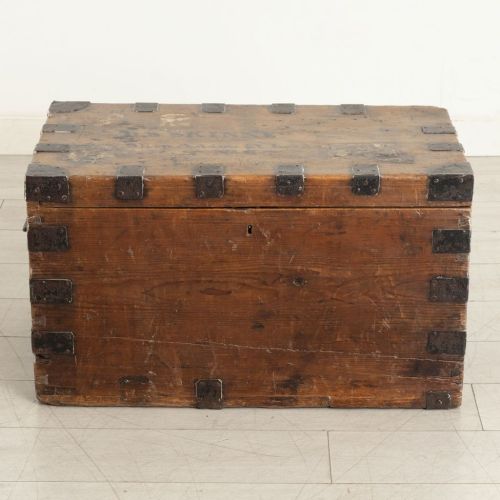
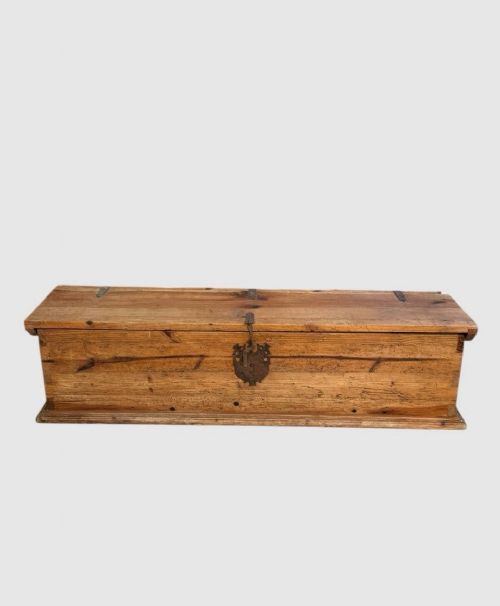
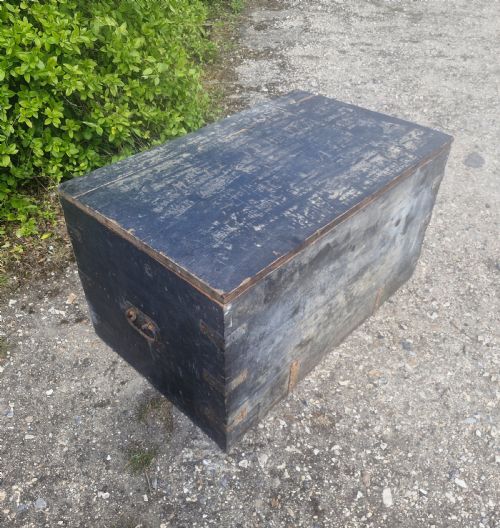
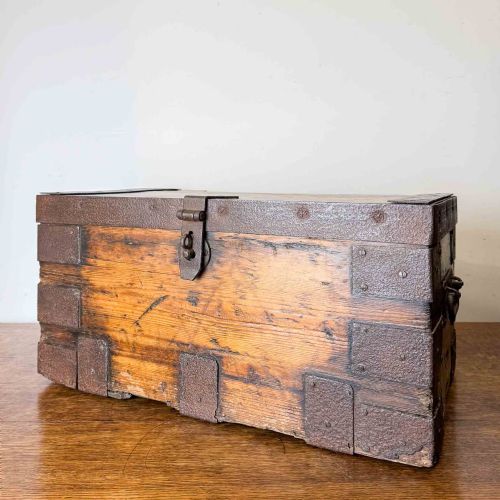
A pine iron bound box is a sturdy wooden container reinforced with metal straps, built to endure travel, storage and daily domestic use.
Pine Iron Bound Box
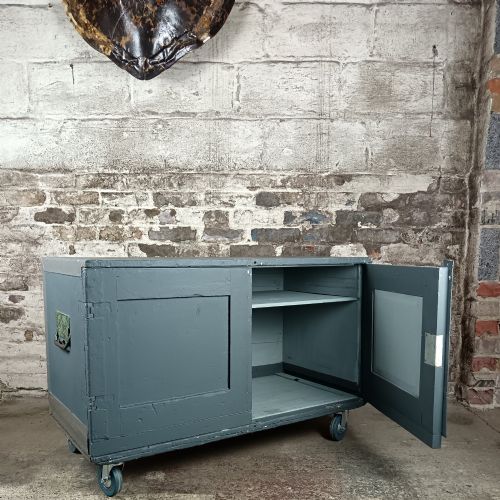
When you search for a pine iron bound box, you encounter robust storage containers spanning the Georgian, Victorian and twentieth-century periods. These practical objects served various utilitarian roles, from military campaigns and carpenter tool transport to household blanket storage.
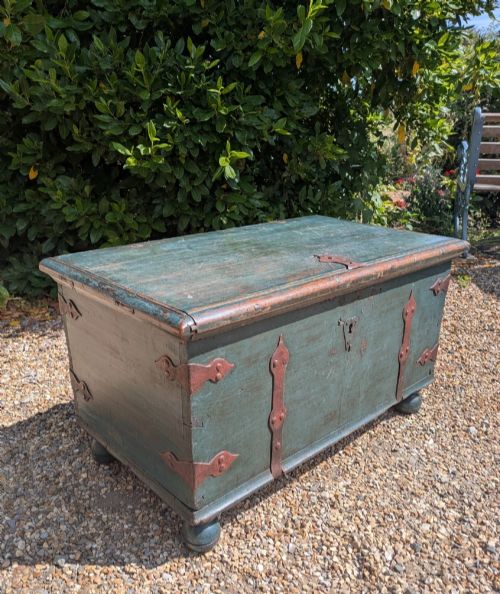
The most common examples on this page are nineteenth-century pieces, frequently featuring hand-forged strapwork or painted Scandinavian folk art decoration. They appear in diverse formats including travel trunks, strongboxes, marriage chests and domed storage boxes.
How they were made
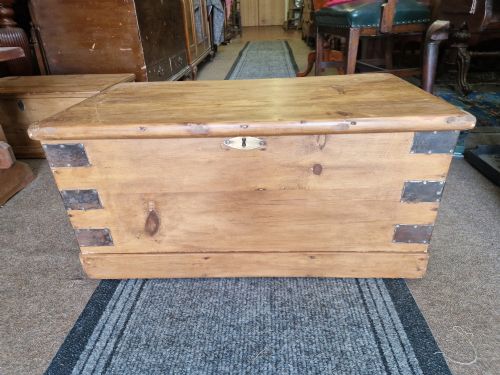
Maker construction relied primarily on solid pine, occasionally combined with elm, assembled into sturdy box forms with lifting handles and working locks. Iron and wrought iron bands provided crucial structural reinforcement against heavy impacts during transit.
Many surfaces received layers of paint or pigment, particularly in Scandinavian tradition, while others left the timber exposed to highlight the natural grain. Metal strapwork was secured with hand-driven nails or rivets to bind the wooden panels tightly together.
Materials recorded across the selection include solid pine, elm, wrought iron, brass, paint, leather and pigment.
What varies in quality
Quality differences emerge in the complexity of the ironwork and the integrity of the original surfaces. Hand-forged strapwork and intact period paintwork elevate a piece above standard utilitarian storage.
Structural preservation also defines the hierarchy, with strongboxes retaining working locks, original side lifting handles and sound timber joints commanding closer attention from collectors.
The Pine Iron Bound Box Glossary
- Strapwork
- Metal bands affixed to a wooden box for reinforcement and decoration. These iron straps distribute weight and protect the corners from damage.
- Folk art
- Traditional decorative painting and ornamentation executed by regional craftspeople. It often adorns Scandinavian marriage chests and strongboxes with distinctive pigments.
- Campaign chest
- A portable storage trunk designed for military transport during active service. These boxes frequently feature recessed brass handles and robust iron bindings.
- Strongbox
- A heavily reinforced container built to secure valuables and documents. They typically incorporate robust iron straps and reliable locking mechanisms.
- Marriage chest
- A celebratory storage box commissioned for weddings and family alliances. Examples from Scandinavian traditions frequently display painted dates and intricate motifs.
Pine Iron Bound Box: Frequently Asked Questions
What were pine iron bound boxes used for?
These containers served varied roles in domestic and military life. Households utilised them for storing blankets, tools and personal belongings.
Travellers and military personnel also relied on them for transporting goods during campaigns and journeys.
How do I date a pine iron bound box?
Dating relies on construction methods, hardware styles and recorded periods like the Georgian and Victorian eras. Hand-forged ironwork and specific painted motifs often point to nineteenth-century or earlier Scandinavian origins.
Secondary clues include the presence of working locks, side lifting handles and specific types of dovetail joinery.
Are these boxes suitable for daily home storage?
Their original purpose as durable storage containers makes them exceptionally practical for modern domestic use. You can place them in living spaces as coffee tables or blanket chests.
The sturdy pine construction and metal reinforcements ensure they withstand everyday interaction while holding household items.
What is Scandinavian folk art on these boxes?
Scandinavian folk art refers to the hand-painted decoration applied by regional craftspeople to marriage chests and strongboxes. These painted finishes often include pigments, dates and geometric patterns.
Such ornamentation reflects the cultural traditions of nineteenth-century Scandinavian rural communities.