
19th Century Pine Box
When you search for a 19th century pine box, you meet utilitarian storage pieces shaped by domestic and regional life across Britain and Europe.
19th Century Pine Box
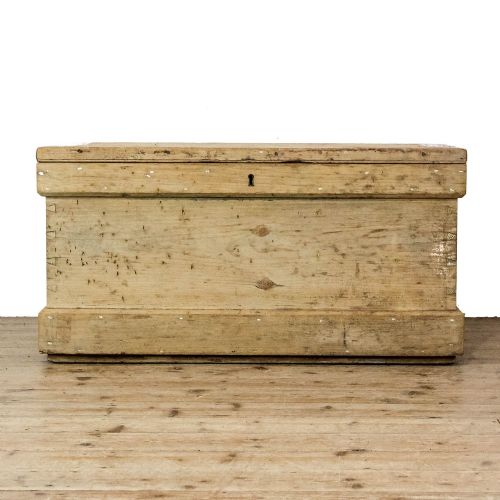
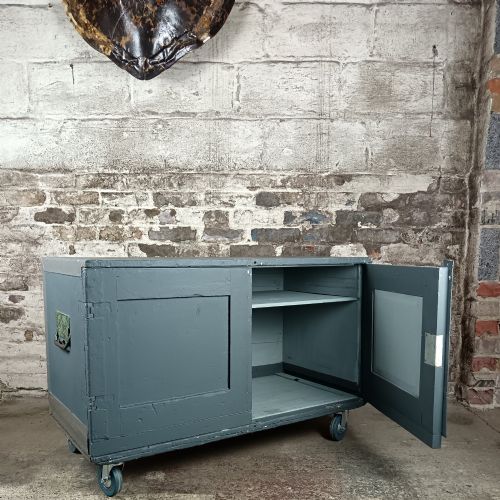
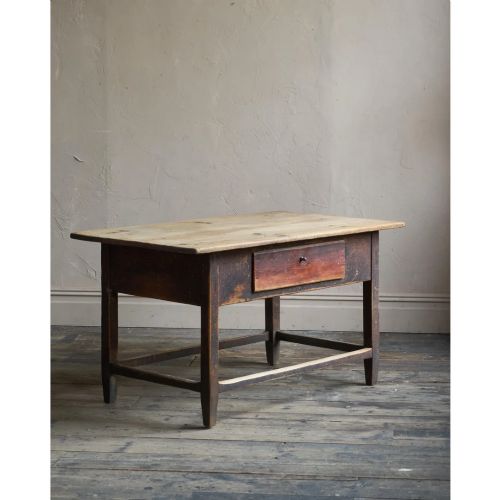
A 19th century pine box encompasses blanket chests, mule trunks, dough bins, and small storage coffers originating from British, Scandinavian, and European rural workshops. These domestic containers served essential daily functions, holding textiles, food, or valuables in farmhouses, country houses, and marine settings.
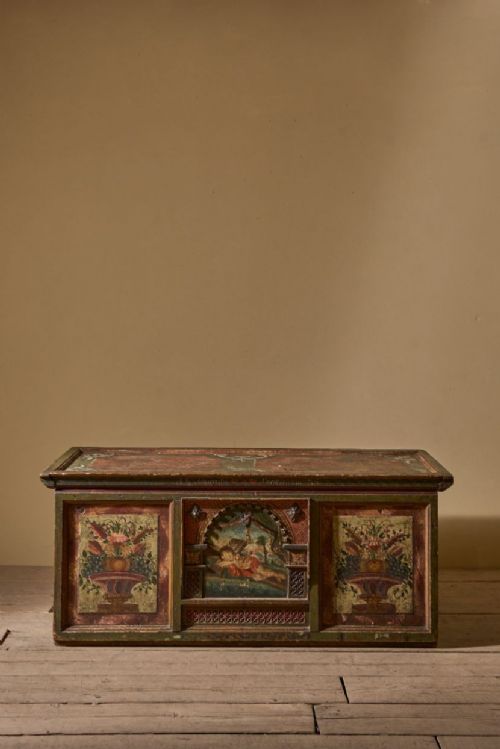
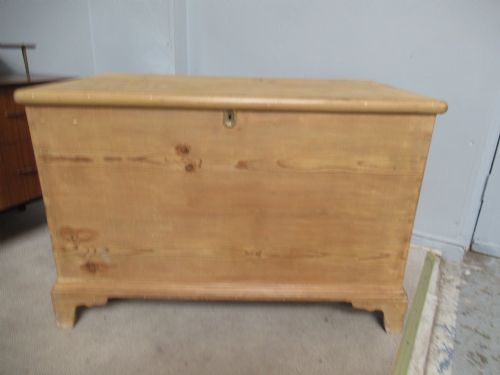
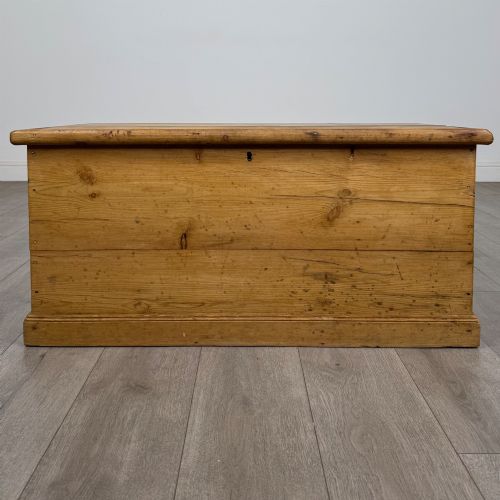
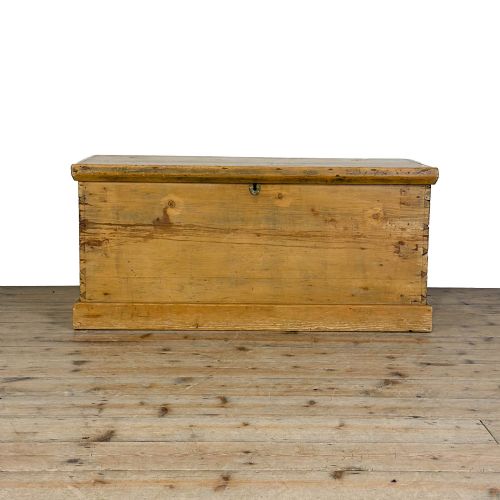
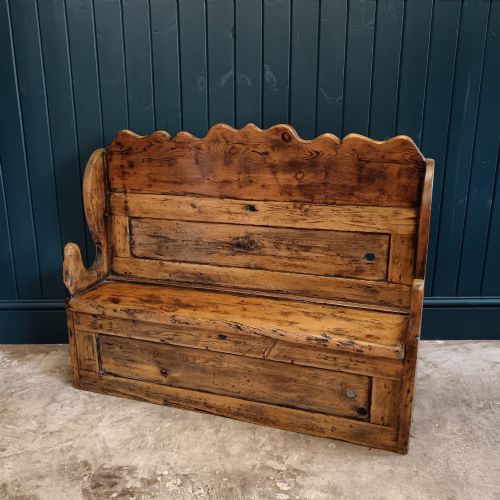
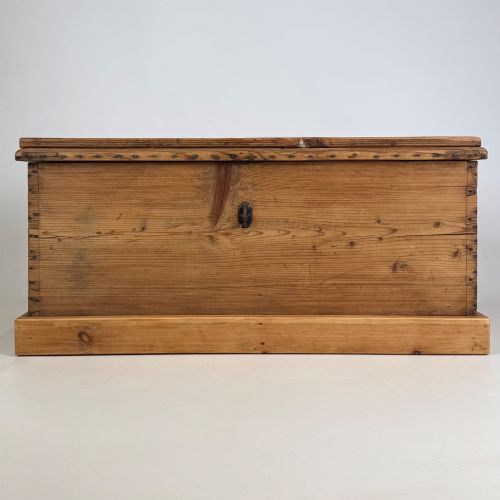
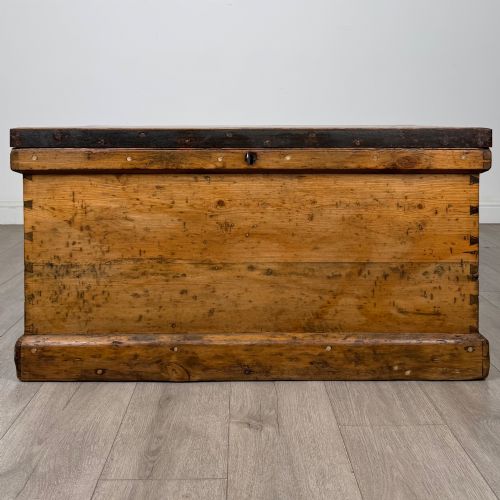
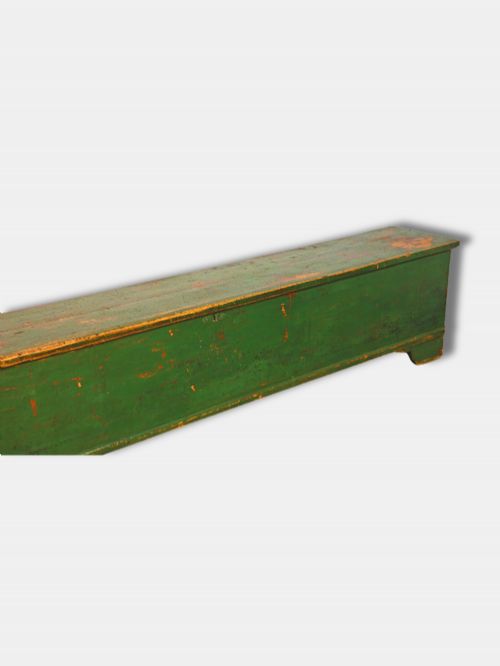
The most common examples on this page are Victorian blanket boxes and Scandinavian painted storage chests featuring hinged lids and dovetailed joints. Regional variants include Welsh settle boxes, alpine marriage chests, and military transport cases from the eighteen hundreds.
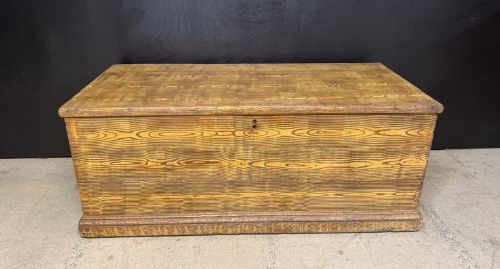
Makers ranged from local village joiners producing utilitarian household furniture to folk artists applying decorative pigment and scumble finishes. Their work bridges plain country utility and regional decorative traditions.
Materials and Technique
Constructed primarily from solid pine timber, these pieces frequently utilise iron, brass, and wrought iron for strap hinges, carrying handles, and locking hardware. Carpenters joined the carcases using hand-cut dovetails or simple pegged joints designed to withstand heavy everyday use.
Many surfaces retain their original paint, pigment, scumble glaze, or early stripped finishes that reveal the grain and tool marks of the wood. Iron bound edges and brass campaign mounts provided structural reinforcement for transport and secure storage.
A nineteenth century poetry book box disguised as a volume of Burns poems proves someone long ago took literature very seriously.
Evaluating Quality
Quality rests in the integrity of the original construction, the survival of authentic surface finishes, and the refinement of the joinery. Boxes retaining undisturbed layers of early paint or pigment command greater interest than those stripped down to bare wood in later eras.
Heavier iron mounts, intact original locks, and tight hand-cut dovetails distinguish superior utilitarian examples from plain domestic containers. The presence of regional folk art decoration or documented provenance elevates an ordinary pine box into a notable piece of material history.
Russel And Co
The 19th Century Pine Box Glossary
- Scumble
- A decorative painting technique where a translucent glaze is manipulated over a paler base coat to simulate wood grain or create mottled textures. This finish appears frequently on nineteenth century Scandinavian and British country furniture.
- Mule chest
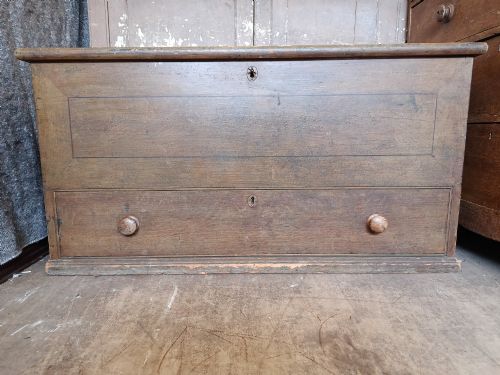
- A storage chest featuring one or more drawers built into the base beneath a primary compartment accessed by a hinged lid. They bridge the design of traditional blanket chests and modern chests of drawers.
- Dovetail
- A joint formed by interlocking wedge-shaped fingers that secures two pieces of wood at a corner. Hand-cut dovetails indicate traditional craftsmanship before mass production.
- Coffer
- A heavy wooden box traditionally used for keeping valuables, money, or documents secure. They usually feature reinforced iron bands and robust locking mechanisms.
- Settle
- A wooden bench featuring a high solid back, enclosed arms, and a hinged seat concealing a storage box beneath. They were placed near hearths in farmhouses to block drafts.
19th Century Pine Box: Frequently Asked Questions
How were these boxes used originally?
Nineteenth century households utilised these containers for storing woollen blankets, bedding, linens, and personal dry goods. Larger trunks accompanied travellers on ships and coaches, while smaller deed and tool boxes secured important documents.
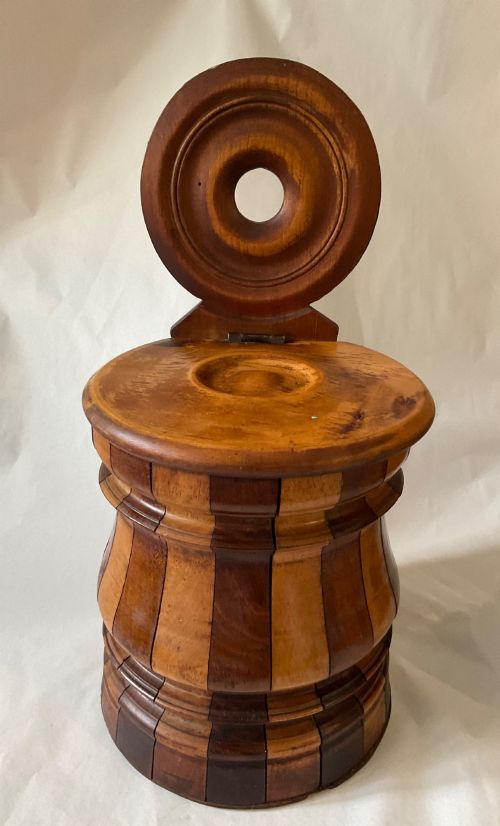
In rural kitchens and farmhouses, specialised forms like dough bins and salt boxes kept provisions protected from pests. Their sturdy construction also allowed them to double as impromptu seating or tables when space was tight.
Are these boxes waterproof for outdoor use?
These domestic and rustic items were constructed for indoor environments and lack modern weatherproofing seals. Exposing historic pine and iron hardware to damp outdoor conditions will cause the wood to warp and the metal to rust.
Keep them in stable indoor climates away from direct sunlight and radiators to preserve the original paint and timber. Sudden humidity changes can cause historic joints to crack.
How can I tell a Victorian box from an earlier one?
Examine the construction methods, tool marks, and hardware types used on the carcase and interior. Hand-sawn boards, forged iron strap hinges, and early pigement paints usually point toward the opening decades of the nineteenth century.
Later Victorian examples often incorporate machine-sawn timber, standardised screws, and factory-produced brass locks. Regional painting styles and documented dates inscribed inside the lid also help narrow down the production period.