


Pine Dresser with Rack
A pine dresser with rack brings honest utility and timeless storage to any room, combining a sturdy base cabinet with open shelving above for display.
Pine Dresser with Rack
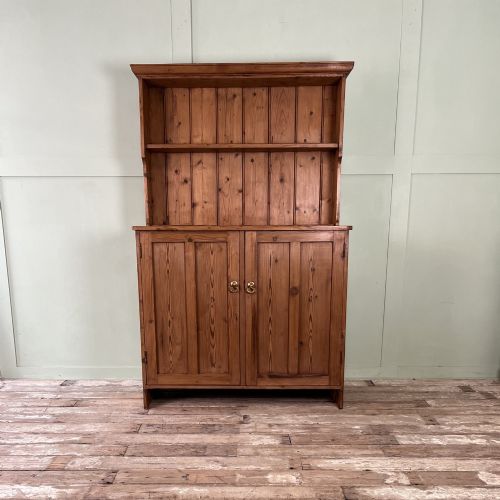
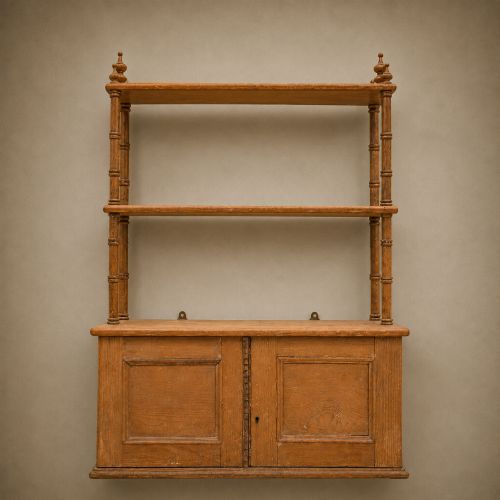
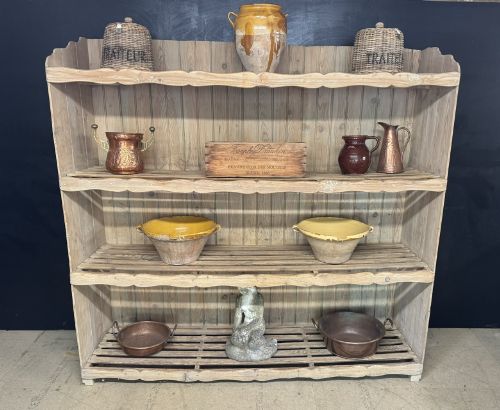
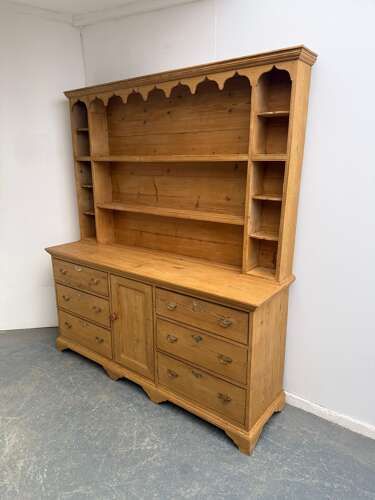
A pine dresser with rack is a traditional kitchen and dining room staple designed to store crockery while displaying plates on the upper shelves. These sturdy pieces combine a lower base of cupboards or drawers with an open or compartmented rack fixed securely to the top.
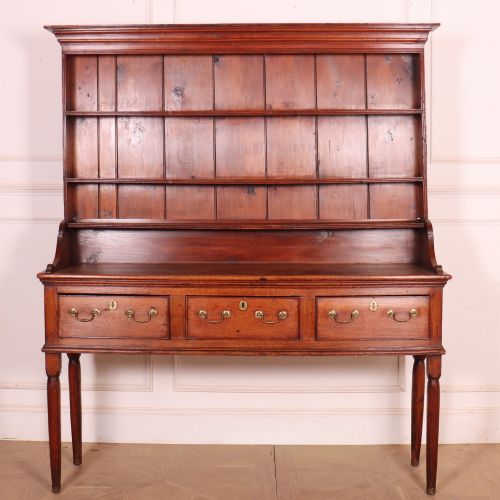
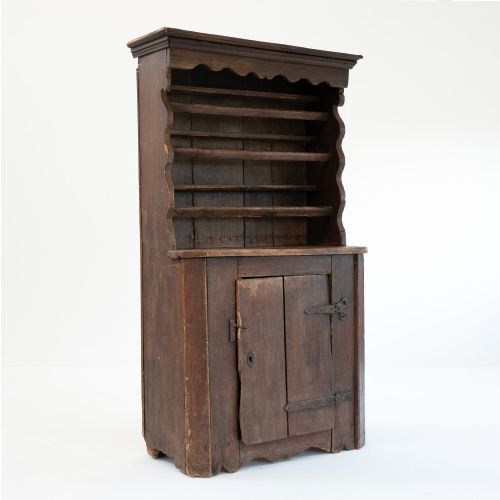
The versions most commonly met on this page date from the eighteenth and nineteenth centuries, reflecting English, Welsh, and West Country vernacular traditions. Examples range from simple farmhouse units to grander pot board designs and pieces featuring breakfront drawers.
Makers utilised local timbers, constructing the main bodies primarily in pine while occasionally incorporating oak for strength or decorative contrast. Regional styles vary from the high status of Georgian town pieces to the robust simplicity of country house furniture.
How they were made
Constructed predominantly from solid pine, these dressers rely on traditional joinery techniques such as dovetailed drawers and pegged frames. Secondary timbers like oak appear in structural elements, while brass hardware and metal fittings secure doors and drawers.
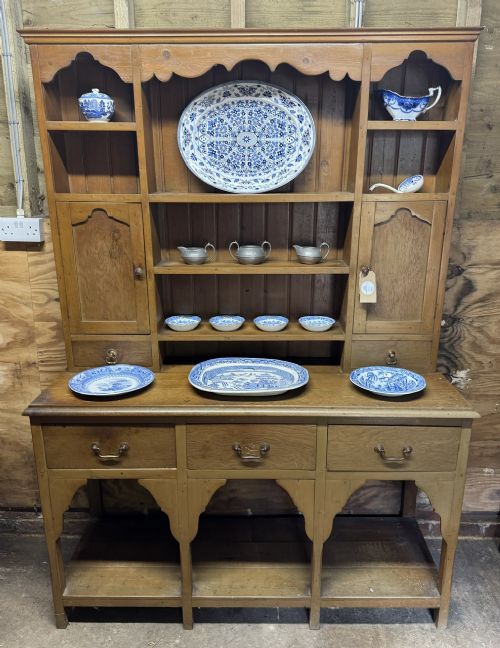
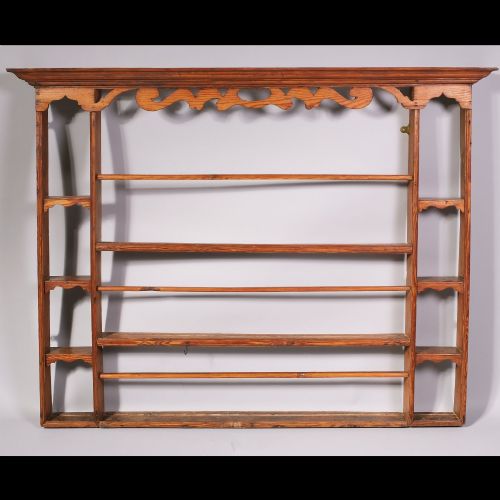
Many historical examples feature a painted finish or retain an original patina built up through decades of domestic use. Upper plate racks often incorporate shaped friezes, fretwork, or architectural details like Corinthian columns on finer eighteenth-century variants.
Basement dressers survived decades of scullery steam, stubborn grease, and enthusiastic scrubbing brushes to emerge into the light as treasured antiques.
What varies in quality
Quality in a pine dresser with rack rests on the integrity of the timber, the preservation of original surfaces, and the balance of proportions between base and top. Pieces that retain their original plate racks and authentic painted finishes command greater respect from collectors.
Construction details differentiate standard utility items from finer vernacular commissions. Fretwork panels, breakfront drawers, and architectural columns elevate a piece beyond basic kitchen storage into the realm of accomplished country furniture.
The Pine Dresser with Rack Glossary
- Pot board
- An open lower shelf built into the base of a dresser, historically used for storing heavy pots and pans. This platform sits just above the floor on short feet or stiles.
- Plate rack
- The upper shelving unit featuring grooves or slatted bars to hold plates upright for display. These racks attach directly to the dresser base or mount separately on the wall.
- Vernacular
- Furniture built by local tradesmen for everyday domestic use rather than following high London fashion. These regional pieces reflect the materials and practical needs of their specific geographic area.
- Patina
- The surface sheen and darkening developed by wood and paint over centuries of handling and cleaning. An untouched patina proves the age and authenticity of the piece.
- Breakfront
- A cabinet design where the central section projects forward from the flanking cupboards or drawers. This architectural feature adds depth and shadow to the facade.
Pine Dresser with Rack: Frequently Asked Questions
Are the rack and base usually original to each other?
Most period dressers were constructed as matched pairs, though upper racks could occasionally be separated or reunited over the lifespan of the furniture. Examining the timber grain, wear patterns, and fixing points helps confirm whether the two sections share a common history.
Matching paint layers and consistent patination across both base and rack strongly indicate an original pairing. Regional vernacular pieces often display specific construction quirks that link the upper shelving directly to the lower cupboard.
How do I care for antique pine furniture?
Keep wooden surfaces away from direct heat sources and strong sunlight to prevent the timber from drying out or splitting. Dust regularly with a soft, dry cloth and avoid modern silicone polishes that can damage historical finishes.
Feed bare pine surfaces with appropriate natural waxes when the wood begins to look dry. Painted finishes require gentle cleaning with a damp cloth rather than abrasive chemical agents.
What is the difference between a Welsh dresser and an English dresser?
Welsh dressers frequently incorporate distinct regional characteristics, such as open pot boards and specific drawer arrangements within the base. The Principality produced robust vernacular furniture utilising local timbers and traditional joinery.
English country pieces span various counties, each bringing unique decorative touches like fretwork or Corinthian columns. West Country examples display their own specific proportions and timber selections distinct from northern or Welsh workshops.
How can I tell an eighteenth-century dresser from a nineteenth-century one?
Earlier eighteenth-century examples often incorporate oak elements, fielded panels, and sophisticated details like fretwork or column supports. The joinery methods, such as hand-cut dovetails and pegged frames, reflect the hand tools of the period.
Nineteenth-century pieces tend to use softer pine construction throughout and frequently feature simpler, more utilitarian lines suited to Victorian kitchens. Machine-sawn timber indicators and standardised hardware become more prevalent as the nineteenth century progresses.