

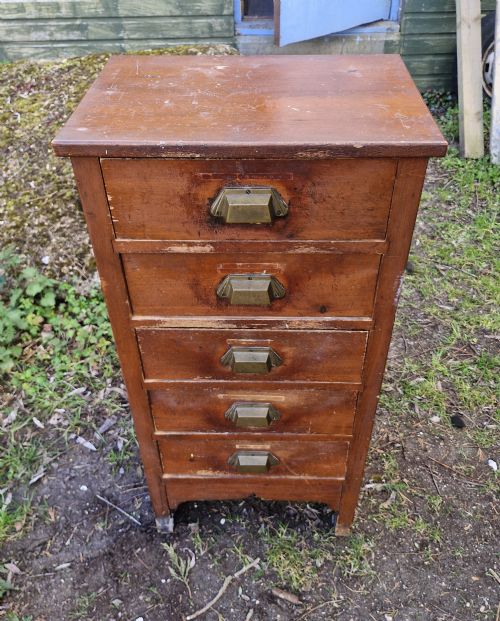

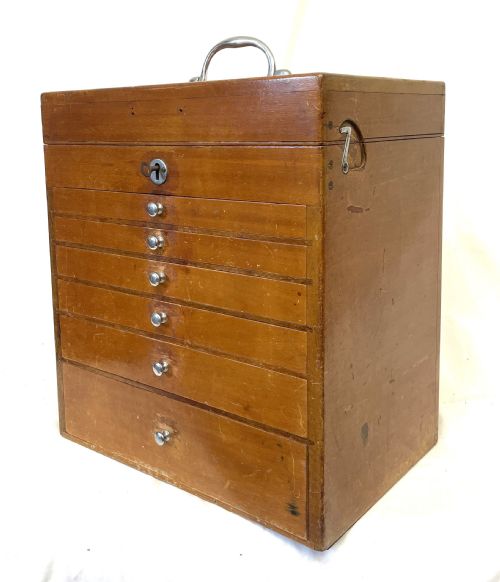
Pine Collectors Chest
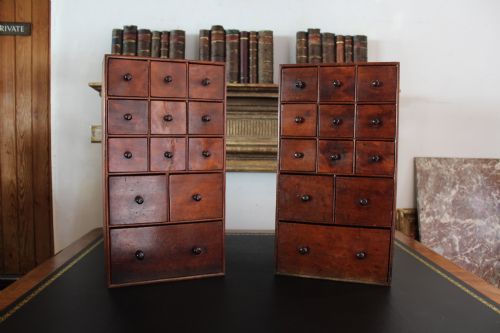
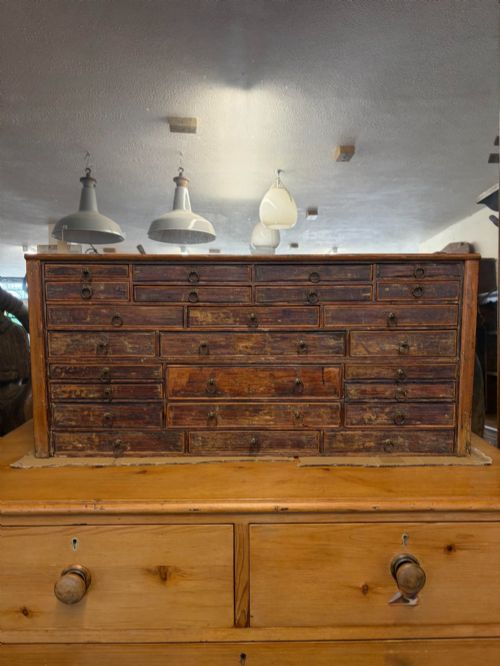
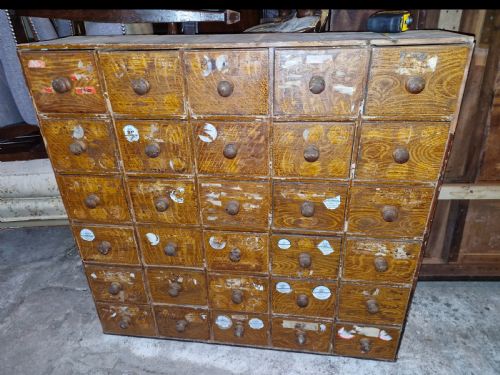
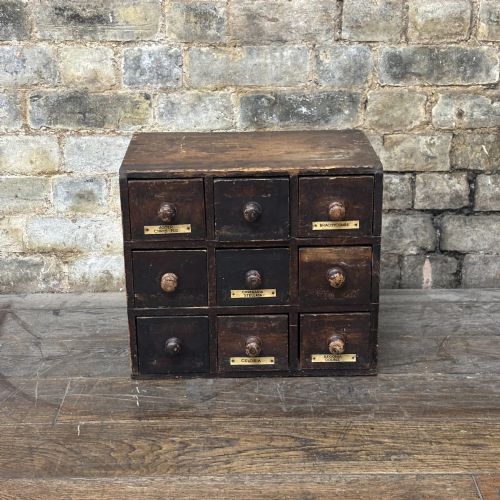
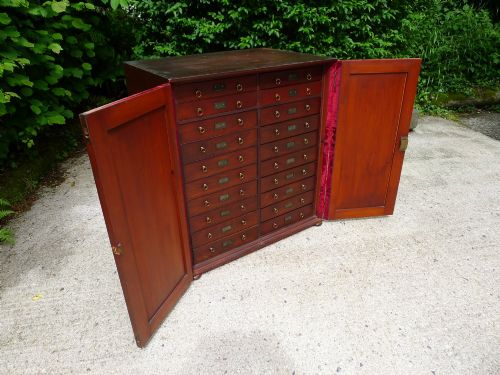
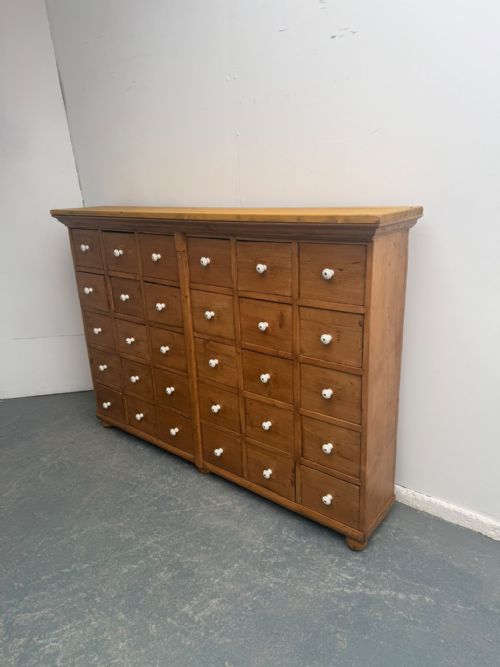
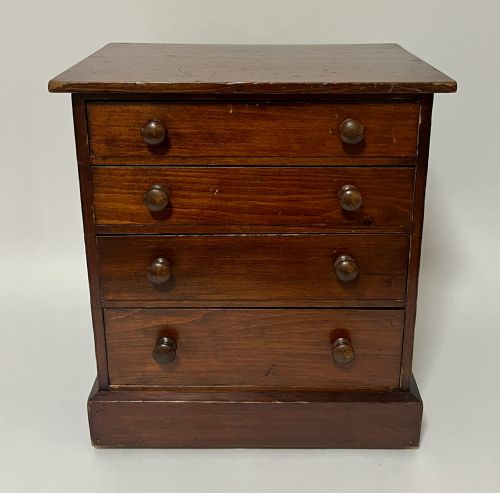
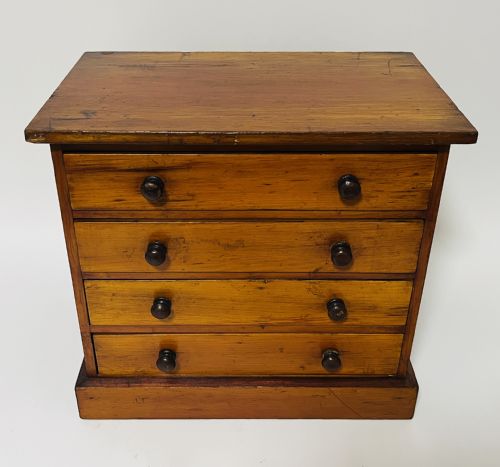
A pine collectors chest gathers numerous small drawers for natural history specimens, seeds, or trade tools, offering practical sorting with honest timber grain.
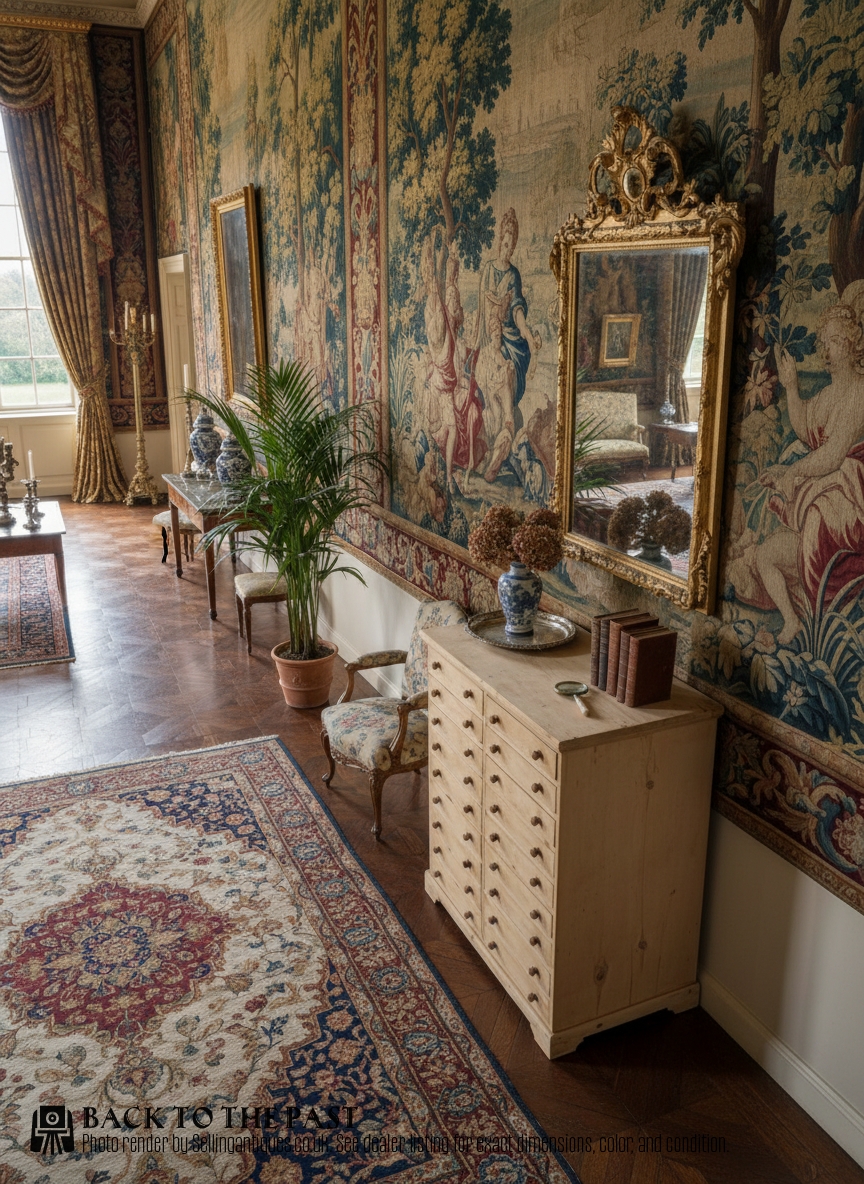
Pine Collectors Chest
When you search for a pine collectors chest, you encounter multi-drawer banks built for storage and classification, originating from Victorian pharmacies, artist studios, and workshops. The pieces on this page span from the early 19th century through the Edwardian period, taking forms such as apothecary cabinets, shallow filing units, and watchmakers banks.
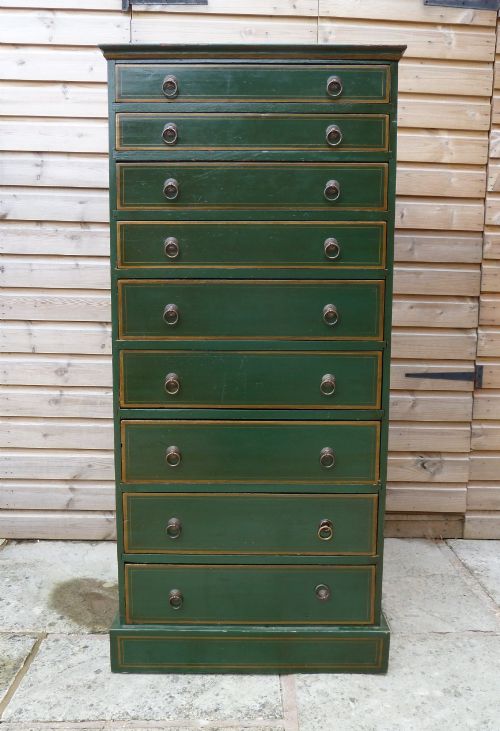
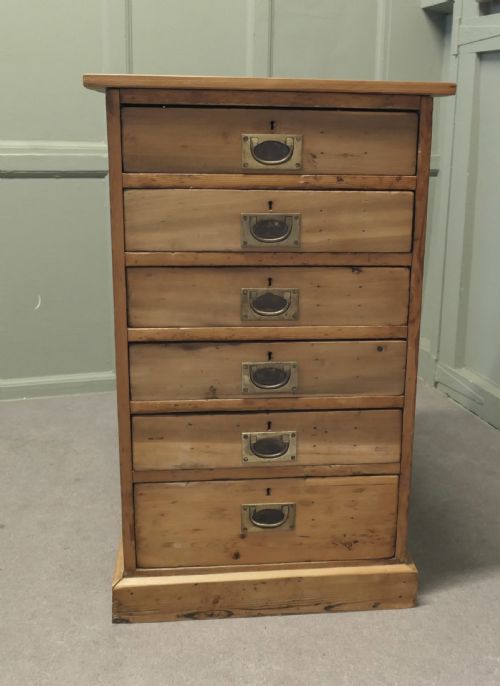
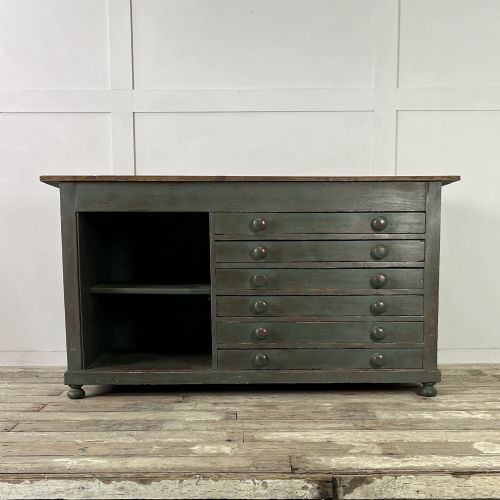
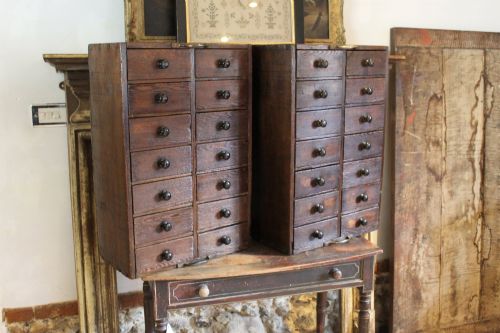
The version you are most likely to meet here is a tall or shallow bank of timber drawers, frequently rendered in plain or stained deal, pitch pine, or painted softwood. These pieces range from small table top specimen cabinets to large multi-drawer banks containing twenty or thirty fitted compartments.
How they were made
Makers constructed these cabinets primarily using pine, deal, and pitch pine, often pairing the softwood carcasses with brass or iron handles, pulls, and label holders. Selected pieces feature stained and polished surfaces, painted finishes, or ebonised mouldings applied to drawer fronts and cornices.
Joinery techniques focused on utility and endurance, utilising fine drawer construction to support frequent pulling and sorting of contents. The integration of glass panels appears in specific apothecary and display formats, while brass hardware secures internal contents and adds functional contrast to the timber.
Listings feature pieces spanning the 19th century, Victorian era, and Edwardian period, constructed from pine, pitch pine, deal, brass, and iron.
What varies in quality
The upper tier of these pieces displays meticulous timber selection, such as figured pitch pine or carefully matched deal boards, alongside original brass handles and intact period labels. Construction depth shows in the precision of the drawer dovetails and the smooth operation of numerous small drawers within a single bank.
Simpler utility variants sacrifice decorative mouldings and polished finishes for plain painted or unadorned softwood surfaces intended strictly for office or workshop storage. The presence of original maker details, specialised internal fittings, and unaltered hardware defines the division between standard utility examples and finer specimen cabinets.
Luxmore's of Ilfracombe·D Napier & Sons·J.T.Crockett
The Pine Collectors Chest Glossary
- Deal
- A softwood timber derived from pine or fir, commonly utilised for carcass construction in 19th-century utility and collectors furniture. It takes paint or stain readily.
- Pitch pine
- A resinous pine variety known for its pronounced grain pattern and durability, frequently selected for finer Victorian cabinetry and specimen chests.
- Specimen cabinet
- A multi-drawer unit designed specifically for housing natural history items, insects, botanical samples, or eggs in shallow, dust-tight compartments.
- Bank of drawers
- An arrangement of numerous small drawers stacked vertically or horizontally within a single housing frame, common in commercial and office settings.
- Apprentice cabinet
- A small-scale piece produced to demonstrate woodworking proficiency or to serve as a portable salesman sample of larger chest designs.
Pine Collectors Chest: Frequently Asked Questions
What were pine collectors chests originally used for?
These cabinets served laboratories, pharmacies, naturalists, and trade workshops for organising small objects like seeds, homeopathic remedies, watch parts, and specimens.
The numerous shallow drawers kept delicate items separated, visible, and protected from dust in professional or domestic workspaces.
How do I date a antique pine chest?
Dating relies on construction methods, timber choice, and hardware styles, with early 19th-century examples often showing hand-sawn boards and simpler pulls.
Later Victorian and Edwardian utility pieces introduce machine-cut elements, standardised brass handles, and occasionally manufacturer stamps or paper labels.
Are all these chests made of solid pine?
While the primary material is pine, deal, or pitch pine, makers frequently incorporated secondary hardwoods, brass pulls, iron brackets, and glass viewing panels.
Stained, painted, or polished finishes were applied according to the intended environment, ranging from commercial offices to private studies.
How can I maintain the wooden surface?
Preserving the timber involves keeping the chest away from direct heat sources and sudden humidity changes that could cause the pine drawers to stick.
Applying occasional appropriate wax polish helps maintain the finish on stained deal and pitch pine surfaces without sealing the wood permanently.