
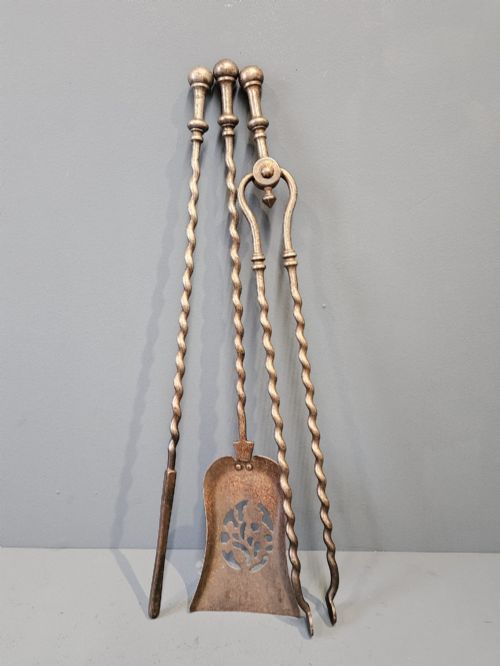
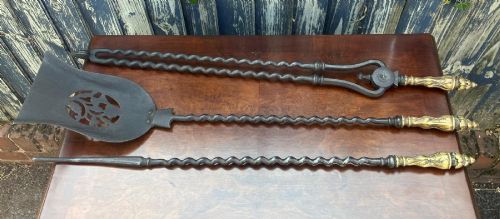


Pierced Steel Fire Shovel
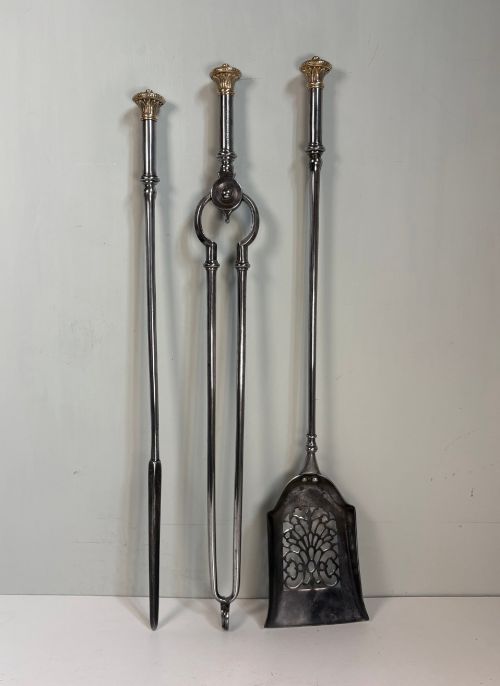
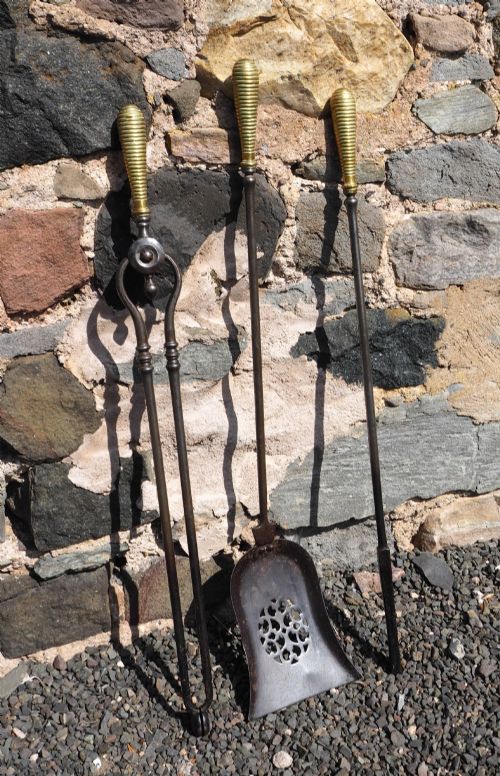
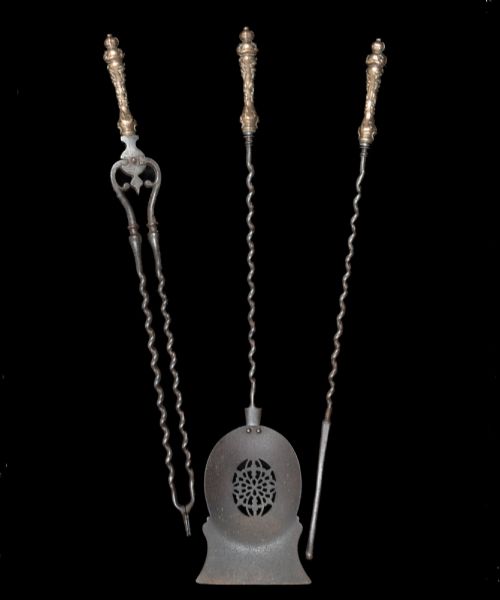
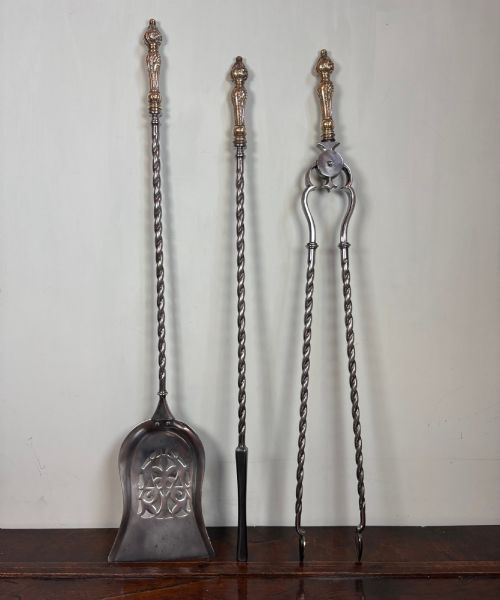
These pierced steel fire shovel examples combine function and finish, offering the traditional steel and brass hearth accessories collectors seek.
What these pieces are
A pierced steel fire shovel forms part of a functional set of fireplace accessories designed for hearth maintenance in period interiors. The pieces listed on this page span the Georgian, Regency, and Victorian eras, alongside dated examples from eighteen eighty and the nineteenth century.
Most entries appear as part of companion fire tools or fire irons rather than single items. Buyers frequently encounter sets combining polished steel with brass, gunmetal, or iron.
How they were made
Makers utilised resilient metals such as steel, iron, and gunmetal for the main body of the tools. Polished steel surfaces provide a bright, reflective finish typical of the period.
Brass components appear in handles and mounts to introduce contrasting metallic tones. Pierced decoration on the shovel blades required precise cutting techniques by skilled smiths.
Retail Price Guide 2026
Typical UK retail prices for pierced steel fire shovel, calculated from the Sellingantiques database of over a million retail prices indexed since 2003. This retail price guide relies exclusively on Sellingantiques data; no external sources or auction records are used, so the figures do not describe the wider market.
Listings feature steel, brass, gunmetal, and iron across Georgian, Regency, and Victorian periods.
What varies in quality
Superior examples display crisp piercing on the shovel blade and well-balanced proportions across the companion tools. The integration of contrasting metals like gunmetal and brass indicates finer workshop production.
Simpler pieces rely entirely on plain polished steel without decorative piercing or mixed metal details. The quality of the finish and the integrity of the original construction dictate the standing of each piece.
The Pierced Steel Fire Shovel Glossary
- Fire irons
- A collective term for the poker, tongs, and shovel used to tend a domestic hearth. These implements usually sat together in a dedicated stand or basket.
- Gunmetal
- An alloy of copper, tin, and zinc valued for its durability and dark grey lustre. It frequently appears alongside steel in nineteenth-century fireplace equipment.
- Polished steel
- Iron alloy treated to create a bright, reflective surface finish. This finish requires regular maintenance to prevent oxidation in damp environments.
- Pierced steel
- Sheet metal punched or cut with decorative patterns, commonly found on shovel blades. This technique lightens the implement while adding ornamentation.
Frequently Asked Questions
What are fire irons?
Fire irons are a matching set of tools used to manage a coal or wood fire in an open hearth. They typically include a shovel, tongs, and a poker.
These implements were kept close to the fireplace for daily use and designed to complement the interior style of the room.
How do I clean polished steel?
Polished steel requires careful maintenance to keep its reflective surface free from rust and tarnishing. Owners generally use dry cloths and specialised metal care products.
Avoiding moisture prevents pitting on antique steel surfaces over time.
Can I use these tools?
Many buyers acquire these historic fireplace tools for decorative display rather than active hearth use. Their age and construction make preserving the original metal finish a priority.
Gentle handling ensures the brass mounts and pierced shovel blades remain undamaged.
What periods do these pieces span?
The available selection includes examples from the Georgian and Regency periods through to the nineteenth century and eighteen eighty. Each era brought distinct stylistic preferences in metal combinations.
Victorian and George IV pieces often feature robust steel construction paired with contrasting brass details.