


Antique Steel Poker
An antique steel poker is a hearth essential offering both utility and period character for a traditional fireplace.
Antique Steel Poker
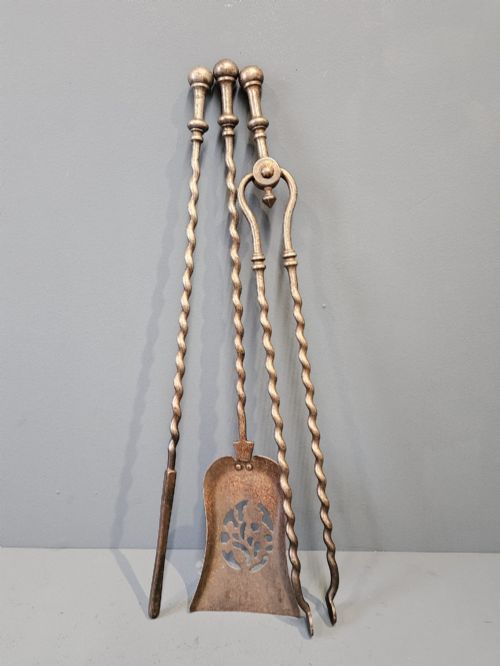
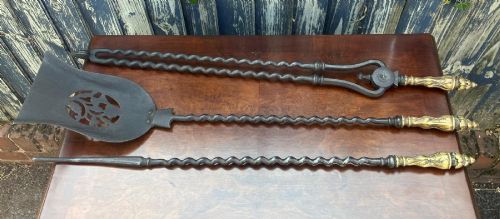
An antique steel poker is a robust hearth implement designed for tending coal and wood fires in domestic settings. When you search for an antique steel poker, you encounter single implements or pieces forming part of larger fire sets and companion sets.
The examples appearing in these listings span the eighteenth, nineteenth, and early twentieth centuries, encompassing Georgian, Regency, Victorian, and Arts and Crafts styles. They often appear alongside brass, iron, and gunmetal elements, frequently paired with shovels and tongs.
Many survivors belong to sets rather than appearing in isolation, reflecting how hearth furniture was manufactured and sold as a coordinated suite. Simpler utilitarian designs sit alongside burnished and polished formats intended for formal drawing rooms.
Materials and construction
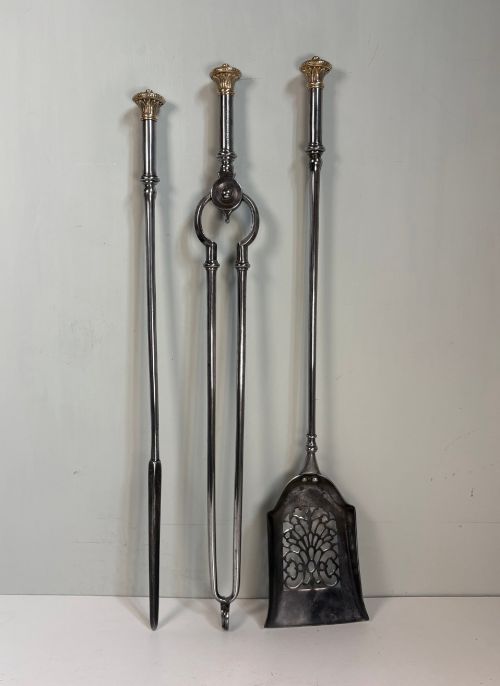
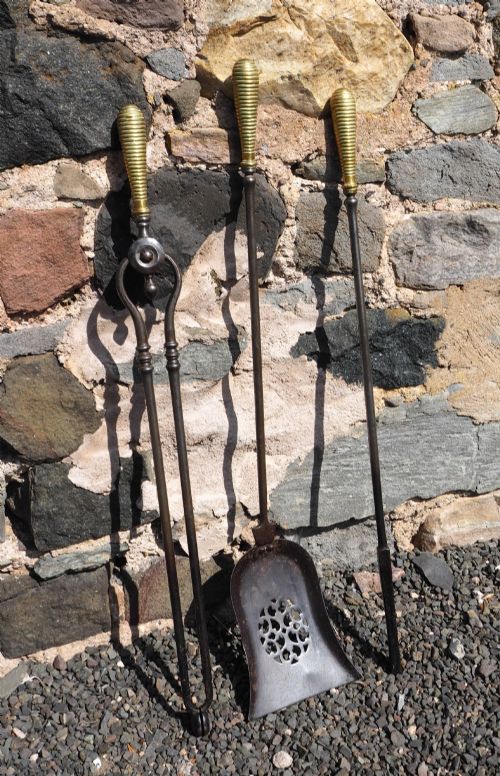
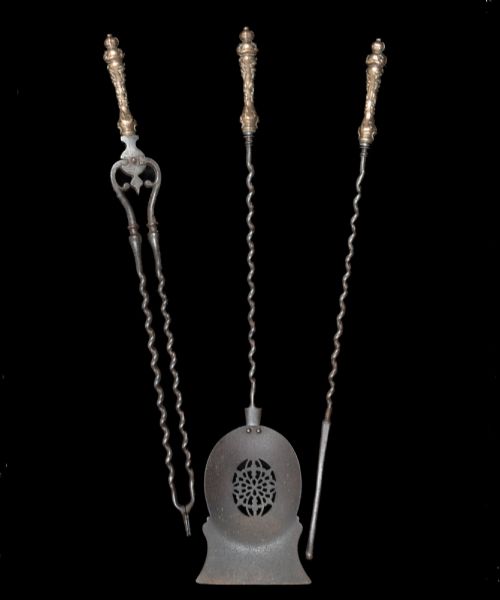
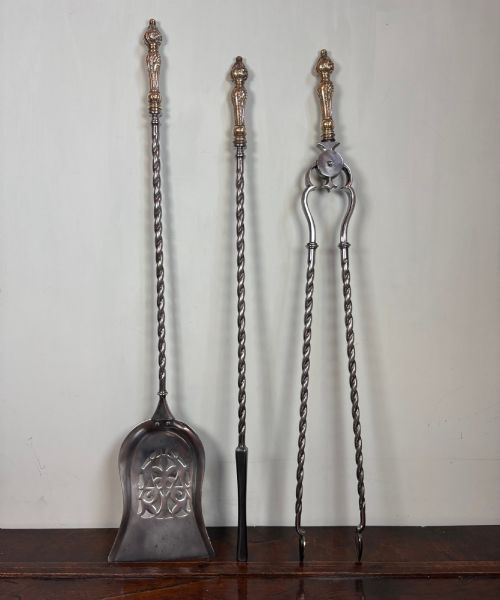
Blacksmiths and metalworkers forged these tools from solid steel, sometimes combining the material with brass handles, gilt brass mounts, or iron shafts. Polished and burnished finishes provided a bright, reflective surface that contrasted with the dark opening of the fireplace.
Handles were frequently turned from brass or incorporated decorative detailing such as urn tops and ring turnings, secured firmly to the steel shaft. The business end of the poker was shaped for strength and durability under intense hearth heat.
The listings here demonstrate that steel pokers frequently survive as part of larger companion sets alongside brass and iron fire irons from the Georgian and Victorian eras.
Assessing quality and craftsmanship
Quality in a hearth poker rests on the weight of the metal, the integrity of the forged construction, and the crispness of any turned or applied brass decoration. Superior examples maintain a balanced proportion and a comfortable heft in the hand.
Surface finish also distinguishes standard utility implements from high-status drawing room pieces, with burnished and polished steel requiring greater skill in initial finishing and subsequent maintenance.
The Antique Steel Poker Glossary
- Steel
- An alloy of iron and carbon valued for its strength and resilience under high temperatures. It forms the primary structural body of these pokers.
- Companion set
- A coordinated group of fireplace tools, typically including a poker, tongs, and shovel, designed to stand together by the hearth.
- Burnished steel
- Metal rubbed or polished with a hard tool to create a smooth, reflective surface finish. This technique enhanced the brightness of formal fireplace furnishings.
- Fire irons
- A collective term for the essential metal implements used to manage a domestic fire. They usually comprise a poker, tongs, and shovel.
- Georgian
- A design period spanning the eighteenth and early nineteenth centuries, characterised by classical proportions and refined decorative restraint.
Antique Steel Poker: Frequently Asked Questions
How were these pokers used?
These pokers were utilised daily to break up coal clinkers, adjust burning logs, and stir the embers to encourage better airflow within the grate.
Because they were built from durable forged metals, they withstood the intense heat of open fires without bending or degrading under normal domestic use.
Are they suitable for daily use?
Most antique steel pokers remain entirely functional and can be employed with modern open fires or wood-burning stoves without difficulty.
Owners should simply ensure the metal is kept dry and free from corrosive soot accumulation to preserve the historic surface condition.
How do I clean polished steel?
Polished steel requires gentle maintenance using specialised metal polishes or fine wire wool to remove light surface oxidation without scratching the historic finish.
Applying a light protective wax film afterwards helps guard against moisture and damp air in unused chimneys.
How do I date a poker?
Dating relies on stylistic clues such as handle turning shapes, decorative motifs like urn finials, and the surrounding companion pieces if a set remains intact.
Georgian and Regency examples tend to feature classical restraint, while Victorian pieces often display heavier proportions and more ornate brass detailing.