
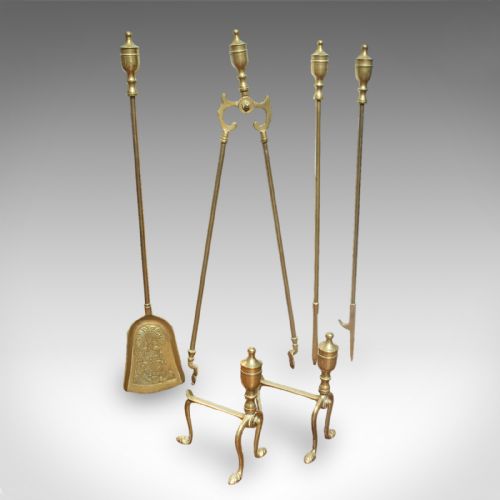


Antique Fireplace Tongs
Antique fireplace tongs form an essential part of period hearth furniture, offering both practical management of coal and wood and distinct decorative presence.
Antique Fireplace Tongs
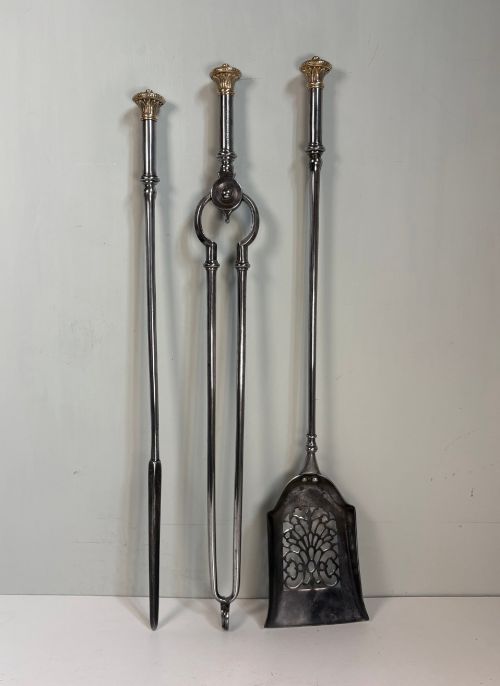
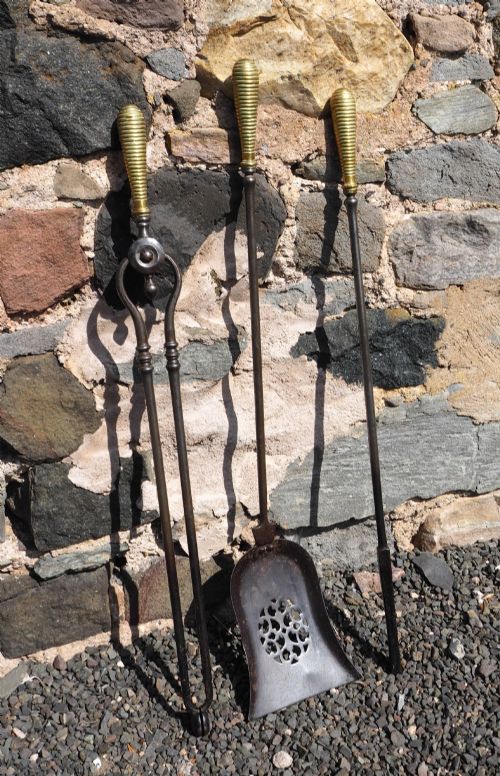
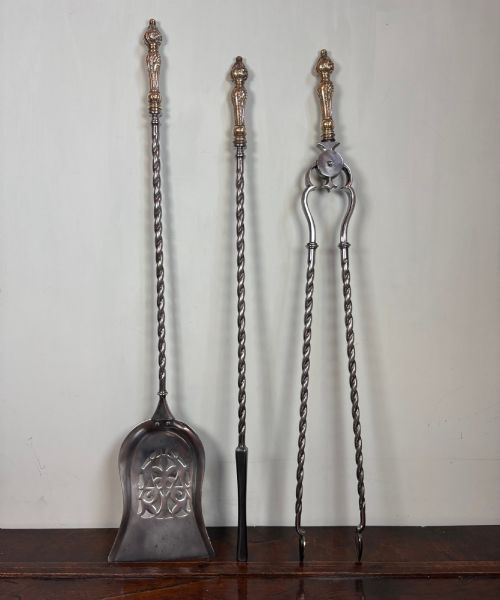
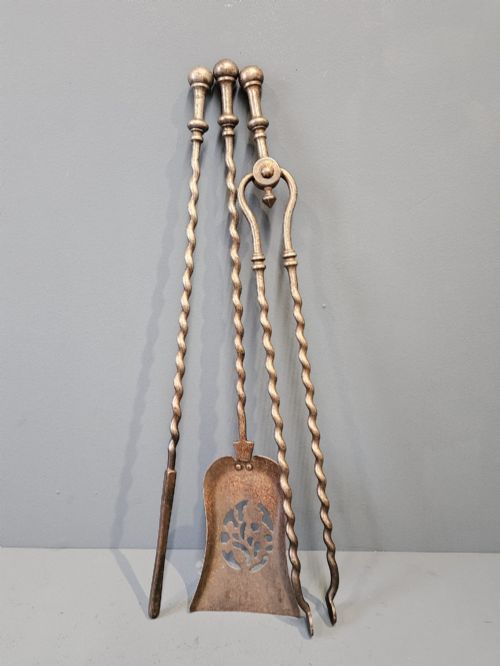
Antique fireplace tongs are utilitarian hearth instruments designed for gripping and moving burning fuel within an open grate. When exploring antique fireplace tongs, buyers frequently encounter complete companion sets or individual pieces originating from the Georgian, Victorian, and Edwardian eras. These domestic implements often appear alongside pokers and shovels as part of a matched grouping utilised in period reception rooms.
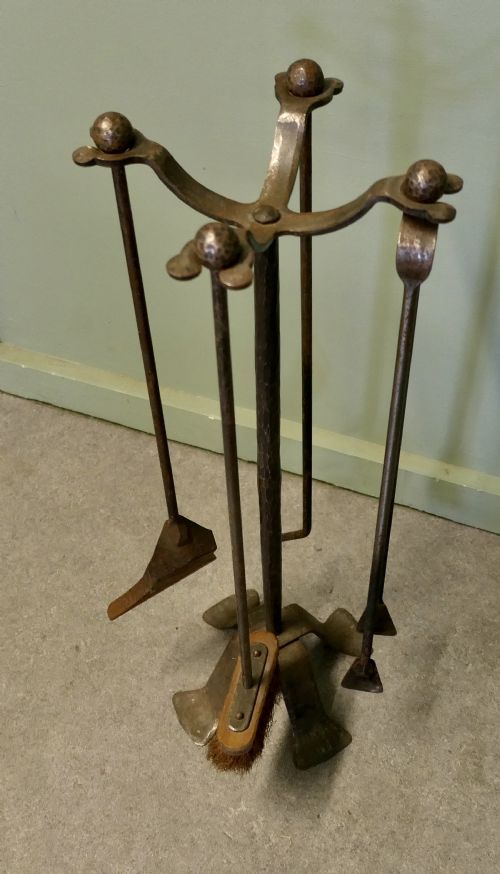
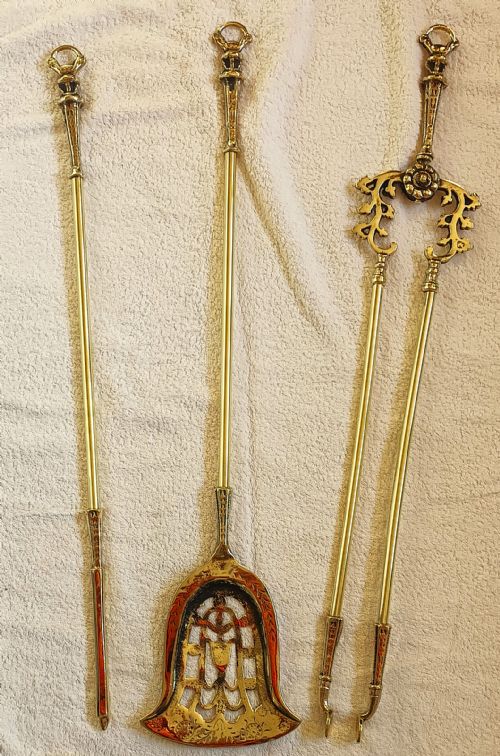
The materials and styles span centuries of domestic design, reflecting changing tastes from austere Georgian steel to ornate Victorian brass. Many examples survive from the nineteenth century, including pieces displaying Arts and Crafts or Gothic Revival characteristics. These items range from simple wrought iron tools intended for large manor house hearths to polished brass designs manufactured for formal drawing rooms.
How they were made
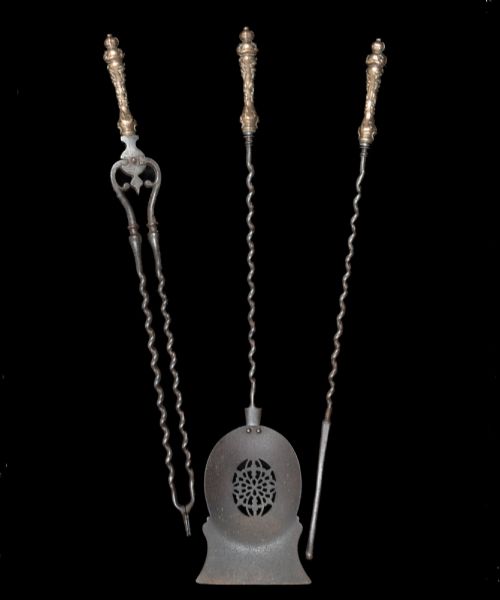
Makers fashioned antique fireplace tongs from robust metals designed to withstand extreme hearth temperatures, principally utilising iron, steel, and brass. Blacksmiths forged early iron and steel variants by hand, often incorporating polished steel finishes or gunmetal details for refined interiors. Foundries cast later brass versions, sometimes integrating turned wooden elements or decorative rope twist handles into the design.
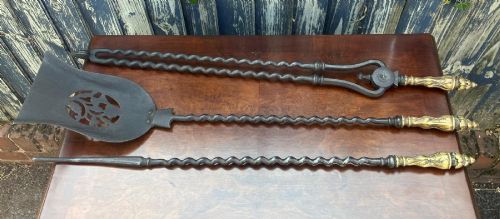
Construction techniques evolved from heavy manual forging to include specialised brass casting and detailed assembly for companion sets. Workshops combined materials within single suites, pairing steel shafts with polished brass handles or mounting implements on matching fire dogs. This dual-metal construction provided the necessary strength at the gripping tip alongside a decorative finish at the handle.
Early blacksmiths occasionally added secret twists to iron tongs so only the keenest butler could lock them.
What varies in quality
The distinction between standard domestic fireplace tongs and superior examples lies in the weight of the metal and the refinement of the finish. Heavier gauges of brass and substantial forged steel indicate a higher grade of manufacture intended for daily use in principal rooms. Superior items exhibit careful proportion, crisp casting details on handles, and a balanced weight that makes the tool comfortable to hold.
Design sophistication further separates exceptional pieces from ordinary utilitarian workshop output. Finer sets incorporate decorative detailing such as rope twist handles or harmonious pairings with companion fire dogs. The integrity of the pivot mechanism and the alignment of the gripping arms also demonstrate the original skill invested in the tool's creation.
The Antique Fireplace Tongs Glossary
- Companion set
- A coordinated group of hearth implements usually comprising tongs, a poker, and a shovel, often mounted on a shared stand or displayed with fire dogs.
- Fire irons
- A collective term for the functional metal tools utilised to tend an open coal or wood fire.
- Gunmetal
- A type of bronze alloy occasionally utilised in nineteenth-century hearth tools to provide a dark, durable metallic finish.
- Wrought iron
- Iron that has been heated and shaped by a blacksmith's hammer, identifiable by its fibrous texture and strength.
- Fender
- A low metal guard placed on the hearth floor in front of the fireplace, frequently accompanied by matching fire irons.
Antique Fireplace Tongs: Frequently Asked Questions
How do I date antique fireplace tongs?
Dating relies on observing the prevailing metalworking techniques, material choices, and stylistic markers recorded across the Victorian, Georgian, and Edwardian periods. Georgian examples often favour steel or gilt brass, whereas Victorian pieces frequently showcase heavier brass casting and diverse revival styles.
Examining construction methods, such as hand-forging versus industrial casting, helps narrow down the era of manufacture. Consulting the design details on the handles provides further clues to the specific decade of production.
Were fireplace tongs used alone?
Tongs were regularly produced as part of larger suites rather than isolated single items. They typically formed part of a matched set that included a shovel and a poker for comprehensive hearth management.
Surviving collections often maintain these groupings together, accompanied by fire dogs or fenders designed in the same aesthetic. Using them as a complete set preserves the intended decorative harmony of the period fireplace.
What metals are most common?
Brass and steel appear most frequently across nineteenth-century and earlier domestic hearth equipment. Brass offered a bright, decorative appearance suitable for formal reception rooms, while steel and iron provided the structural resilience required for heavy fuel handling.
Combinations of both metals are typical, pairing polished steel working ends with decorative brass handles. Gunmetal and wrought iron also feature in specific regional or stylistic variants.
Can antique tongs still be used?
Most period fireplace tools remain structurally sound and capable of functioning within an active open hearth. Their robust iron, steel, and brass construction was originally engineered for demanding daily service.
Buyers often choose to display them alongside period grates or utilise them gently for tending fires. Careful handling preserves the original finish and mechanical integrity of the piece.