
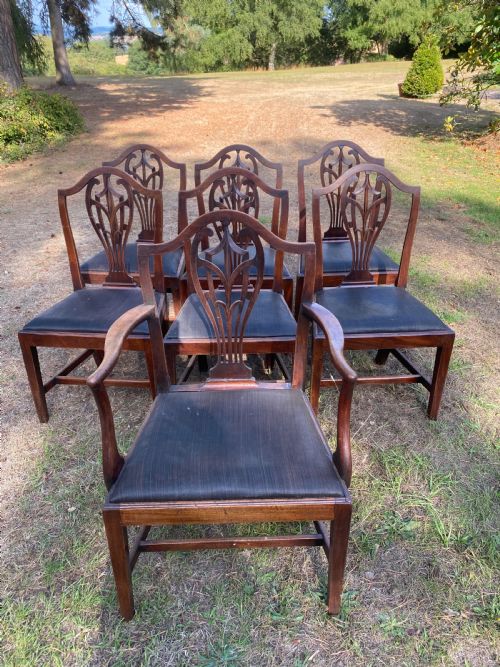
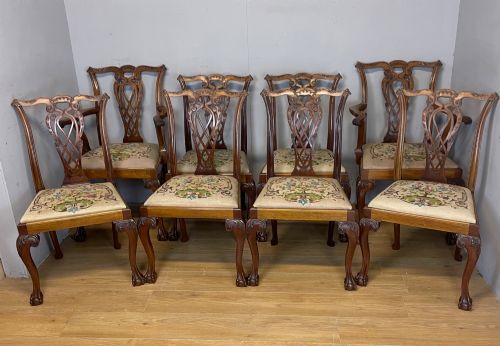
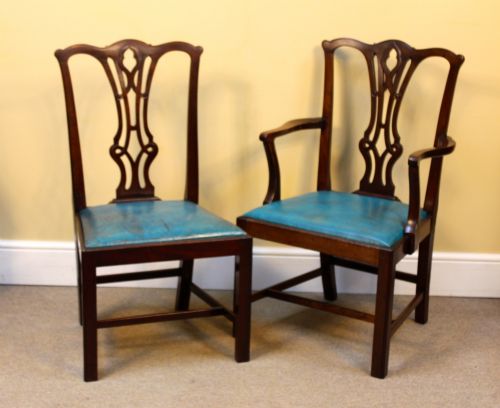
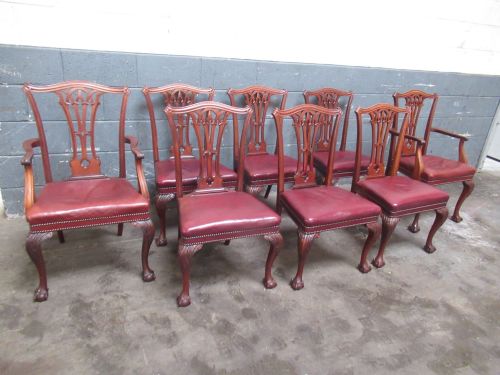
Pierced Splat Mahogany Chairs
These pierced splat mahogany chairs bring dependable craftsmanship and classic timber tones to a room, offering enduring seating options for dining and study.
Pierced Splat Mahogany Chairs
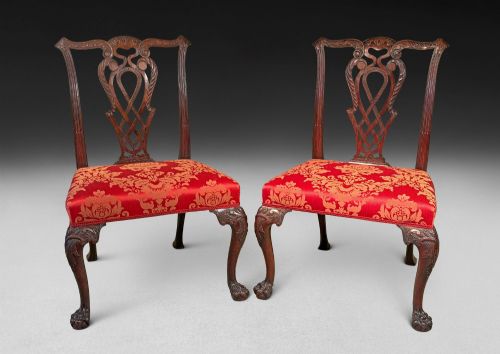
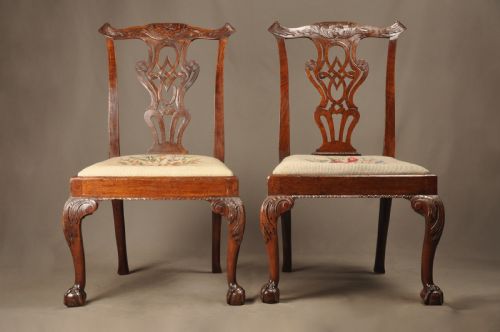
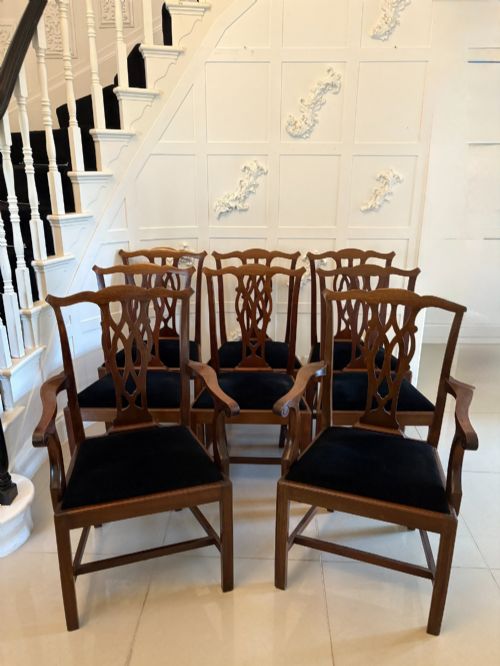
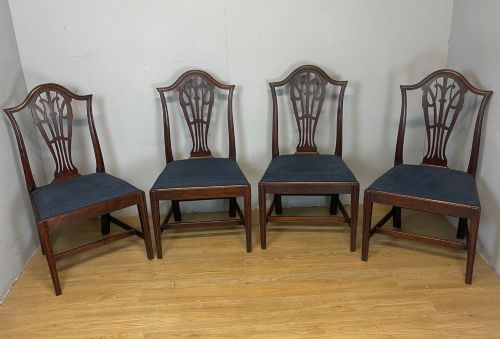
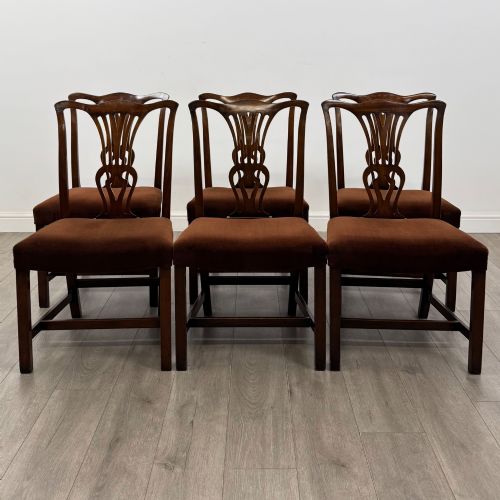
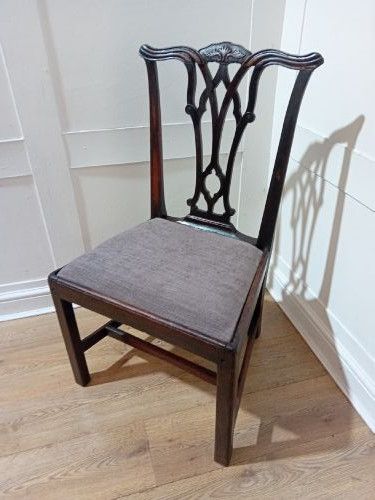
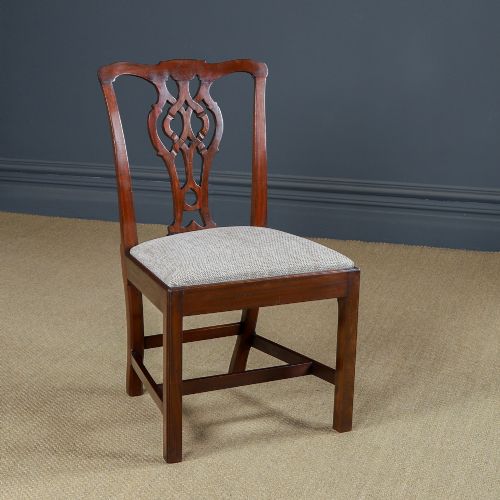
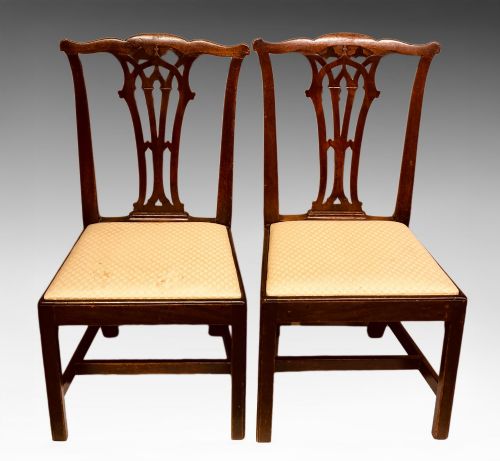
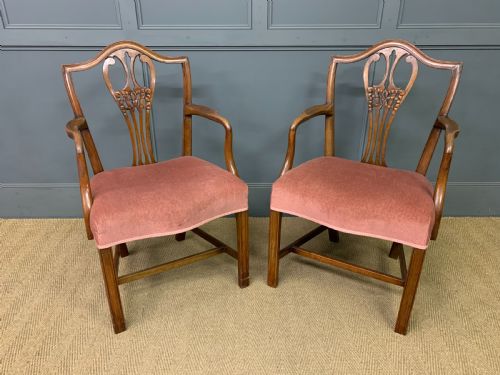
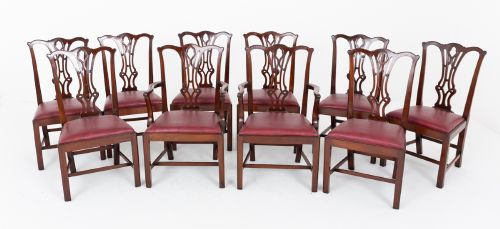
When buyers search for pierced splat mahogany chairs, they encounter practical seating forms designed for dining rooms, studies, and drawing rooms across multiple centuries. These pieces appear most frequently as sets of dining chairs, single side chairs, or individual armchairs and carvers.
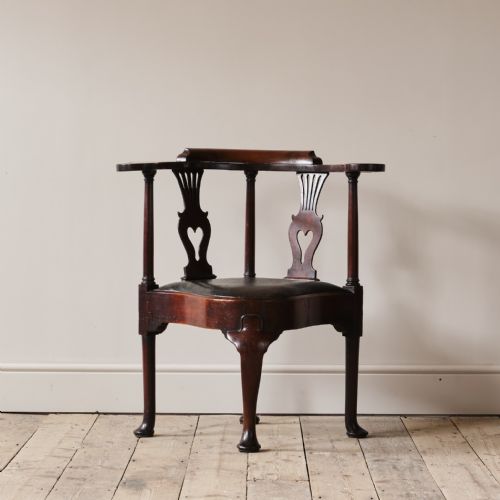
The selection ranges from period 18th-century Georgian and George III examples to later revivals from the 19th and early 20th centuries, including Edwardian and Chippendale Revival pieces. Forms span from standard dining chairs to corner chairs, hall chairs, and desk chairs.
Originating predominantly from English and Irish workshops, these chairs utilise sturdy timbers shaped with distinctive openwork back splats. Buyers frequently meet matched sets alongside pairs and individual carvers suitable for daily use.
How They Were Made
Cabinetmakers built these chairs primarily using dense mahogany, occasionally bleached or carved with intricate details along the crest rails and splats. The timber was selected for its strength, allowing the intricate cutouts of the pierced splats to remain structurally sound under daily weight.
Upholstered elements rely on traditional textiles such as fabric, leather, velvet, and tapestry, secured over stuffed seats often paired with supportive brass details. Frames incorporate traditional joinery, attaching shaped seats to straight, tapering, or carved forelegs.
Upholstered elements across these chairs incorporate fabrics, leather, velvet, tapestry, and brass accents.
What Varies in Quality
The standard of carving and the crispness of the openwork in the splat separate basic utility seating from finer examples. Superior pieces display deeply sculpted details along the top rail and arms, showing confident handling of the timber by the maker.
Integrity of the timber frame and the condition of original or period-appropriate upholstery materials also determine the distinction between ordinary workshop output and exceptional cabinetmaking.
Warings·Wheelers of Arncroach
The Pierced Splat Mahogany Chairs Glossary
- Splats
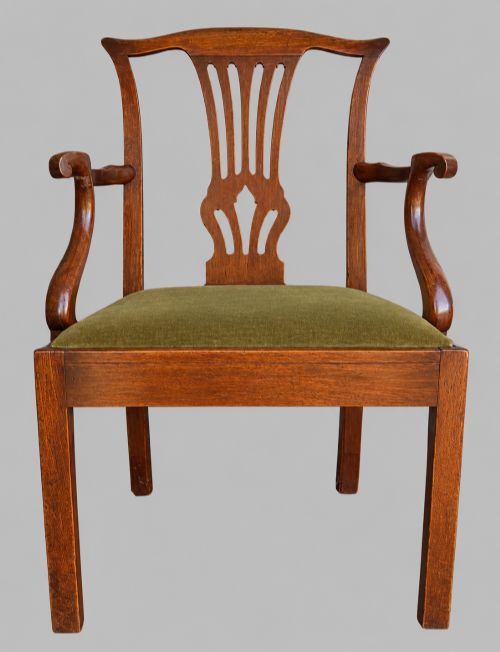
- The vertical central strip of wood in the back of a chair. In these pieces, the splat is pierced or cut through to create decorative openwork patterns.
- Carver
- An armchair, traditionally placed at the head of a dining table or used as a desk chair. These often match the smaller side chairs in a dining set.
- Elbow Chair
- An alternative term for an armchair, referencing the supportive arms that cradle the user's elbows. They frequently appear alongside sets of single dining chairs.
- Overstuffed
- A seat where the upholstery padding covers the wooden frame rails entirely. This method provides a softer edge and a more generous seating area.
- Corner Chair
- A seat designed to fit into the corner of a room, featuring a diagonal orientation with a backrest wrapping around two adjacent sides.
Pierced Splat Mahogany Chairs: Frequently Asked Questions
How do I date an antique mahogany chair?
Dating relies on observing construction methods, timber patination, and stylistic markers such as leg shapes and carving motifs. Georgian pieces often display hand-cut joinery and signs of age in the mahogany grain.
Later revival pieces from the late 19th and early 20th centuries imitate these earlier forms but utilise machine-assisted production techniques and different secondary woods.
Can I mix these chairs with a modern table?
Mahogany dining chairs pair effectively with contemporary tables due to the deep, neutral tones of the timber. Mixing eras adds textural contrast to a dining space.
Ensure seat heights align comfortably with the underside clearance of the modern table before combining them.
What is the difference between a side chair and a carver?
Side chairs are narrower, armless seats designed to line the sides of a dining table efficiently. They occupy less floor space and move easily.
Carvers feature armrests and broader proportions, traditionally designated for the host at the head of the table or for use as a desk chair.
How should I care for antique mahogany and upholstery?
Maintain the mahogany timber by dusting with a dry cloth and occasionally applying natural beeswax to nourish the surface. Avoid placing the wood near direct heat sources or strong sunlight.
Upholstery care depends on the textile used, requiring gentle vacuuming for woven fabrics or specialised cleaning for leather, velvet, and tapestry.