


Pierced Silver Platter
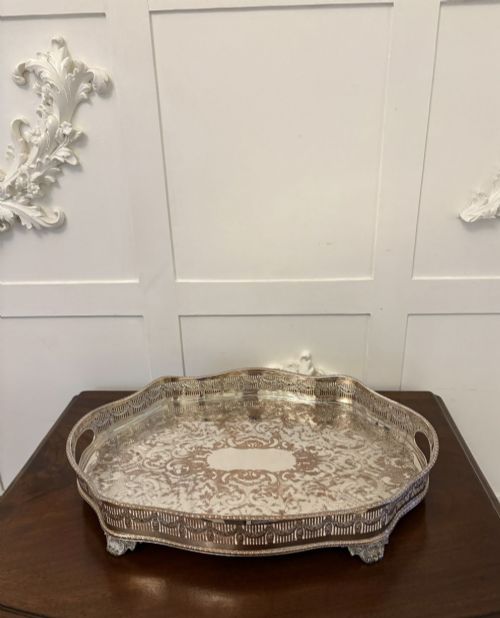
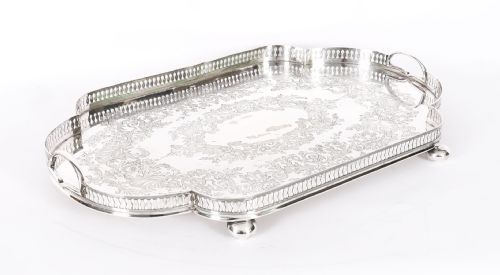
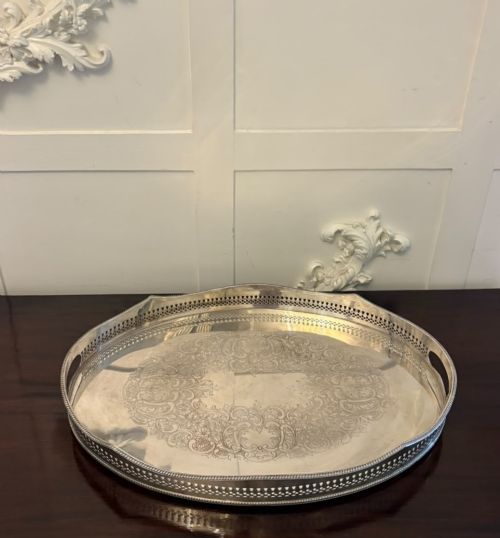
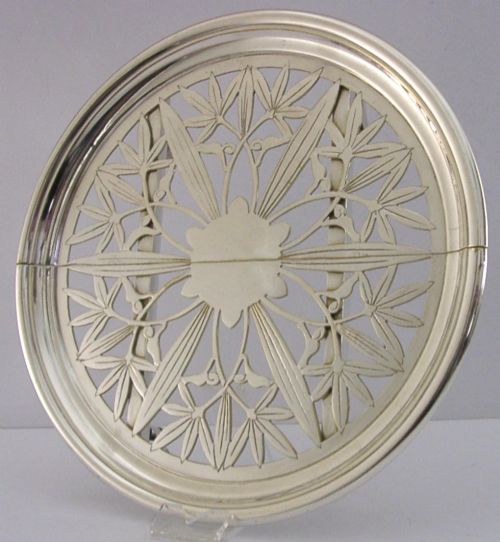
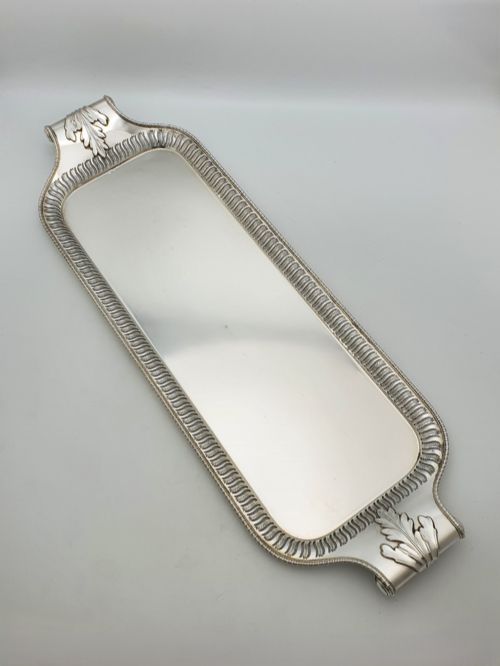
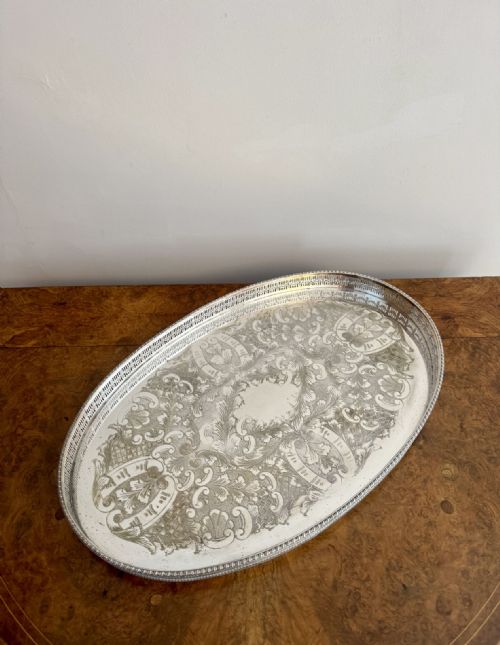
These pieces known as a pierced silver platter are silver-plated serving items with pierced or reticulated borders, bought for display and formal service.
Pierced Silver Platter
A pierced silver platter is a serving piece found in forms such as gallery trays, tea trays, mazarine draining plates, and serving dishes. These items date primarily from the Victorian, Edwardian, and Art Deco periods, spanning the late nineteenth century through to the interwar period.
The selection here includes English and continental examples, alongside items with Indo-Persian and Chinese export origins. Makers such as Mappin & Webb, James Deakin, Elkington, John Collyer, Lee & Wigfull, and J.H. Potter appear among the listed pieces.
Buyers encounter oval, circular, and hexagonal formats, often equipped with handles or wooden bases alongside the metal framework. The defining characteristic across these forms is the pierced, reticulated, or openwork border framing the central surface.
How they were made
These items rely on a base metal, frequently copper, nickel silver, or electroplated nickel silver, which receives a coating of silver plate or old Sheffield plate. Makers utilised techniques including piercing, reticulation, repoussé, embossing, and engraving to ornament the borders and central fields.
Some examples incorporate secondary materials like oak for the tray base, adding structural rigidity to larger serving surfaces. The application of silver plating over copper or nickel silver allowed workshops to produce robust serving items with the appearance of solid silver.
Some trays double as cocktail stations, proving that nineteenth-century hosts took their evening drinks just as seriously as modern ones.
What varies in quality
Quality depends on the precision of the piercing and the depth of the hand-engraved or embossed scrolls on the border. Sharply defined reticulation and substantial gauge metal separate finer serving trays from simpler production pieces.
The reputation of the maker, such as Elkington or Mappin & Webb, influences the standing of a piece within the range. The integration of maker marks and the preservation of the original silver-plated or Sheffield plated surface also dictate the standard of the item.
James Deakin·Mappin & Webb·Christofle·Elkington·John Collyer·Lee & Wigfull·J.H. Potter
The Pierced Silver Platter Glossary
- Pierced
- Pierced work involves cutting decorative patterns through the metal plate to create openwork borders. This technique lightens the visual weight of large serving trays.
- Reticulated
- Reticulated describes a net-like or openwork design formed across the metal surface. It appears frequently on Victorian serving trays.
- Mazarine
- A mazarine is a draining plate pierced with holes to allow liquid to drain from meat or fish during service. These date back to the nineteenth century.
- Sheffield Plate
- Sheffield plate is a composite material made by fusing a thin sheet of silver to a thicker copper base. It is typical of older pieces in this category.
Pierced Silver Platter: Frequently Asked Questions
What is a pierced silver platter used for?
These items serve primarily as tea trays, cocktail trays, or serving dishes for formal presentation. The pierced borders keep items contained while offering an ornamental frame for the table.
Historically, specific variants like mazarines functioned as draining plates for food service. Today, buyers use them for drinks service, display, or centrepieces.
How do I tell Victorian from Edwardian pieces?
Victorian examples date from the nineteenth century and often display heavier gauge metal or traditional Sheffield plate construction. Makers like Elkington and Lee & Wigfull represent this earlier period.
Edwardian pieces, dating from around 1900 to 1910, frequently incorporate intricate gallery rails and refined pierced borders. Makers such as Mappin & Webb and James Deakin are common in this era.
What is electroplated nickel silver?
Electroplated nickel silver, abbreviated as EPNS, is a base metal alloy of copper, nickel, and zinc coated with a layer of silver using an electrolytic process. It became a standard manufacturing method in the nineteenth and twentieth centuries.
This technique provided a durable and uniform alternative to older fusion plating methods like Sheffield plate. It allowed workshops to produce intricate pierced trays efficiently.
How do I clean a silver plated tray?
Cleaning requires a soft cloth and a specialised silver polish formulated for plated items. Vigorous scrubbing should be avoided to protect the underlying copper or nickel silver.
Careful handling preserves the engraved details and the integrity of the pierced borders on older serving trays.