


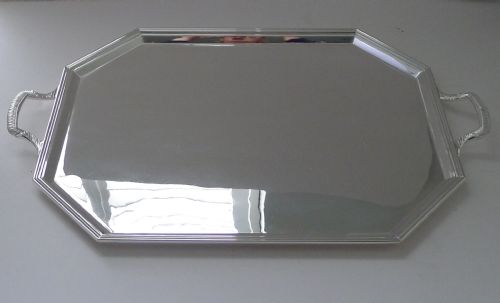


Art Deco Cocktail Platter
An art deco cocktail platter brings serious style to your drinks hour, combining period glamour with utilitarian metal and glass.
Art Deco Cocktail Platter
An art deco cocktail platter combines geometric styling with practical surfaces designed for holding drinks and glassware during entertaining. You will encounter pieces dating predominantly from the 1920s and 1930s, reflecting the height of the modernist design movement.
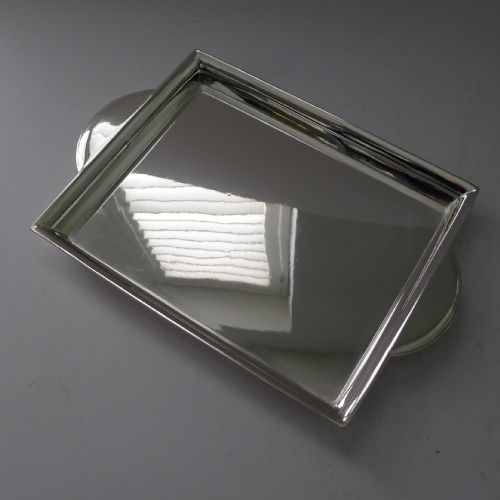
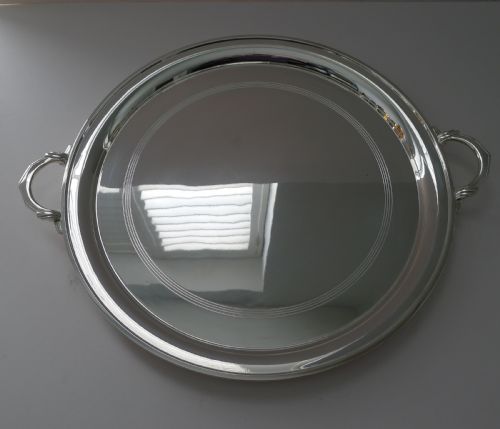
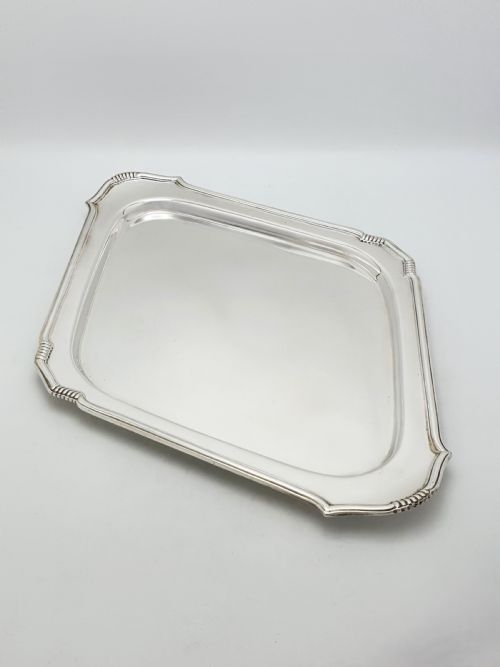
Forms vary from simple circular and diamond shapes to handled serving trays and specialist drinks platters. Many examples integrate decorative borders, shell motifs, or novelty character depictions such as Charlie Chaplin.
How they were made
Makers utilised resilient base metals and silver plating techniques to form sturdy trays that could withstand regular use. Surfaces were frequently embellished with engine turning, etching, or geometric cutting to catch the light during evening gatherings.
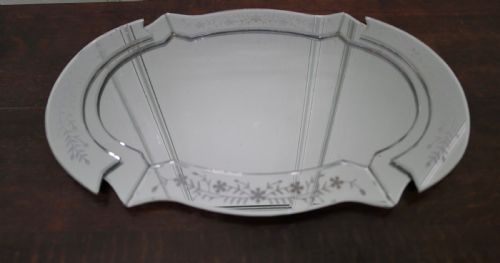
Mirrored glass and Venetian cut glass panels were secured into metal frames, providing a reflective base for crystal decanters and cocktail glasses. Handles were cast separately and soldered or riveted to the main body for durability.
Materials recur across silver plate, chrome, nickel silver, cobalt blue glass, and mirror, demonstrating the diverse manufacturing palette of the period.
What varies in quality
The distinction between standard production and top tier work rests on the weight of the metal and the precision of the detailing. Heavier gauge silver plating and substantial mountings separate bespoke commissions from simpler commercial output.
Maker attribution elevates a piece significantly, particularly when bearing marks from notable silversmiths and design houses. The clarity of etched glass inserts and the crispness of engine turned patterns further define the upper tier of surviving examples.
Keith Murray For Mappin & Webb·J B Chatterley & Sons·Hukin & Heath·James Dixon & Sons·Roberts & Dore·Asprey, London·Elkington·Roberts & Belk
The Art Deco Cocktail Platter Glossary
- Silver plate
- A layer of silver bonded to a base metal core. This technique allowed makers to produce substantial serving items at a lower cost than solid sterling silver.
- EPNS
- Electroplated nickel silver. A common base material for twentieth century tableware providing a durable foundation for silver plating.
- Engine turning
- A mechanical engraving method used to create precise, intricate geometric patterns across metal surfaces. It adds texture and reduces the visibility of minor surface wear.
- Venetian mirror
- Silvered glass produced in Venice, often featuring bevelled edges or hand etched decoration. These panels provide a decorative reflective base for cocktail serving ware.
- Macassar
- A heavily figured tropical timber prized in modernist French design for its deep brown colouring and striking dark grain patterns.
Art Deco Cocktail Platter: Frequently Asked Questions
How do I clean an old cocktail platter?
Use a gentle silver cloth for plated surfaces, taking care not to rub too vigorously near engraved edges. For mirrored inserts, wipe gently with a soft cloth and avoid submerging the tray in water.
Moisture trapped beneath the mirror backing can cause clouding, so keep the piece dry and store it in a stable environment away from direct heat.
Can I use these trays for serving drinks?
Most surviving pieces remain entirely functional for serving cocktails, provided you treat the antique surfaces with reasonable care. Use coasters for sweating glasses to protect vulnerable silver plating and glass inserts.
While sturdy enough for regular hosting, hand washing is essential to preserve the original finishes and prevent chemical damage from modern dishwashers.
How do I date an art deco tray?
Examine the maker marks, style of the handles, and the geometric motifs used across the rim. Pieces from the 1920s often feature softer decorative borders, whereas 1930s examples lean towards streamlined modernist lines.
Checking registry marks or specific silversmith stamps can often narrow down the production year to a precise decade.
What is the difference between EPNS and sterling silver?
EPNS consists of a base metal like nickel silver coated with a thin layer of pure silver. Sterling silver is solid precious metal throughout, marked with distinct hallmarking stamps.
Silver plated items offer the same visual appeal on the cocktail table while remaining much lighter and more accessible for daily use.