


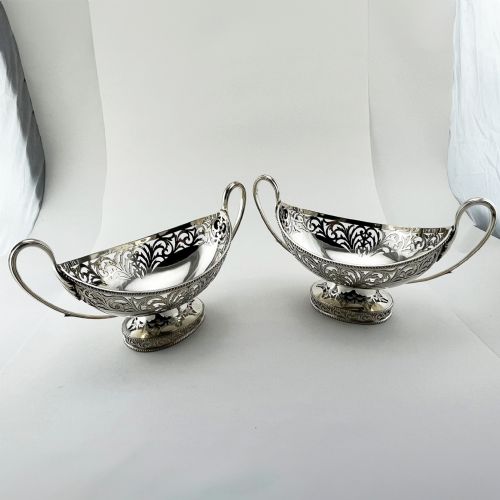


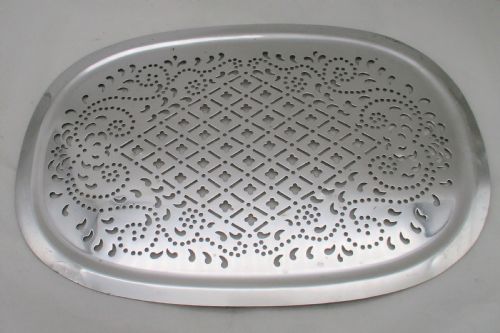


Pierced Silver Plate Dish
A pierced silver plate dish brings openwork metalwork and polished metal to a table, combining function with decorative design.
Pierced Silver Plate Dish
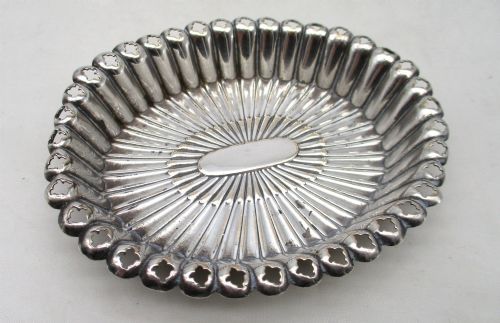
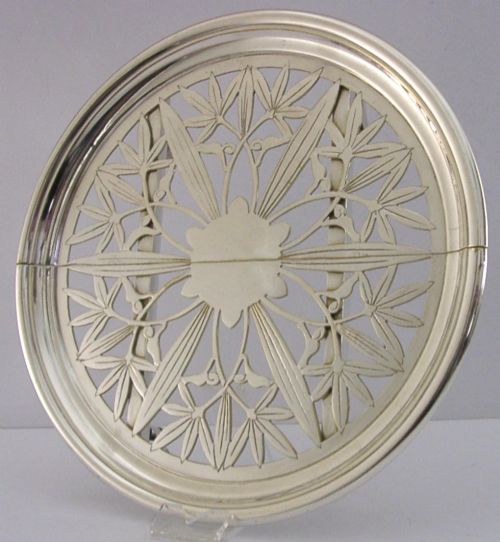
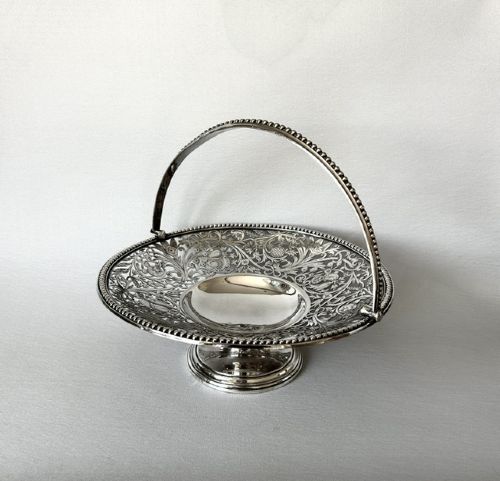
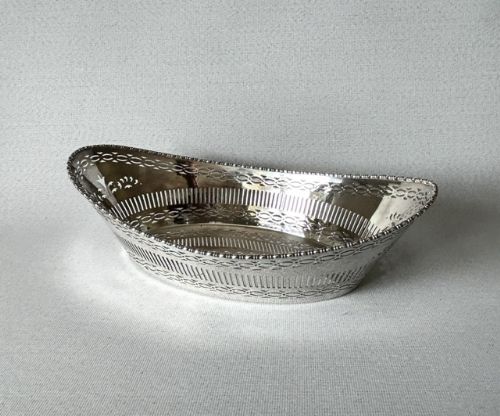
When you search for pierced silver plate dish, you encounter a variety of openwork serveware spanning the eighteenth, nineteenth and early twentieth centuries. The selection includes fruit baskets, bread baskets, bonbon dishes, pin trays, mazarine draining plates and cheese dishes.
Victorian and Edwardian examples dominate the offerings, often featuring elaborate openwork patterns alongside swing handles or removable glass liners in colours like ruby, cranberry and blue. Earlier pieces from the eighteenth century appear in Old Sheffield Plate.
The forms range from small pin trays and hexagonal dishes to large handled serving baskets and extending stands. These items served dining and entertaining purposes in period homes and continue to function as decorative table centrepieces.
Materials and construction
The objects are constructed primarily from silver plate, Old Sheffield Plate, EPNS and electroplated nickel silver, sometimes combined with copper, metal and glass liners. Old Sheffield Plate involves fusing a thin sheet of silver to a copper base, whereas later nineteenth and twentieth century pieces utilise electroplating techniques.
Piercing techniques involve cutting or stamping openwork designs directly into the metal body to create geometric, floral or scroll patterns. Additional elements such as reeded handles, swing mechanisms and fitted glass inserts are integrated into the primary metal framework.
Materials appearing across the inventory include standard silver plate, Old Sheffield Plate, EPNS, copper and contrasting glass inserts.
Assessing quality
Quality in a pierced silver plate dish rests on the crispness of the openwork cutting and the preservation of the underlying metal surface. Cleaner apertures and sharper decorative stamping distinguish finer workshop production from simpler commercial output.
The presence of original coloured glass liners, maker marks from established firms and sturdy handle mechanisms elevate the standing of a piece. The uniformity of the plating layer and the integrity of the joints further separate standard examples from superior ones.
Christofle·Mappin and Webb·Elkington·Thomas Bradbury·John Collyer Birmingham
The Pierced Silver Plate Dish Glossary
- Old Sheffield Plate
- An early method of fusing silver to a copper core before the invention of electroplating. This technique produces a characteristic warm tone where the underlying copper occasionally shows through at high points.
- EPNS
- Electroplated Nickel Silver. A common base metal composition coated with a layer of silver through an electrical process.
- Mazarine
- A flat draining plate or insert pierced with holes or slots. These pieces sit inside larger dishes to drain juices from food.
- Bonbon dish
- A small open vessel designed for holding sweets or confectionery. They frequently feature decorative pierced walls and pedestal bases.
- Swing handle
- A movable handle attached to the sides of a basket via pivots. This allows the handle to drop flat against the rim when not in use.
Pierced Silver Plate Dish: Frequently Asked Questions
What were pierced silver plate dishes used for?
These items functioned primarily as serveware for bread, fruit, cakes, bonbons and cheese during formal meals and tea services. Pin trays held small personal items on dressing tables.
The openwork designs often allowed air circulation or drainage when combined with glass liners or mazarine inserts, serving both practical and decorative roles in the dining room.
How do I clean a silver plated dish?
Clean these items using a soft cloth and mild, non-abrasive silver cleaner formulated for plated surfaces. Avoid harsh scrubbing that can wear away the thin silver layer over the base metal.
Take care around glass liners and remove them before polishing the metal frame to prevent chemical contact with the coloured glass.
How can I tell Victorian from Edwardian pieces?
Victorian examples tend to feature heavier, more ornate decoration with dense floral or scroll piercing reflecting nineteenth-century tastes. Ruby and cranberry glass liners frequently accompany these items.
Edwardian pieces often display lighter, more refined piercing patterns influenced by neoclassical or simpler stylistic revivals. The proportions generally lean toward airier forms.
What is Old Sheffield Plate?
Old Sheffield Plate is a composite material made by melting a sheet of silver onto a copper ingot and rolling them together under heat. This predates nineteenth-century electroplating methods.
Dishes made this way show a distinct edge where the copper core is visible, which serves as an indicator of this early manufacturing process.