
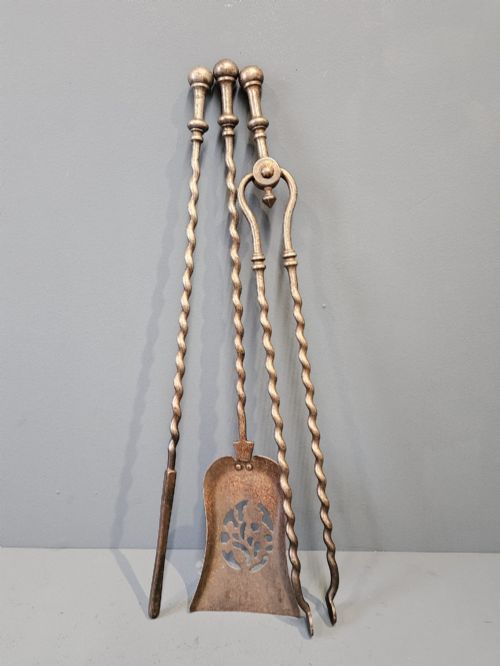
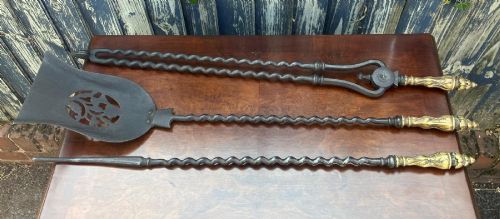


Pierced Shovel Companion Set
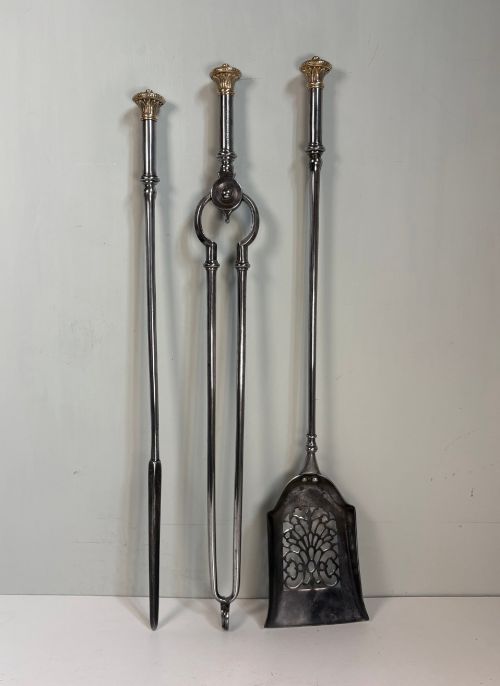
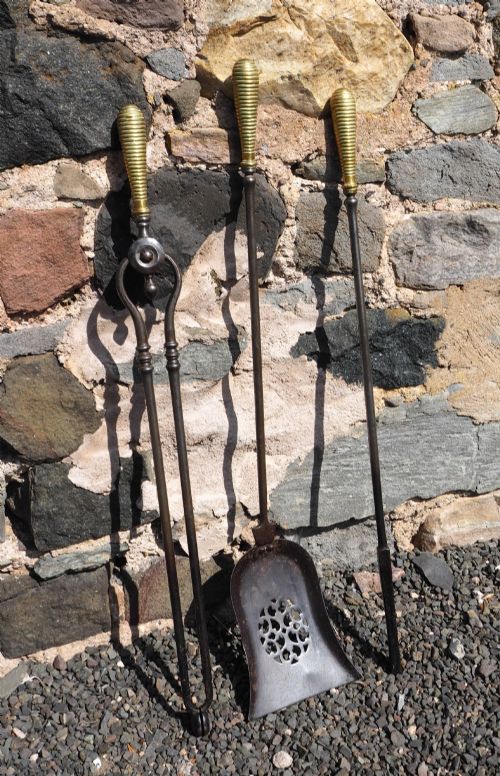
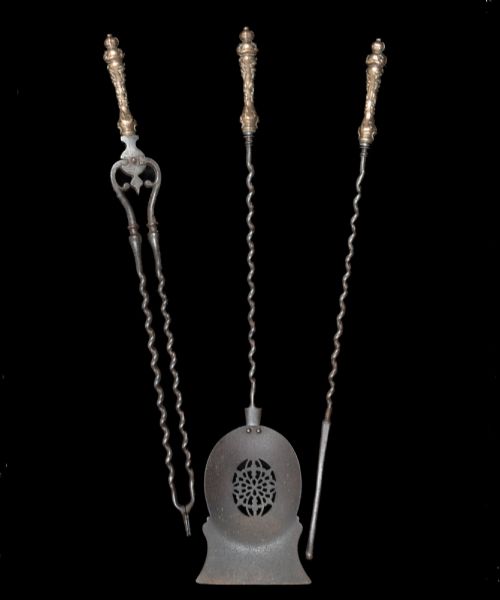
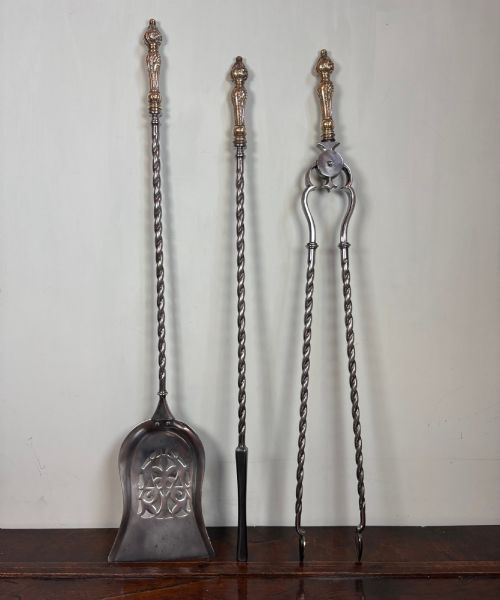
These pieces known as a pierced shovel companion set bring utilitarian metalwork and hearth furniture together for the fireplace.
Pierced Shovel Companion Set
The versions most likely to meet you on this page date from the eighteenth century through the Victorian period, spanning Georgian, Regency, and Arts and Crafts styles. They appear in matched sets or coordinated groupings intended to stand beside the fireplace as both practical equipment and decorative furnishings.
Materials and construction
The primary metals used in these companion sets are steel, brass, and iron, often combined within a single set to contrast bright brass handles against polished steel shafts. Gunmetal and burnished steel also appear among the surviving pieces, reflecting the metallic preferences of nineteenth-century metalworkers.
Makers shaped these tools through forging, casting, and hand-piercing the metal blades. Polishing and finishing techniques created the reflective surfaces seen on Regency and Victorian examples, while handles frequently incorporated cast brass details like starburst motifs.
Starburst brass handles ensure your hearth sparkles even when the fire is completely out.
Factors of quality
The distinction between ordinary and superior sets rests on the crispness of the hand-pierced work on the shovel blade and the tactile weight of the metal. Higher quality sets demonstrate careful proportion across all three pieces, ensuring the poker, tongs, and shovel form a balanced visual and physical unit.
Material selection also dictates quality, with burnished and polished steel requiring superior initial stock and ongoing maintenance compared to plain iron. Integrated design elements, such as matched brass handles or decorative casting, separate standard utility tools from fine hearth furniture.
The Pierced Shovel Companion Set Glossary
- Pierced shovel
- A coal shovel featuring decorative cut-outs or perforated patterns through the metal blade. This detail allowed fine ash to fall through while retaining larger unburnt cinders.
- Companion set
- A coordinated group of fireplace tools, usually comprising a shovel, poker, and tongs, designed to be stored together on a stand or fender. These sets ensured the hearth had matching implements ready for use.
- Burnished steel
- Steel that has been mechanically polished to a high, reflective shine. This finish was favoured during the Regency and Victorian periods for decorative fireplace equipment.
- Fire irons
- The collective term for metal implements used to tend a fire, including pokers, tongs, and shovels. They were often displayed prominently in the main rooms of a house.
- Gunmetal
- A copper alloy containing tin and zinc, historically used for durable mechanical parts and occasionally incorporated into fireplace tools for its dark, lustrous appearance.
Pierced Shovel Companion Set: Frequently Asked Questions
What is a pierced shovel used for?
The pierced shovel was designed to lift coal or ash from the grate while allowing fine particles to sift back down through the decorative cut-outs. This kept the hearth tidy and separated usable fuel from waste.
In daily use, the pierced blade also lightened the overall weight of the tool, making it easier to handle when clearing a working fireplace.
How do I style a companion set?
These sets are traditionally placed directly beside the fireplace, resting against a fender or hung from a dedicated stand. They serve as functional objects that also introduce metallic texture and period character to the room.
Matching the metal finish of the tools to other fireside accessories, such as brass fenders or coal buckets, helps create a cohesive arrangement.
Are these tools safe to use?
Most antique fire irons remain structurally robust and entirely suitable for managing a modern open fire or wood burner. The heavy gauge steel and brass used in Georgian and Victorian examples withstand regular heat and movement.
Care should be taken with antique brass handles and delicate pierced work to avoid unnecessary impact during heavy tasks.
How do I date a companion set?
Dating relies on observing the prevailing style of the handles, the methods of construction, and the type of metal finish. Georgian and Regency pieces often feature clean, classical lines and high-polish steel, while Victorian sets frequently incorporate cast brass ornamentation.
Examining how the tools are joined together provides further clues to their period of manufacture.