
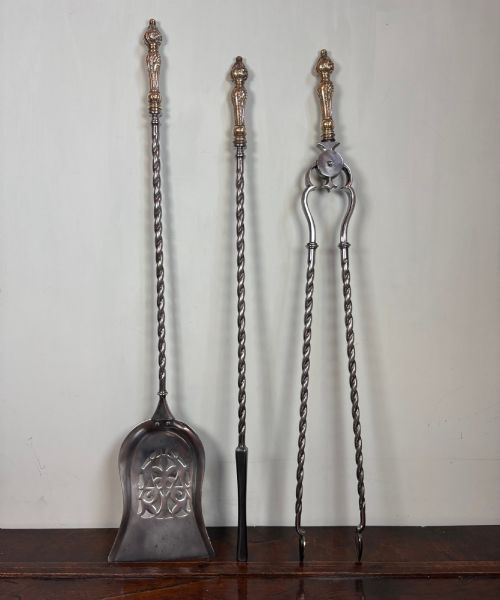
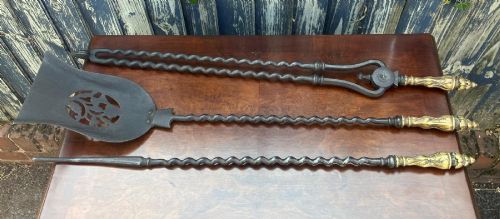


Brass and Steel Fire Irons
Brass and steel fire irons bring functional elegance to a hearth, combining sturdy metal shafts with decorative handles for daily fireside use.
Brass and Steel Fire Irons
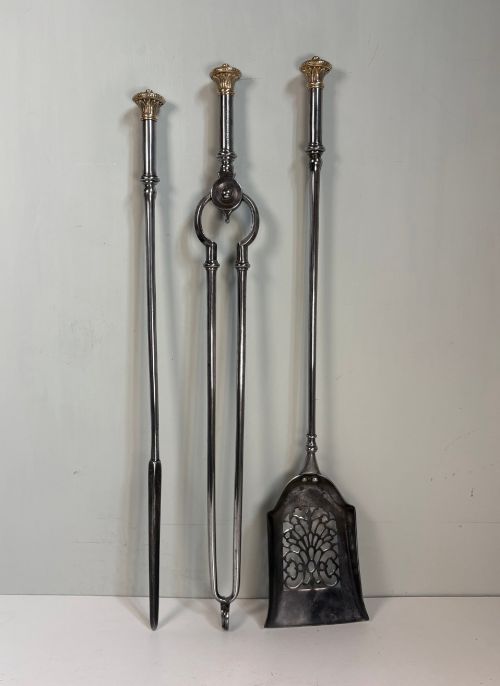
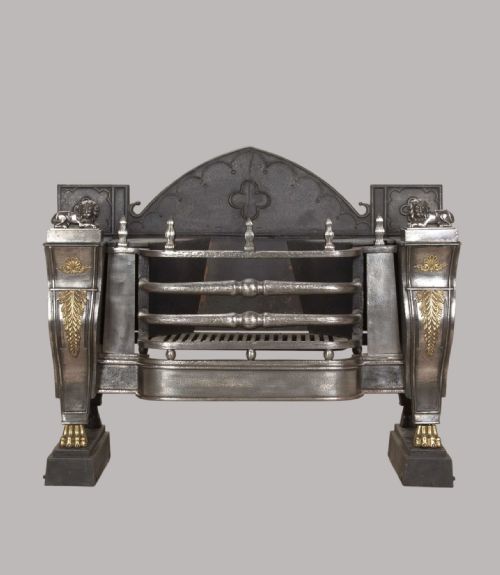
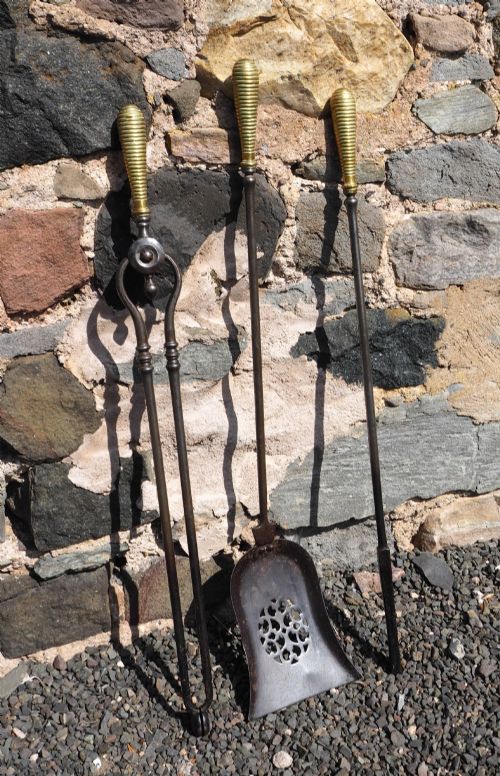
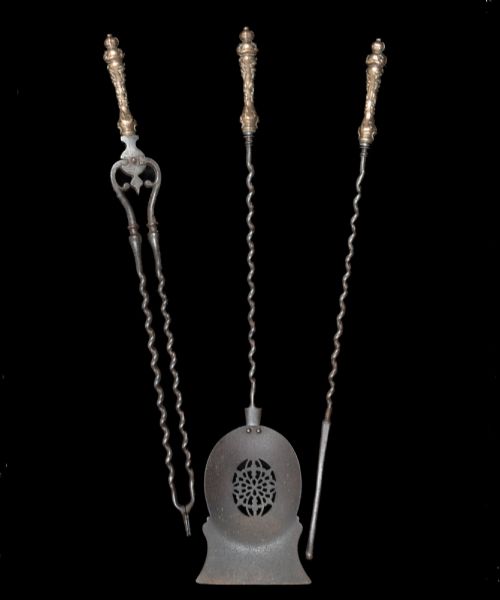
Brass and steel fire irons form functional companion sets designed for tending domestic hearths. You encounter complete tripartite sets comprising tongs, a poker and a shovel, frequently paired with fire grates or fenders.
The surviving selection spans the eighteenth, nineteenth and early twentieth centuries. Georgian and Regency examples sit alongside robust Victorian sets featuring polished brass handles and steel shafts.
What varies in quality
Quality rests upon the weight of the metal and the crispness of the brass handle casting. Heavier sets demonstrate superior substance and balance in the hand during hearth use.
Refinement of design distinguishes standard utility tools from finely detailed Regency or Georgian examples with ornamental detailing on the grips.
Materials recorded across the archive include steel, brass, cast iron, wrought iron, gunmetal and gilt brass.
The Brass and Steel Fire Irons Glossary
- Fire irons
- Implements used for tending a fire, typically consisting of a poker, tongs and a shovel. These tools were essential for managing coal or wood fires in open grates.
- Companion set
- A coordinated group of fireplace tools displayed together on a stand or fender. Sets usually include three matching pieces.
- Fender
- A low metal guard placed in front of a fireplace to contain sparks and ash. Fenders often incorporate rests designed to hold fire irons.
- Gilt brass
- Brass coated with a thin layer of gold or gold-coloured finish. This treatment added brightness to nineteenth-century hearth furnishings.
- Hob grate
- A type of fireplace featuring raised side platforms for heating pots. These grates frequently accompany early iron and steel fire tool sets.
Brass and Steel Fire Irons: Frequently Asked Questions
What tools come in a set?
Complete sets typically comprise three pieces: a poker for adjusting fuel, tongs for handling logs or coal, and a shovel for clearing ash.
Historical sets were designed to hang from a fender or stand together beside the hearth for daily use.
How do I date these items?
Dating relies on stylistic clues in the brass handles and the manufacturing techniques visible on the steel shafts.
Georgian and Regency pieces often show neoclassical restraint, while Victorian examples can be heavier with more ornate cast brass grips.
Can I use them on a fire?
Most surviving sets remain structurally robust enough for regular use in an open fireplace or stove.
Steel shafts and brass handles withstand normal heat, though collectors often choose to preserve fragile gilt surfaces by using them gently.
What is a club fender?
A club fender is a low hearth surround featuring cushioned top rails designed for seating by the fire.
These large nineteenth-century accessories frequently incorporate integrated storage or rests for fire irons and fire dogs.