


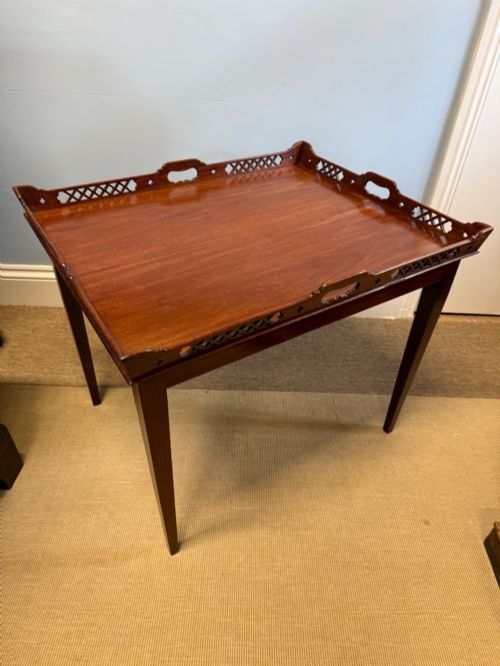


Pierced Gallery Tray Table
A pierced gallery tray table brings practical versatility and distinct period character to a room, offering a raised edge to secure contents safely.
Pierced Gallery Tray Table
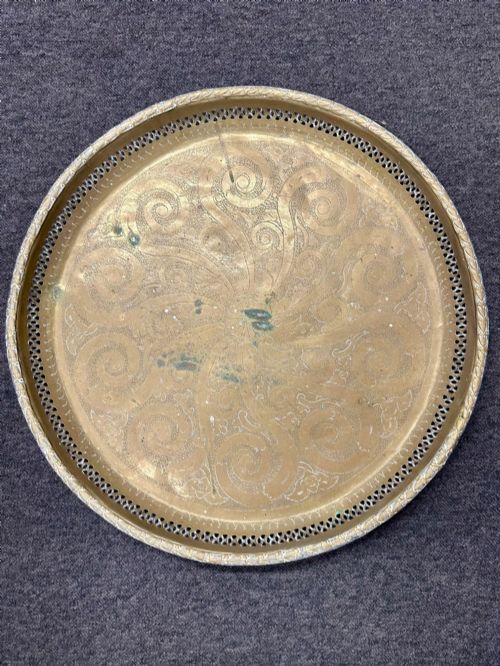
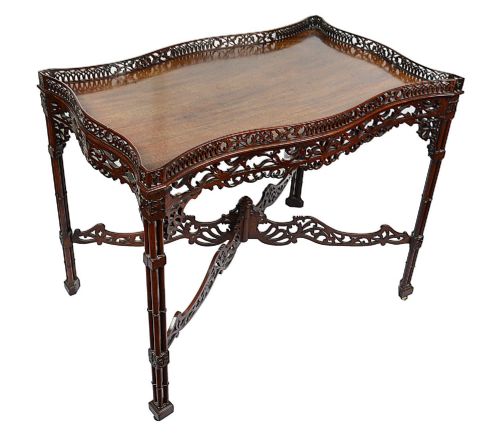
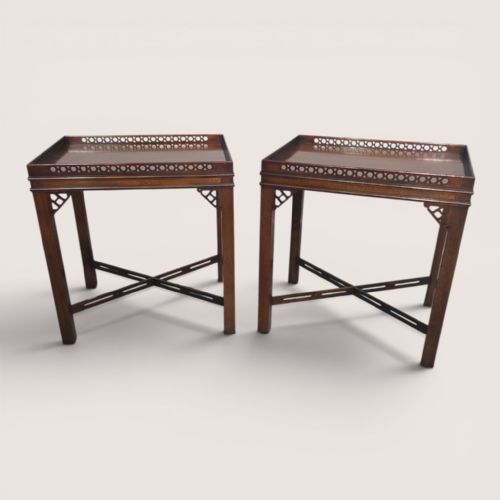
A pierced gallery tray table combines a portable or fixed tray surface featuring a pierced border with a supporting stand, frequently appearing in forms such as occasional tables, side tables, and bedside cabinets. Buyers exploring a pierced gallery tray table encounter pieces spanning the eighteenth century through the twentieth century, incorporating Georgian, Victorian, and Edwardian design influences.
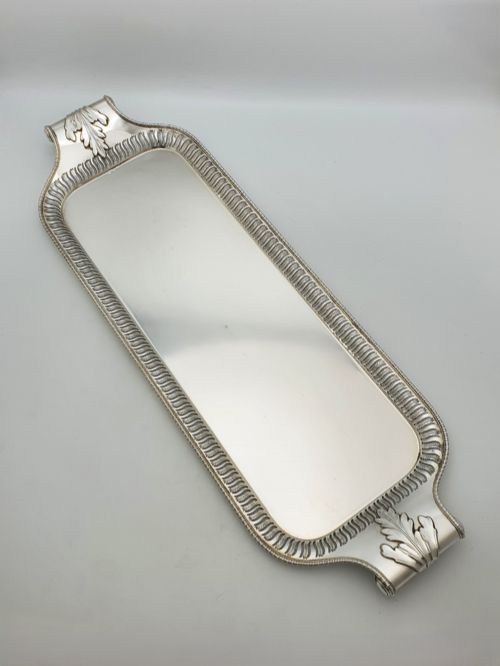
The prevailing material across these examples is mahogany, often paired with silver plate, brass, metal, nickel silver, felt, or oak depending on the specific period and function. Common configurations include removable trays resting on folding or rigid stands, alongside integrated bedside night tables and wine tables featuring raised galleried edges.
How they were made
Makers utilised solid mahogany and oak as structural timbers for frames, stands, and table bodies, applying carved detailing and smooth finishes to accent the wood grain. Trays incorporate pierced borders executed through careful cutting or openwork metal techniques, whilst silver plate and brass elements provide contrasting metallic finishes.
Support stands utilise sturdy joinery to secure the tray tops, whether designed as fixed side tables or collapsible butler tray stands intended for portable use.
Pierced Gallery Tray Table Retail Price Guide 2026
Typical asking prices for pierced gallery tray table among the pieces listed under this phrase on Sellingantiques today, from the lower quarter to the upper quarter. They describe what is for sale here now, not the wider market.
What varies in quality
The distinction between standard examples and finer pieces lies in the crispness of the pierced gallery work and the selection of timber figure, particularly in mahogany surfaces. Superior construction is evident in the precision of the joinery connecting the tray borders to the base and the harmony between the stand and the upper surface.
Period authenticity also influences the character of a piece, with eighteenth-century origins displaying distinct cabinetmaking methods compared to later Chippendale Revival or Edwardian interpretations.
The Pierced Gallery Tray Table Glossary
- Gallery
- A raised ornamental border surrounding the edge of a tray or table top to prevent items from sliding off. It is frequently pierced with openwork patterns.
- Tray table
- A piece of furniture consisting of a removable or fixed tray surface supported by a distinct stand or frame. These serve multiple domestic functions as side or occasional tables.
- Chippendale
- A style of eighteenth-century English furniture design characterised by carved ornamentation, elegant proportions, and rococo or Gothic influences. This style also appears in later revival periods.
- Silver plate
- A metallic manufacturing technique where a thin layer of silver is bonded to a base metal such as copper or nickel. It provides the appearance of solid silver for trays and coasters.
Pierced Gallery Tray Table: Frequently Asked Questions
Are tray tops removable?
Many traditional butler tray tables and serving pieces feature a removable tray that lifts entirely free from its folding or rigid wooden stand. Other variations integrate the tray top directly into the structure of a bedside cabinet or occasional table.
Examining the underside and supports reveals whether the surface is intended to lift off or remain fixed in place.
What materials are used?
Mahogany serves as the primary timber across the majority of these listings, frequently accompanied by oak in structural framing or drawer components. Metal elements include silver plate, brass, and nickel silver, particularly on trays, wine coasters, and decorative borders.
Felt linings also appear inside specific compartments or trays to protect stored items.
How were these tables used?
Historically, tray tables and galleried serving pieces functioned as portable surfaces for serving beverages, holding small dining items, or organising personal belongings in bedrooms and reception rooms. Versions with fixed stands acted as permanent side tables, lamp tables, or bedside night cupboards.
The raised gallery edge ensured that cups, decanters, or small vessels remained secure during transport.