
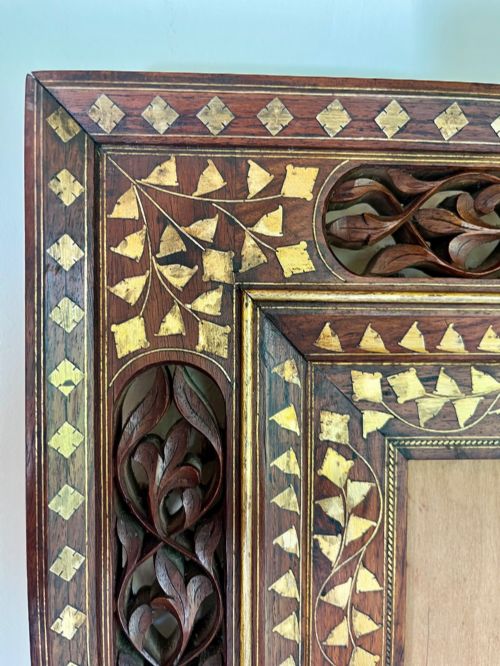


Pierced Frame Wall Mirror
A pierced frame wall mirror brings carved depth and openwork detail to a room, offering reflective light held within intricate wood or metal.
Pierced Frame Wall Mirror
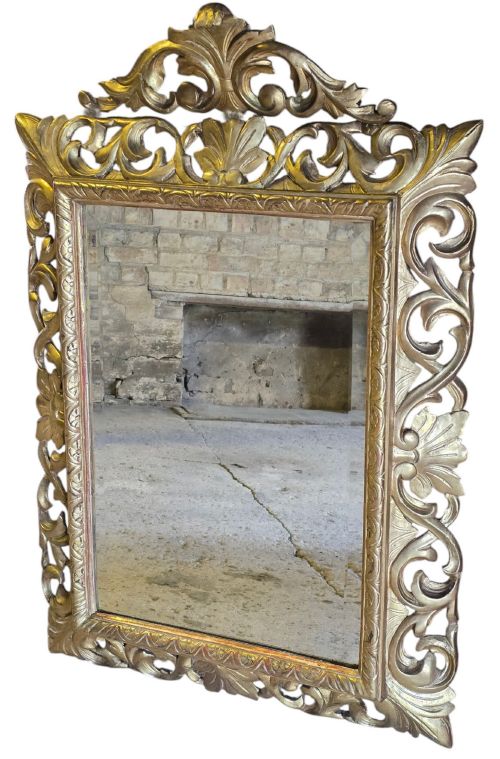
When you search for a pierced frame wall mirror, you enter a field defined by openwork carving, fretwork frames and pierced edges that range from Georgian mahogany to Florentine giltwood.
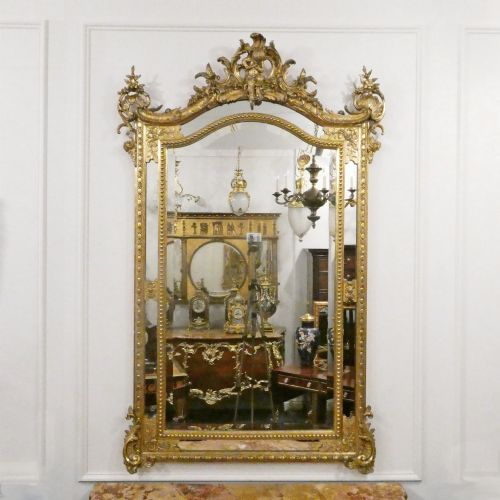
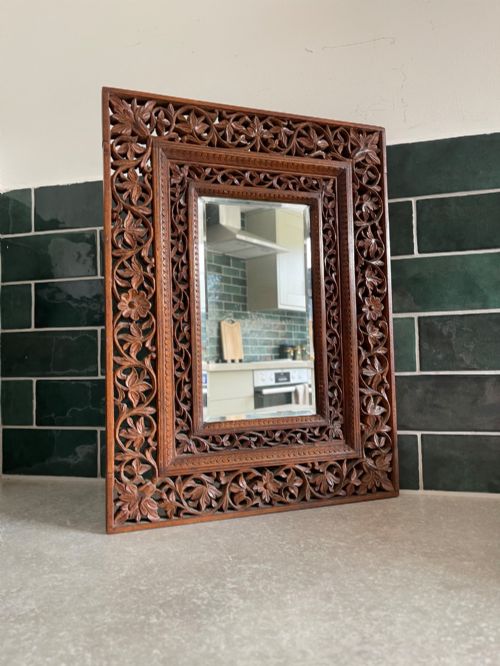
The pieces you meet most often on this page date from the Georgian period through the nineteenth century, taking forms that span Anglo-Indian hardwood carvings, Victorian brass edges and French Louis XVI styles.
These wall mirrors serve both practical reflection and decorative presence, using cutout frames to break the heavy boundary between glass and wall.
How they were made
Makers shaped these frames from timbers like mahogany and oak, or carved softwoods to receive layers of gesso and gold leaf.
Perforations and fret-cut patterns required careful hand-sawing and chisel work, whilst metal versions utilised cast brass or intricate wire and sheet inlay.
Mirror glass was set into these open frames by hand, often retaining original plates that show the slight distortions of earlier manufacturing.
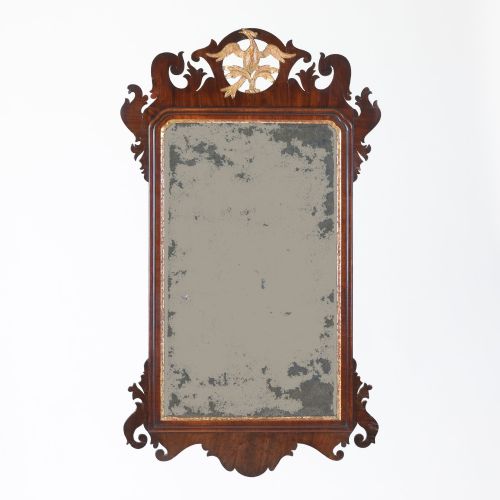
A watchful Ho-ho bird occasionally peers down from the top of a Georgian fret-cut frame.
What varies in quality
The crispness of the openwork carving determines much of the distinction, separating pieces with sharp, undercut foliage or birds from softer, rounded profiles.
The application and survival of original finishes - whether burnished gold leaf on gesso or polished hardwood - dictate the visual depth of the frame.
The integration between the mirror plate and the pierced mount shows the maker's hand, where tight joints and well-fitted backing preserve the structure over centuries.
The Pierced Frame Wall Mirror Glossary
- Giltwood
- Timber coated in fine gold leaf over a prepared gesso ground. This finish provides a warm, reflective surface that catches natural light in a room.
- Fretwork
- Openwork ornamentation carved or pierced from a flat board. It creates intricate geometric or floral patterns light in visual weight.
- Gesso
- A plaster-like mixture applied to wood frames to create a smooth surface for gilding. Its thickness allows for sharp, detailed moulding.
- Overmantle
- A large mirror designed to hang specifically above a fireplace mantel. These pieces anchor the reception room or hall.
- Plate
- The sheet of glass used for reflection. Earlier examples display distinct bevels and minor surface imperfections.
Pierced Frame Wall Mirror: Frequently Asked Questions
Where should I hang a pierced frame wall mirror?
These mirrors suit spaces where light and reflection enhance the room, such as above a fireplace mantel in a reception room or along a hallway wall.
The openwork frame benefits from a plain background that allows the carved silhouette to stand out clearly against the wall surface.
How do I identify a Georgian pierced mirror?
Georgian examples often feature mahogany fretwork, Ho-ho birds, or carved giltwood frames following Rococo or classical lines. The timber construction and hand-cut details mark this period.
Closer inspection of the backboards, joinery, and fixings helps confirm the age and construction methods typical of eighteenth-century workshops.
What is Anglo-Indian woodwork?
Anglo-Indian pieces combine traditional Indian carving techniques with British furniture forms from the nineteenth and early twentieth centuries. They frequently utilise dense hardwoods and intricate inlaid elements.
These frames display distinct floral and geometric pierce-work that differs from standard European Rococo or classical revival styles.
Are the mirror plates original?
Many nineteenth and eighteenth-century mirrors retain their original glass, which can exhibit light foxing, minor silver loss, or subtle distortions.
Original plates contribute to the character of the piece, reflecting light with a softer quality than modern manufactured glass.
How do I care for a giltwood frame?
Giltwood requires gentle dusting with a soft, dry brush to protect the delicate gold leaf and gesso layers from damage.
Avoid liquid cleaners and moisture, as water can lift the ancient gesso and expose the underlying timber.