
Antique Gilded Crested Mirror
An antique gilded crested mirror brings warmth and reflective depth to a room through centuries-old craftsmanship.
Antique Gilded Crested Mirror
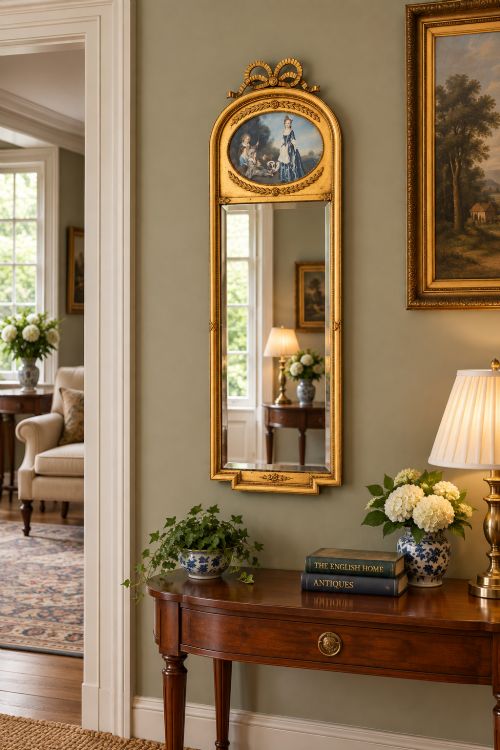
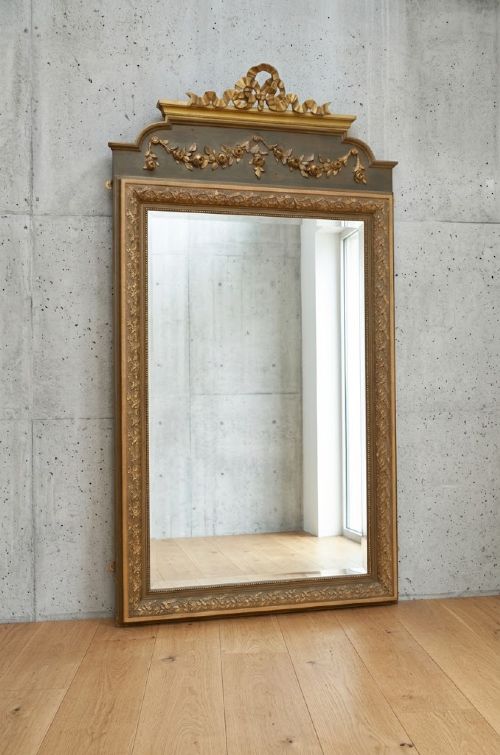
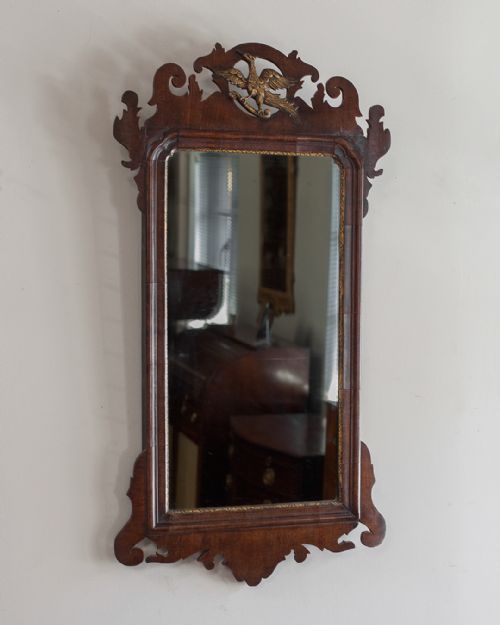
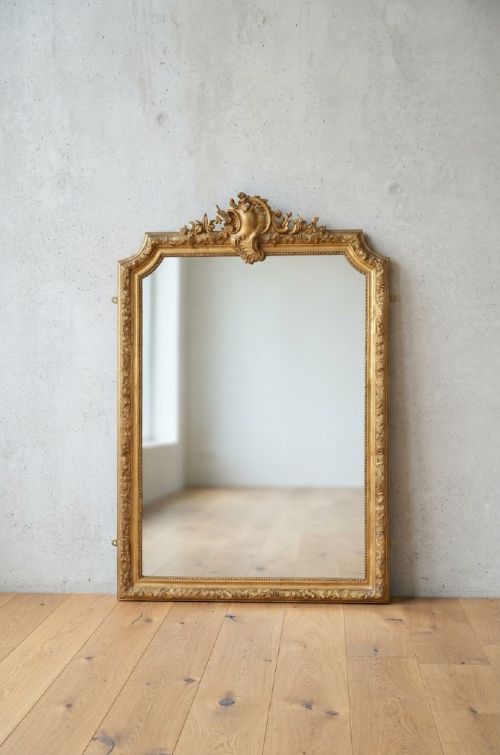
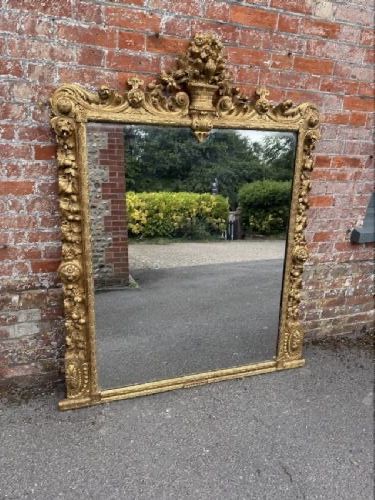
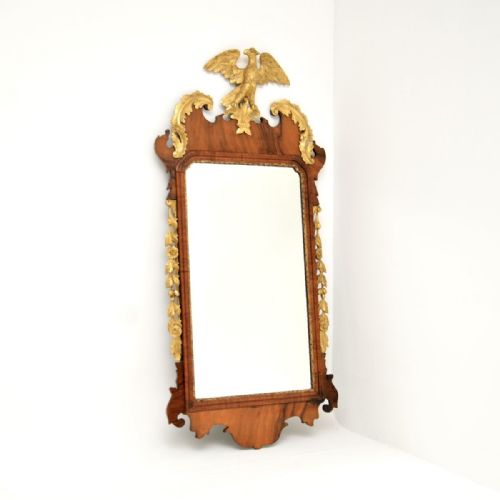
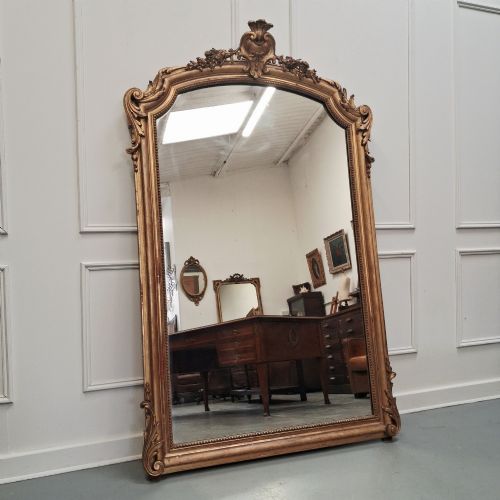
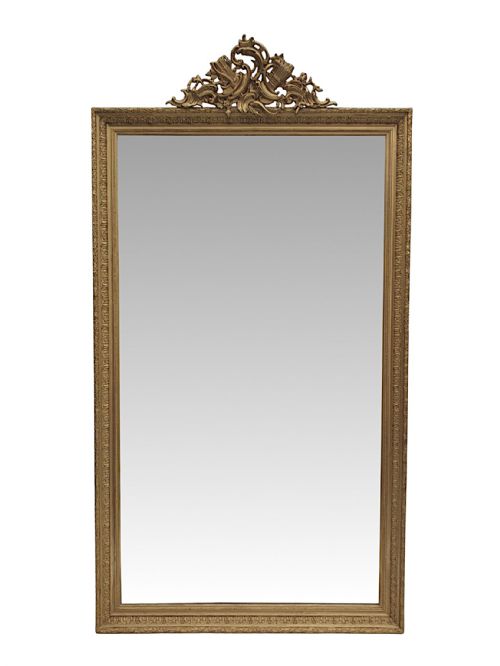
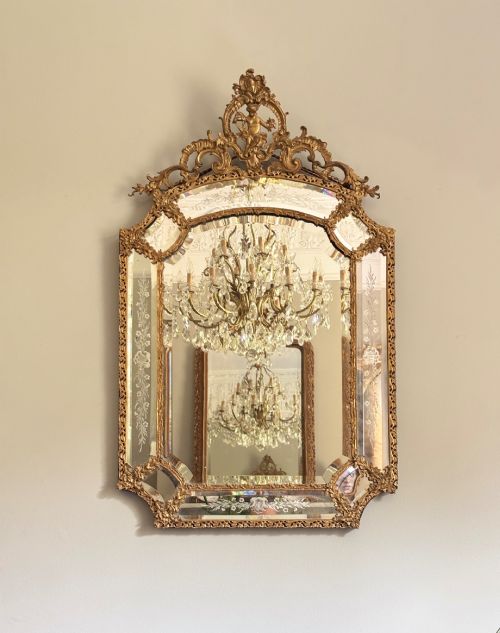
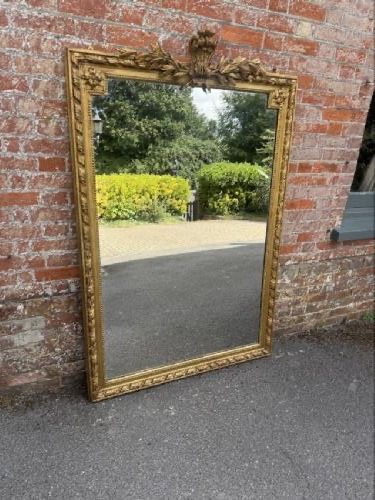
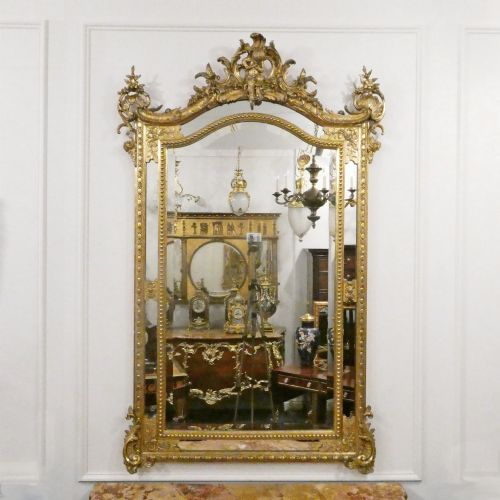
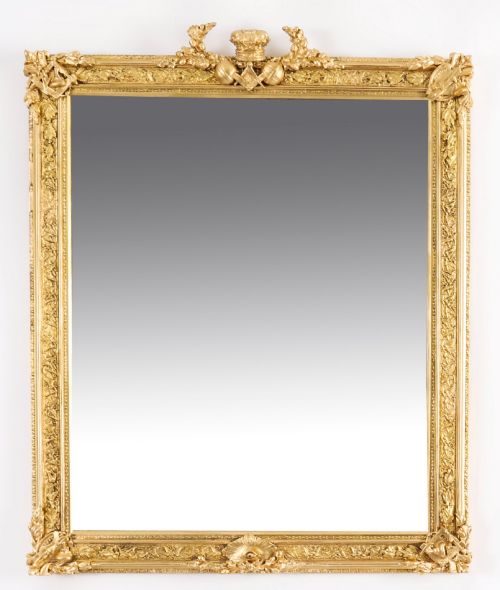
An antique gilded crested mirror serves as a prominent wall hanging, defined by decorative ornamentation perched at the top frame. These pieces appear frequently from the eighteenth and nineteenth centuries, spanning French, English, and Italian origins.
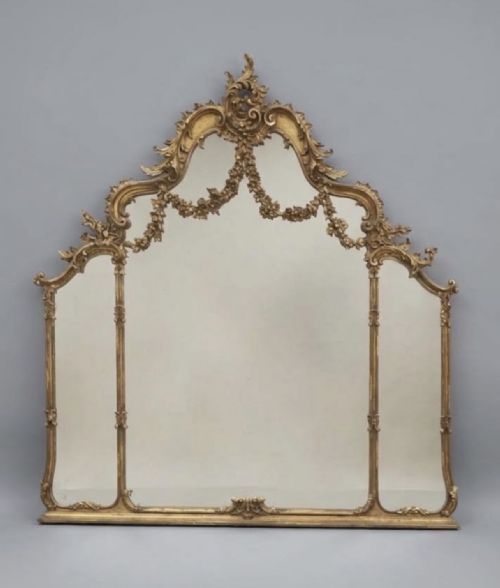
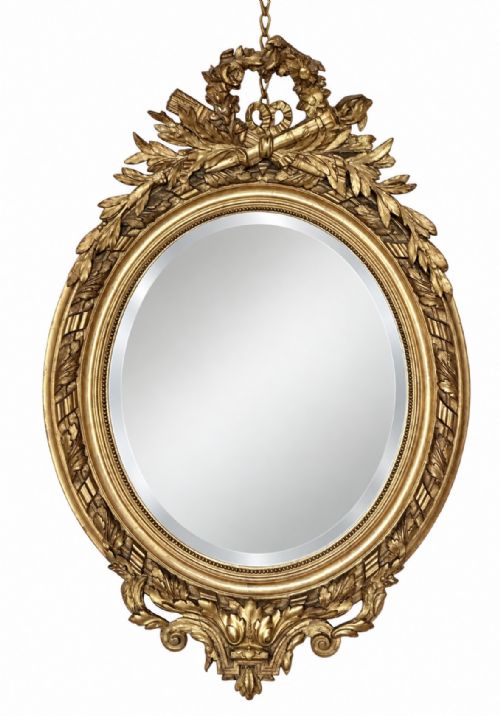
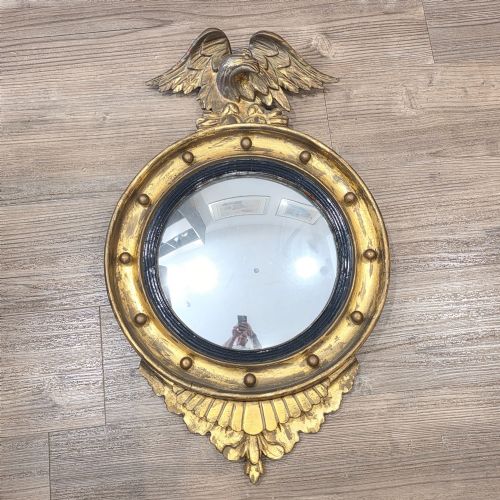
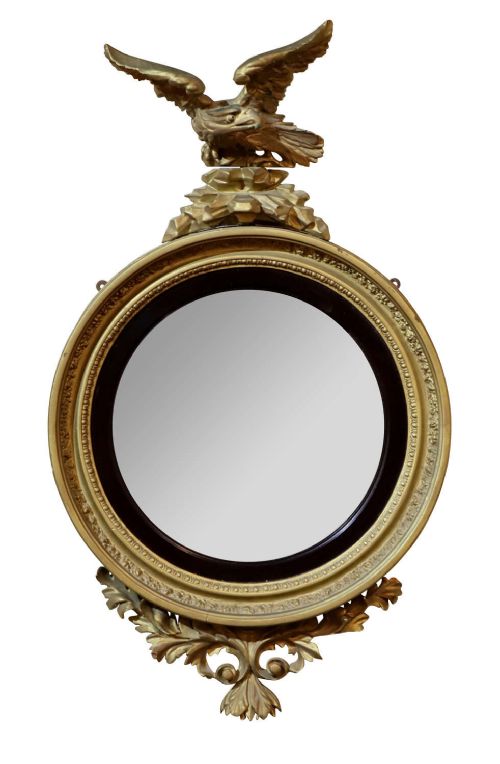
The selections on this page range from compact convex circular frames surmounted by eagles to grand overmantel mirrors placed above fireplaces. Common styles include Rococo Revival, Louis XVI, and Regency, reflecting the ornate tastes of their respective periods.
Buyers will encounter various formats, including tall pier mirrors designed for narrow wall spaces between windows and smaller dressing or hall mirrors. Many incorporate carved wooden crests featuring birds, ribbons, or floral motifs.
Materials and construction techniques
Craftsmen built the core frames primarily from wood such as mahogany, pine, or carved gesso-coated timber. Artisans then applied thin layers of gold leaf or silver-gilt over the prepared wooden surfaces to achieve a luminous metallic finish.
Mirror plates in older examples often consist of heavy glass, sometimes exhibiting natural foxing or distortion from early manufacturing methods. Frames frequently utilise intricate carved wooden elements, rope twists, and applied composition ornaments for their distinct crests.
Several circular convex mirrors feature fierce spread eagles perched watchfully on top, guarding the reflection below.
Assessing quality in gilded mirrors
The depth and sharpness of the hand-carved wood elements dictate the upper tier of craftsmanship, distinguishing fine work from simpler moulded composition. Crisp detailing on the crest and surrounding frame indicates superior artistic execution.
The retention of original gold leaf and the condition of the historic mirror glass contribute significantly to the piece's integrity. Uniformity in the gilding and stability of the underlying wooden structure reflect careful historic maintenance.
Gillows Of Lancaster
The Antique Gilded Crested Mirror Glossary
- Gesso
- A plaster-like mixture applied to wooden frames as a smooth base before gilding.
- Convex mirror
- A round glass mirror with a curved surface that provides a wide-angle reflection of the room.
- Overmantel mirror
- A large horizontal mirror specifically scaled to hang above a fireplace mantelpiece.
- Foxed glass
- Mirror glass showing age-related spots, dark patches, and oxidation behind the reflective coating.
- Gilding
- The application of thin gold leaf or metallic powder to the surface of a wooden frame.
Antique Gilded Crested Mirror: Frequently Asked Questions
Where should I hang a large overmantel mirror?
These large mirrors traditionally sit directly above a fireplace mantel to reflect light and anchor the room's proportions.
They also work effectively mounted low on a main living room wall above a sideboard or console table.
What is the difference between convex and flat mirrors?
Convex mirrors feature a curved glass surface that captures a wide field of view in a compact frame, popular during the Regency period.
Flat mirror plates provide a standard, undistorted reflection and typically appear in larger overmantel and pier formats.
How can I tell if the mirror glass is original?
Original historic glass often displays subtle imperfections, slight waviness, and natural foxing spots behind the surface.
Twentieth-century replacements usually present a completely uniform reflection without the characteristic age marks of earlier manufacturing.