
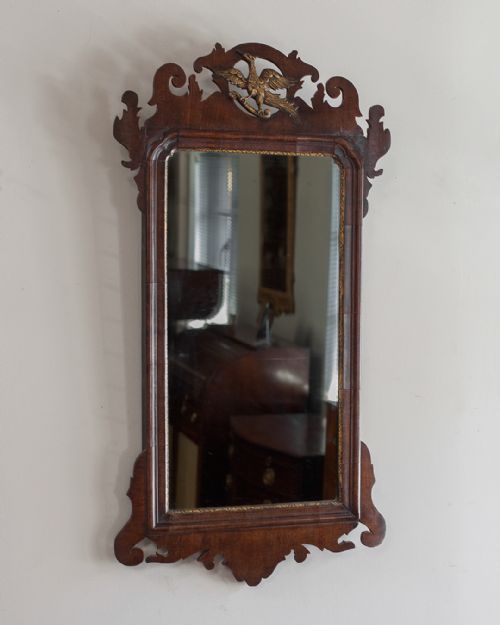
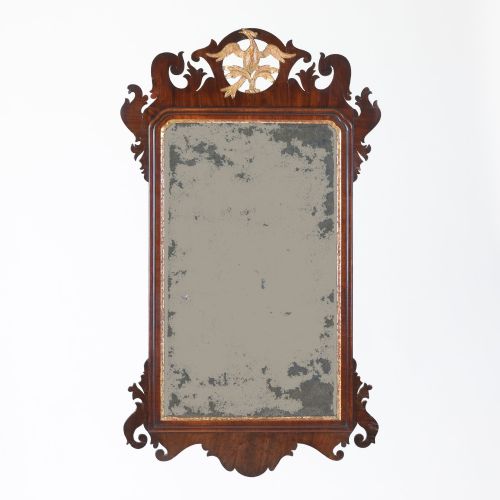
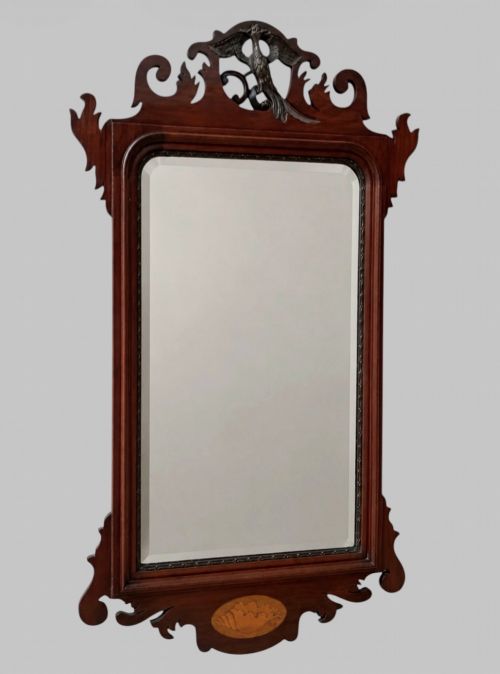

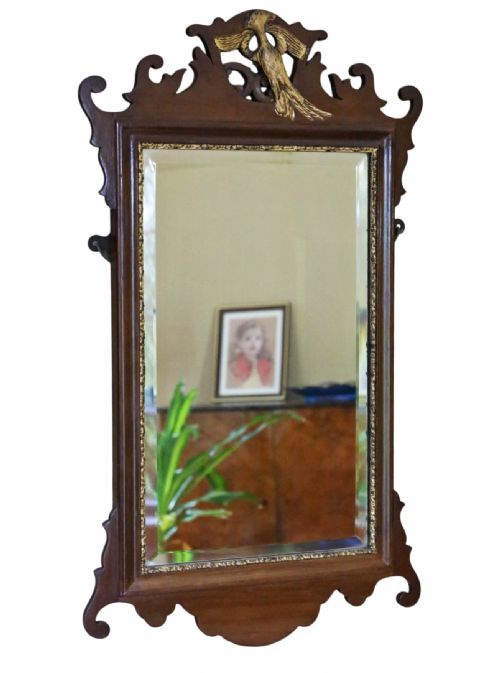





Antique Phoenix Wall Mirror
An antique phoenix wall mirror brings eighteenth-century carving and mythical crests into a room, offering the bold fret-cut silhouettes that collectors prize.
Antique Phoenix Wall Mirror
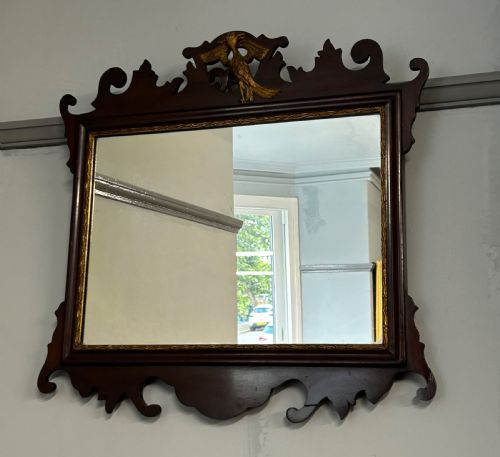
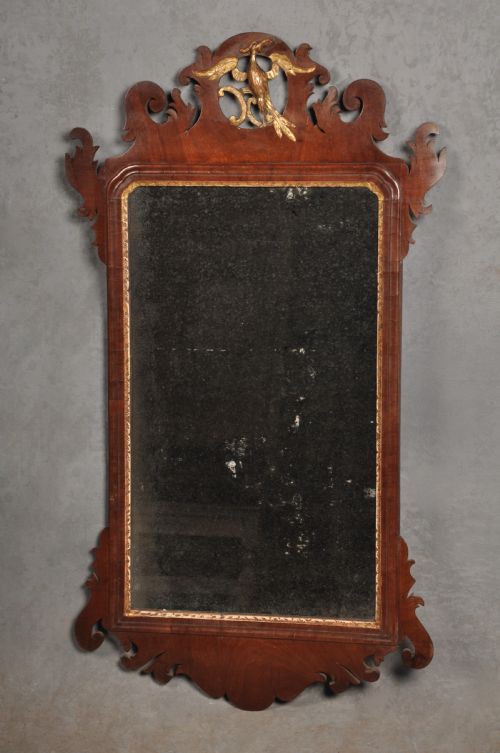
An antique phoenix wall mirror is defined by its carved crest, often depicting the mythical ho-ho bird atop a fret-cut wooden frame. These wall mirrors appear primarily in mahogany and walnut timbers, alongside giltwood and gesso surfaces.
The selections available span from eighteenth-century Georgian originals to later nineteenth-century revivals. Buyers encounter styles ranging from early Georgian and Chippendale to Regency and later revival interpretations.
Most examples function as principal decorative wall pieces, drawing the eye with pierced scrollwork and rectangular or bevel-edged glass plates. The form relies heavily on symmetrical fretwork and heraldic bird motifs.
Materials and construction
Cabinetmakers constructed the frames using native hardwoods such as mahogany and walnut, frequently shaping the outlines with a fretsaw to create intricate pierced patterns. Giltwood and gesso finishes provide a gilded alternative to polished timber.
Makers applied gold leaf over gesso grounds to highlight carved details like the central bird crest. Glass plates, including Vauxhall and bevel-edged variants, were fitted into the rebated backs of these wooden frames.
The mythical bird perched atop the frame keeps a watchful eye over the parlour.
Evaluating craftsmanship and age
The distinction between superior examples and lesser pieces lies in the crispness of the fret-cut carving and the depth of the silhouette. Finer specimens display delicate, well-defined piercing and harmonious proportions rather than heavy, mechanical sawing.
Original mercury or Vauxhall glass plates and untouched gilding or timber patination elevate an antique wall mirror. Later revivals demonstrate different surface treatments and machine-cut precision compared to eighteenth-century hand-worked originals.
The Antique Phoenix Wall Mirror Glossary
- Fretwork
- Pierced ornamental woodwork formed by cutting patterns through a thin board. This technique creates the signature pierced borders characteristic of these frames.
- Ho-ho bird
- An East Asian mythical phoenix motif adapted by European designers. It forms the prominent crest atop many Georgian and Regency mirrors.
- Gesso
- A plaster-like mixture applied to wood surfaces as a preparation for gilding. It allows craftsmen to model sharp relief details before applying gold leaf.
- Vauxhall glass
- Early English mirror glass characterised by thin plates with bevelled edges. These plates often show slight imperfections and historic ageing.
Antique Phoenix Wall Mirror: Frequently Asked Questions
How do I date an antique mirror?
Dating relies on examining the timber species, the style of the fretwork, and the construction methods used on the reverse. Eighteenth-century pieces use dense hardwoods and hand-cut joinery.
Revival pieces from later centuries often display machine tooling and different backing boards while copying earlier Georgian designs.
Where should I hang these mirrors?
These wall mirrors suit formal reception rooms, above mantelpieces, or on principal drawing-room walls where their reflective glass and carved crests can be appreciated. Their vertical rectangular format works well above furniture.
Ensure the wall fixings match the substantial weight of solid timber and glass frames.
Are giltwood and mahogany frames different?
Giltwood frames utilise a gesso base coated in gold leaf to achieve a bright, reflective surface. Mahogany and walnut versions showcase the natural grain and dark polished tone of the timber.
Both finishes appeared across the Georgian and Regency periods, though gilt is more commonly paired with gesso crests.