
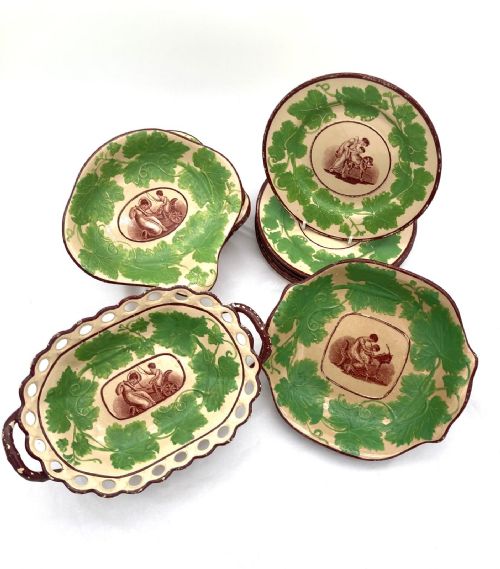
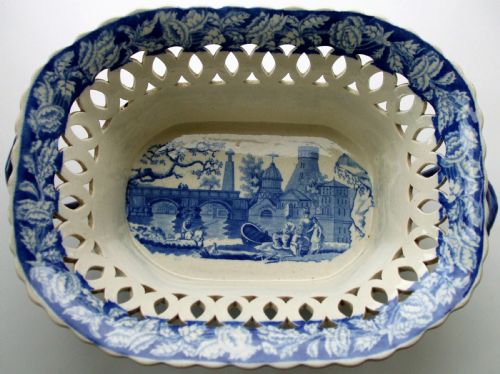
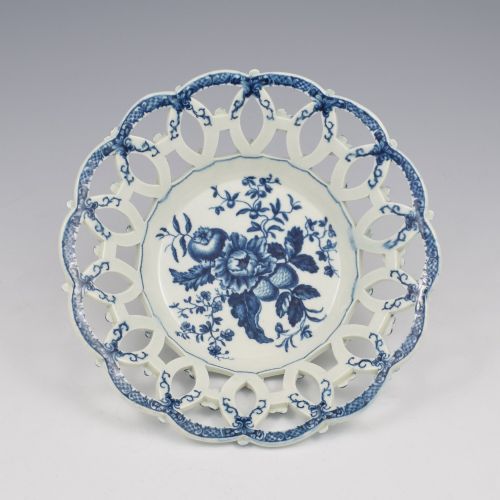


Pierced Ceramic Basket
A pierced ceramic basket brings table-bound openwork charm from the eighteenth and nineteenth centuries straight to your home.
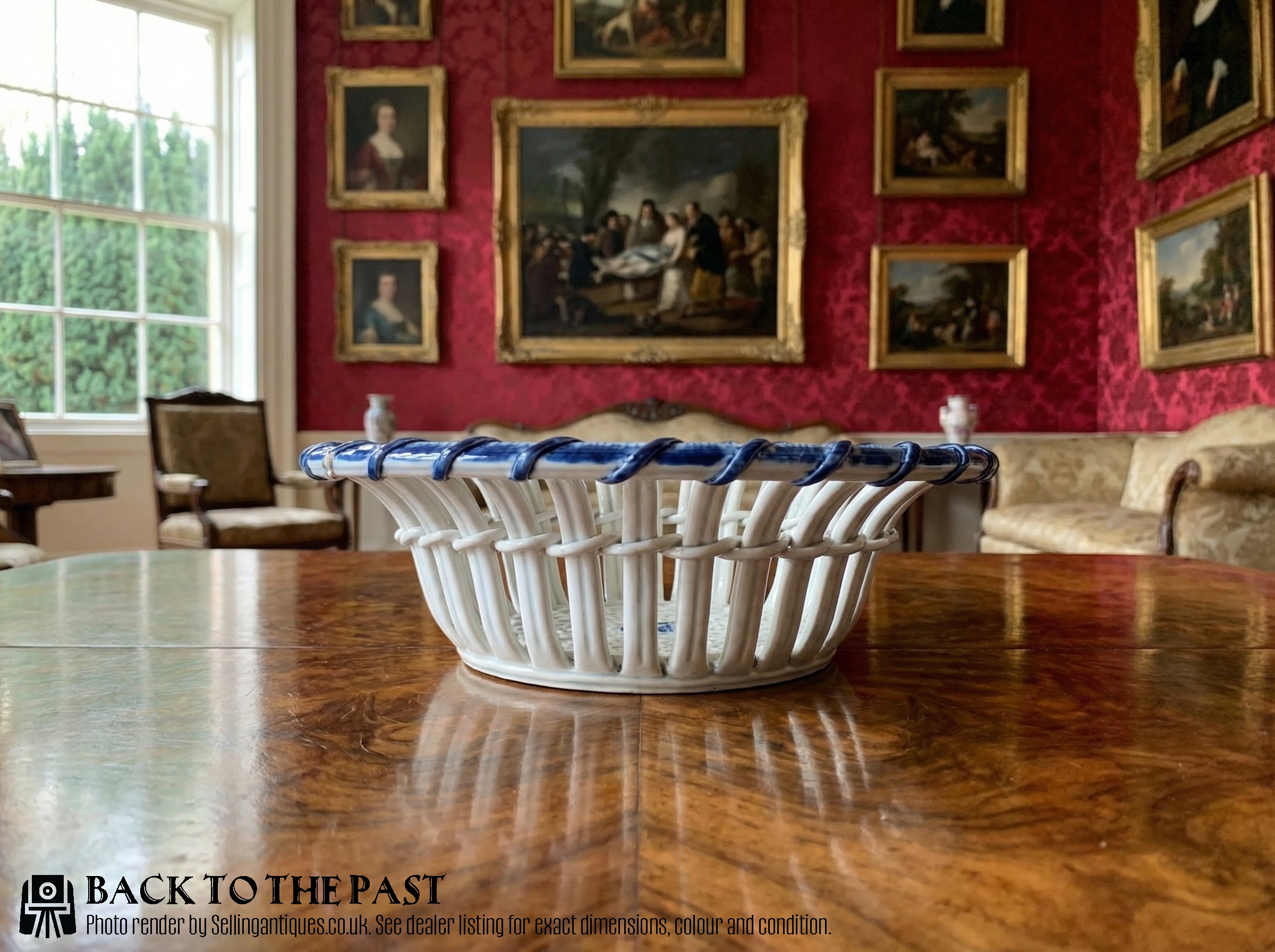
Pierced Ceramic Basket
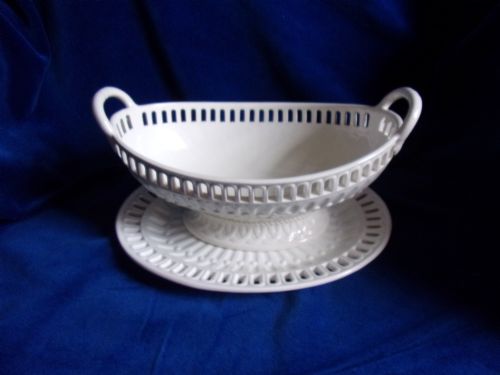
A pierced ceramic basket serves as a decorative bowl, centrepiece, or fruit and chestnut vessel designed for display during grand dessert services. These table wares emerge from eighteenth and nineteenth-century traditions, spanning Georgian and Regency eras through to later nineteenth-century revivals.
You will most commonly meet English and continental porcelain or earthenware vessels, including creamware, pearlware, and soft-paste porcelain. Many examples feature matching stands or covers, rendered in blue and white transfer print, polychrome enamel, or monochrome glaze.
How They Were Made
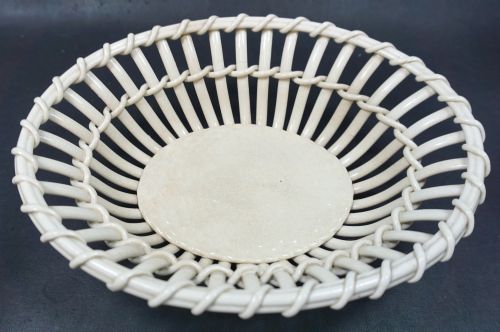
Potters shaped these pieces using earthenware, creamware, pearlware, ironstone, and soft-paste porcelain, applying lead or tin glazes to seal the porous bodies. Artisans pierced the wet clay walls by hand or pressed them in moulds to create the characteristic openwork trellis and reticulated patterns.
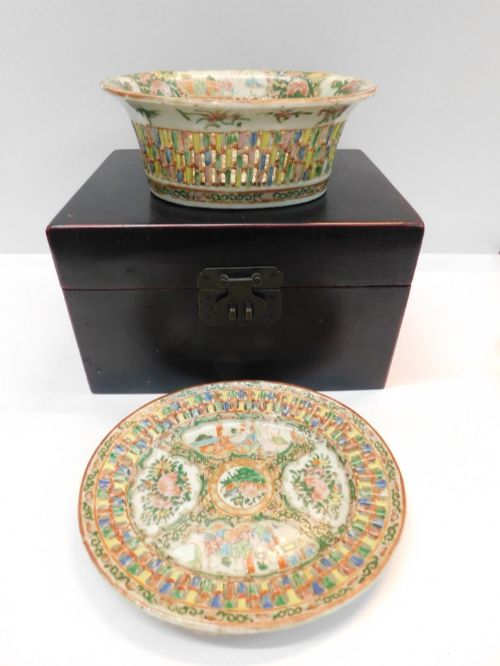
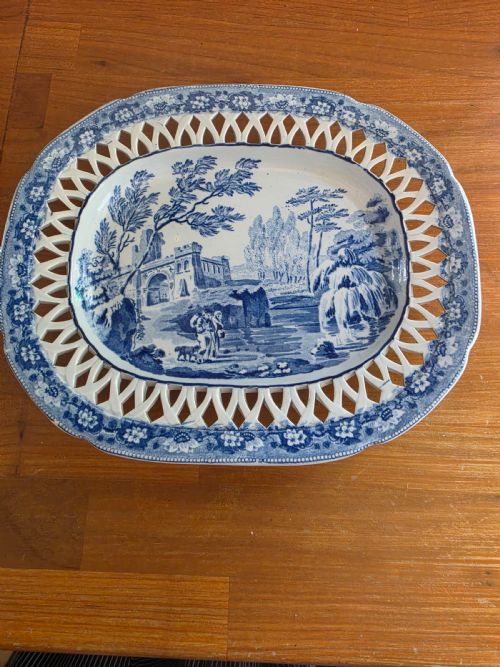
Decoration relied on underglaze blue painting, intricate blue and white transfer printing, and hand-applied enamels alongside gold leaf and gilding. Firing took place in traditional kilns, sometimes incorporating intricate wicker-moulded textures or applied floral motifs.
Transfer-printed blue and white willow patterns appear alongside hand-painted Chinese export Famille Rose designs.
What Varies in Quality
Quality rests upon the crispness of the pierced openwork and the delicacy of the moulded exterior, where sharp, clean lattice edges distinguish superior potting from softer, blurred forms. Hand-painted enamel precision and the clarity of transfer-printed scenes further separate standard production from masterworks.
The presence of original matching stands, covers, and intact handles elevates an object's integrity and visual balance. The refinement of the paste - whether fine translucent porcelain or carefully potted creamware - dictates the overall sophistication of the piece.
Derby Porcelain·Davenport·J. and R. Clews·Meissen·Sevres
The Pierced Ceramic Basket Glossary
- Chestnut basket
- A specialised vessel designed for holding chestnuts or fruit at the table, frequently supplied with an under-tray or stand. These pieces often feature pierced sides to allow air circulation.
- Reticulated
- Describes a net-like or openwork pattern formed by cutting or piercing geometric or interlaced shapes into the clay wall before firing. This technique requires considerable skill to prevent warping in the kiln.
- Pearlware
- An refined earthenware developed by Josiah Wedgwood in the late eighteenth century, featuring a pale bluish glaze that pooled in recesses to create a bright white appearance resembling Chinese porcelain.
- Creamware
- A fine earthenware developed in England with a warm, yellowish lead glaze, highly popular during the Georgian period for table services and decorative bowls.
- Soft-paste porcelain
- An artificial porcelain composition made from white clay mixed with ground glass and frit, fired at lower temperatures than hard paste and prized for its warm glaze texture.
Pierced Ceramic Basket: Frequently Asked Questions
What were pierced ceramic baskets used for?
These vessels functioned primarily as table centerpieces and serving containers for fruit, sweetmeats, or roasted chestnuts during formal dessert courses. Their openwork design also permitted ventilation for delicate foods.
Over time, they transitioned from active dining table service into decorative display items showcased on sideboards, mantelpieces, and dedicated cabinets.
How do I clean a ceramic basket?
Dust the openwork lattice gently using a soft, dry artist brush to prevent accumulation of debris within the pierced cavities.
Avoid submerging antique pieces with overglaze enamel or gold leaf in water, as harsh detergents can degrade delicate historic pigments.
How can I tell eighteenth from nineteenth-century pieces?
Eighteenth-century examples often utilise soft-paste porcelain or early creamware bodies with hand-painted polychrome enamel or underglaze blue decoration. The potting tends to show subtle organic variations characteristic of earlier studio practices.
Nineteenth-century items frequently employ transfer-printing techniques, ironstone compositions, or bolder revival styles such as Rococo and French Empire.
Did these baskets always come with stands?
Many chestnut baskets and dessert service centrepieces were originally paired with a matching tray or platter to catch stray crumbs and complete the visual silhouette. Surviving matched pairs of basket and stand remain particularly sought after by collectors.
Disparate pairing occurred historically through usage and breakage, meaning some surviving vessels now rest on associated rather than original stands.