
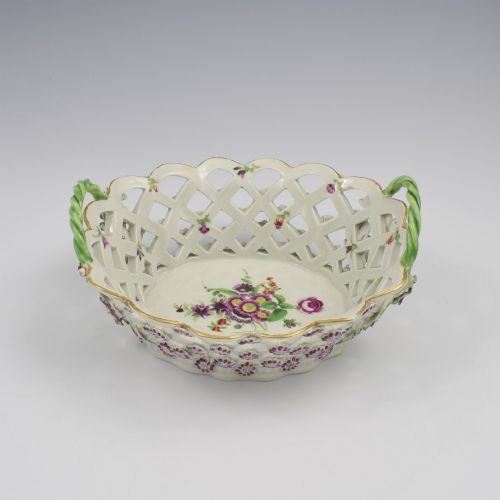
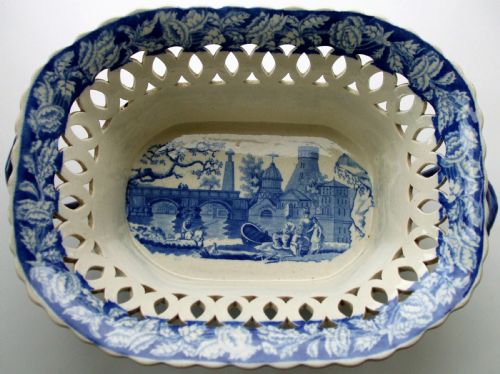
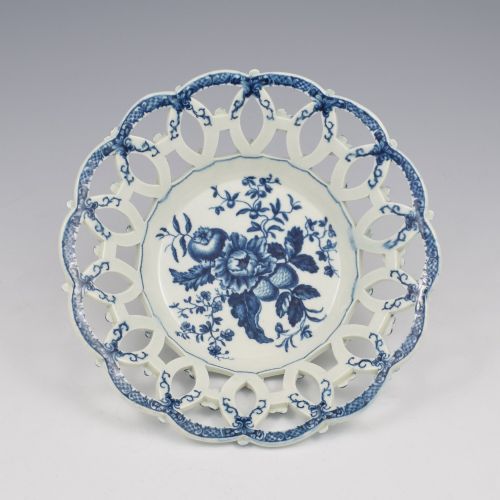


Ceramic Chestnut Basket
A ceramic chestnut basket is a pierced serving vessel designed for holding roasted nuts at formal dining tables, prized for its intricate openwork lattice.
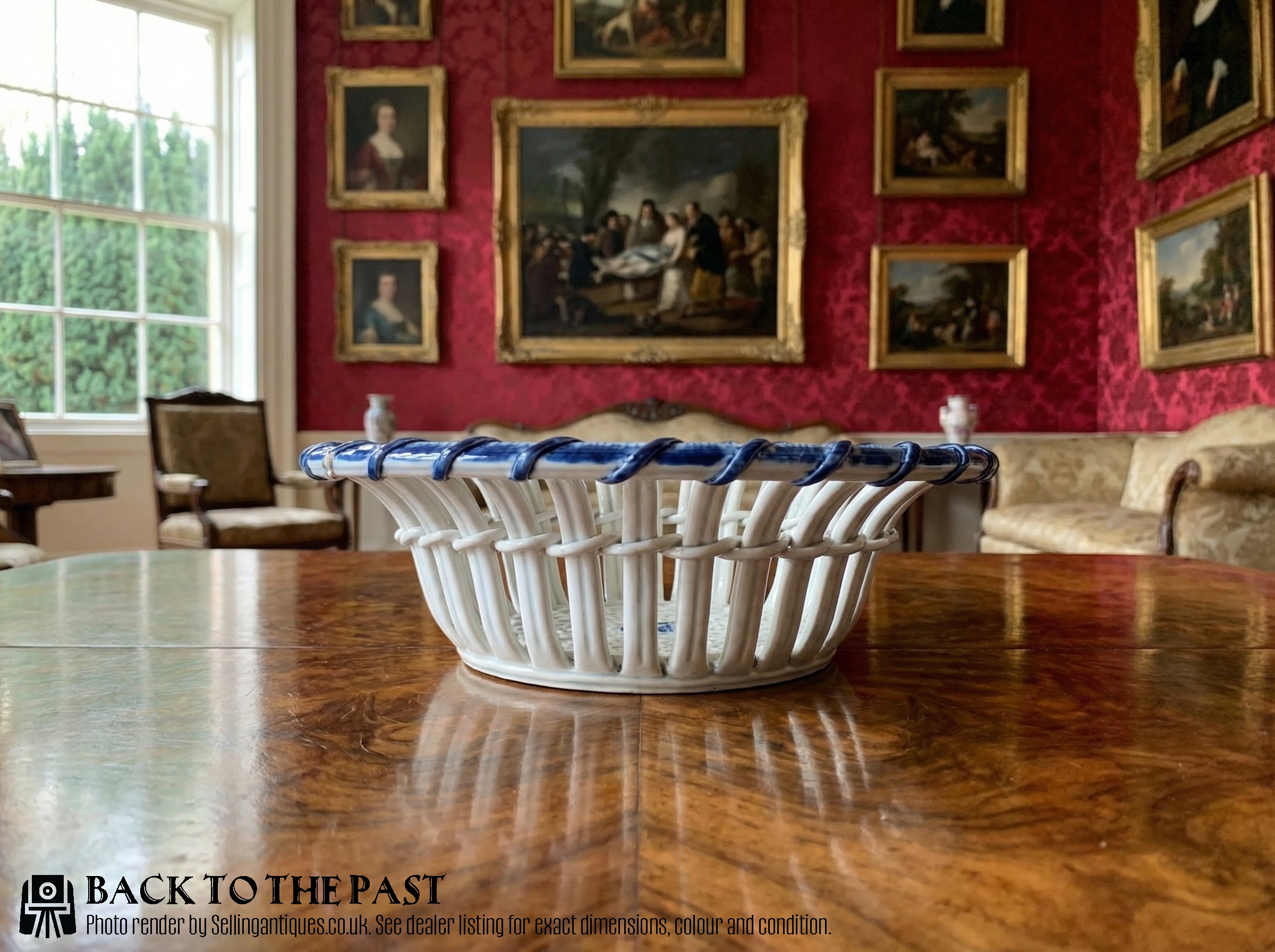
Ceramic Chestnut Basket
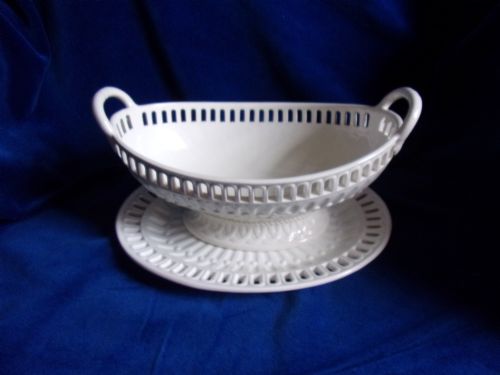
A ceramic chestnut basket is a formal dining table vessel designed for serving roasted chestnuts, often accompanied by a matching under-stand or cover. These decorative pieces emerge from Georgian, Regency, and nineteenth-century production centres across England and China.
How they were made
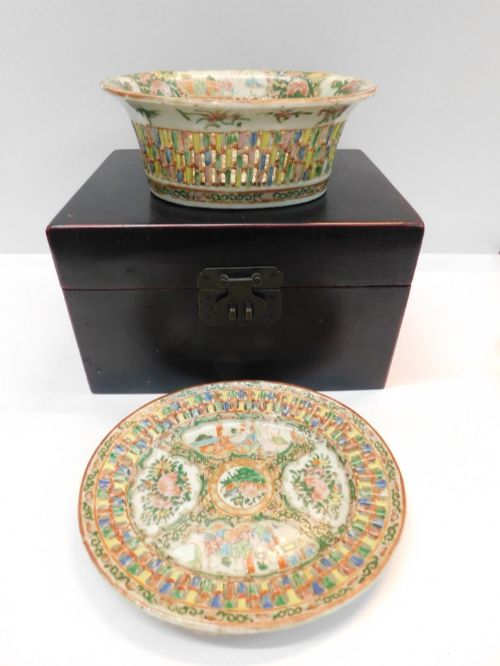
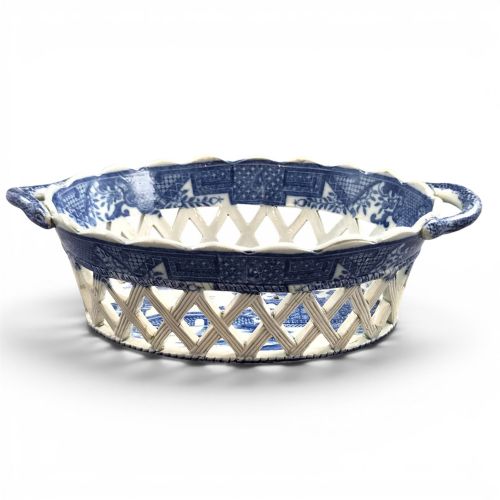
Potters shaped these vessels using soft-paste porcelain, earthenware, pearlware, and ironstone, often building the openwork lattice by hand-piercing the clay before firing. Many examples incorporate intricate hand-painted polychrome enamels, blue and white transfer printing, or delicate gold leaf details.
Covered pieces required precise throwing and moulding so that lids, bases, and stands fitted securely together through multiple kiln firings. Specialised glazes, including pearl glaze and clear glossy coatings, were applied to seal the porous ceramic bodies and enhance the painted decoration.
Listings feature earthenware, porcelain, and pearlware forms spanning the eighteenth and nineteenth centuries, including Georgian and Regency periods.
What varies in quality
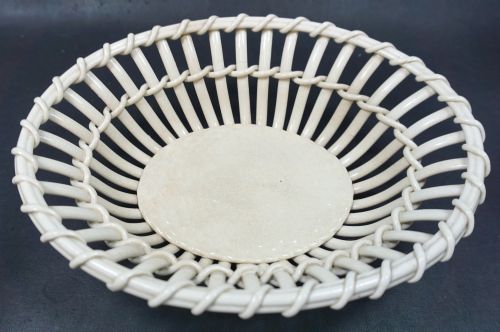
The precision and crispness of the pierced reticulation define the upper tier of these vessels, requiring immense skill to cut clean lattice patterns without warping the clay during high kiln temperatures. Finer examples display meticulous hand-painted details or sharp transfer printing rather than simplified decoration.
Completeness dictates much of the desirability, with matching stands, trays, and original covers surviving together marking the more significant pieces. The reputation of the manufacturing source, from notable English porcelain works to Chinese Export workshops, further distinguishes the grade.
J. & R. Clews·Mason·Spode·Wedgwood·Worcester
The Ceramic Chestnut Basket Glossary
- Reticulated
- Pierced or openwork decoration forming a net-like or lattice pattern across the ceramic body. This technique required exceptional skill from the potter to prevent the clay from collapsing during firing.
- Transfer printing
- A mechanical method of applying complex designs to pottery by transferring ink from an engraved copper plate onto tissue paper and then onto the ceramic surface. This innovation allowed for intricate pictorial scenes like river landscapes to be reproduced consistently.
- Soft-paste porcelain
- An artificial porcelain composition made from white clay mixed with ground glass and other materials, fired at lower temperatures than true hard-paste porcelain. It is characteristic of eighteenth-century English factories such as Worcester and Derby.
- Pearlware
- A refined earthenware developed in England featuring a pale bluish glaze that pooled in crevices to mimic the whiteness of Chinese porcelain. It dominated tablewares during the late eighteenth and early nineteenth centuries.
- Famille rose
- A palette of opaque enamels dominated by pink or rose colours, introduced to Chinese ceramics during the Qing dynasty. These pigments were widely utilised on export wares destined for European markets.
Ceramic Chestnut Basket: Frequently Asked Questions
What was a ceramic chestnut basket used for?
These vessels served roasted chestnuts at the conclusion of formal meals, allowing hot nuts to be presented attractively at the table. The pierced walls permitted aroma and residual heat to escape while keeping the chestnuts contained.
Over time, wealthy households utilised them as decorative centerpieces or fruit bowls when seasonal dining habits shifted. Their intricate openwork made them conversation pieces for affluent dining rooms.
How do I distinguish eighteenth-century pieces?
Eighteenth-century examples often exhibit soft-paste porcelain bodies with hand-painted polychrome or blue and white motifs specific to factories like Worcester or Derby. They frequently show subtle potting imperfections and painterly brushwork characteristic of early ceramic production.
Later nineteenth-century iterations frequently incorporate transfer printing, ironstone bodies, or pearl glazes. Examining the paste, glaze pooling, and decorative technique helps clarify the manufacturing era.
How should I display a chestnut basket?
Display these baskets on sturdy surfaces away from high-traffic areas to protect their delicate pierced lattice walls from accidental impact. Keeping them out of direct sunlight preserves the vibrancy of overglaze enamels and gold leaf highlights.
If the basket includes a matching stand or cover, display them assembled to showcase the complete historical form. Ensure any supporting furniture provides stable footing for heavier ironstone or earthenware bodies.
Are covers and stands usually original?
Covers and stands sometimes became separated from their baskets during centuries of domestic use, leading to matched pairings over time. Careful inspection of the paste, glaze colour, and wear patterns helps determine whether components belong together.
Matching components sharing identical potting characteristics and factory marks confirm an authentic suite. Even without covers, baskets accompanied by original matching stands remain particularly desirable.