

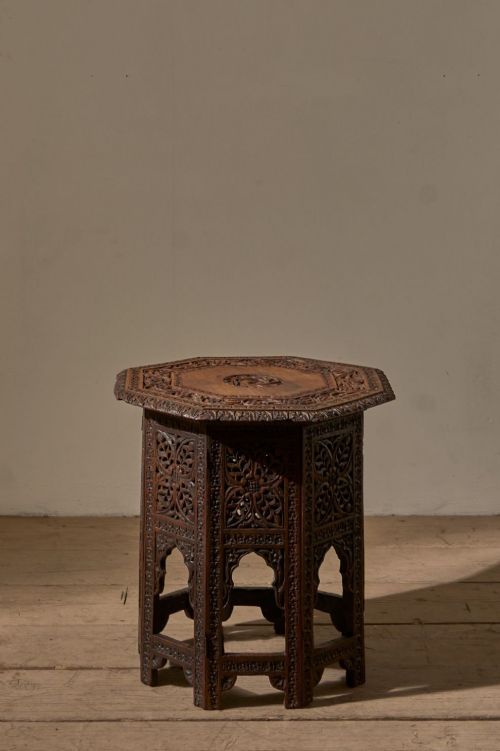
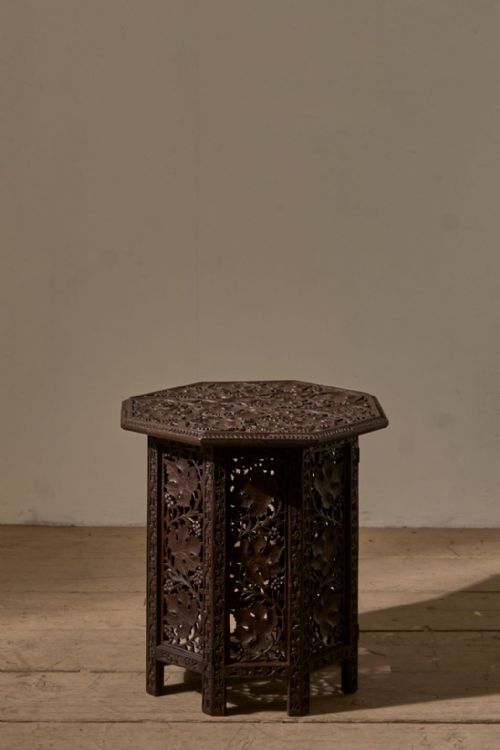
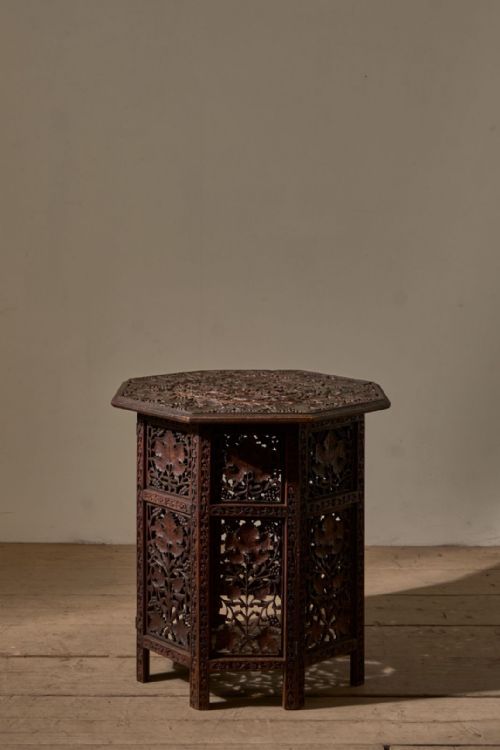
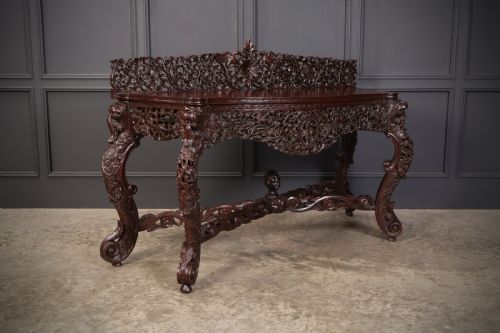


Pierced Carved Side Table
These pierced carved side table examples bring intricate Anglo-Indian and Victorian craftsmanship into domestic spaces.
What they are
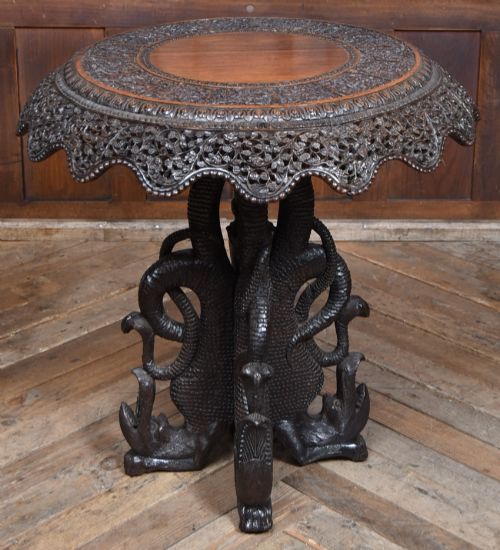
A pierced carved side table is a functional surface defined by elaborate openwork decoration, spanning the nineteenth century and around nineteen hundred. These pieces encompass occasional tables, tray top tables, fold up designs, and lamp tables created within Anglo-Indian, Anglo-Indian Colonial, and Victorian traditions.
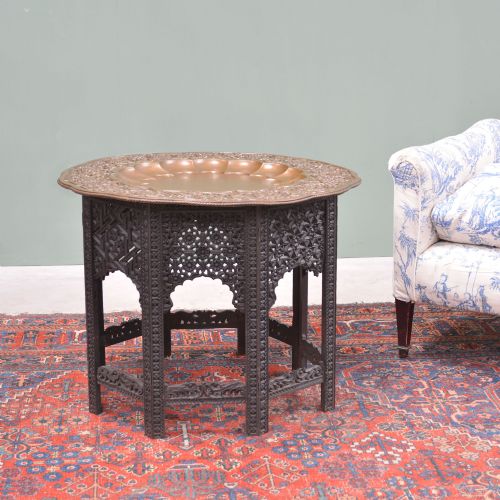
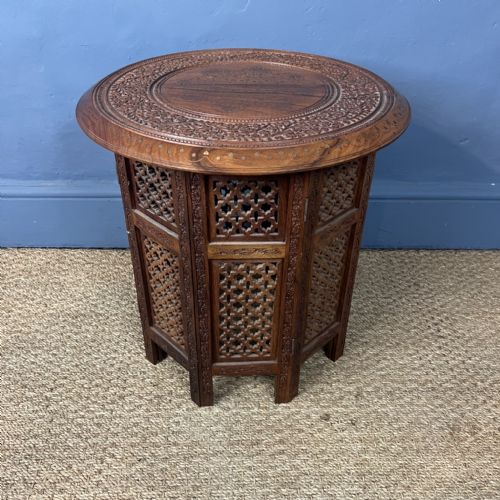
The most common examples encountered on this page belong to the Anglo-Indian tradition, frequently featuring intricate folding frames or removable tray tops. Victorian iterations also appear, focusing on rich wood figures rather than openwork carving.
How they were made
Maker's workshops utilised dense tropical timbers such as teak and padauk alongside temperate hardwoods including walnut and burr walnut. These materials were selected for their ability to hold fine detail under hand-carving tools.
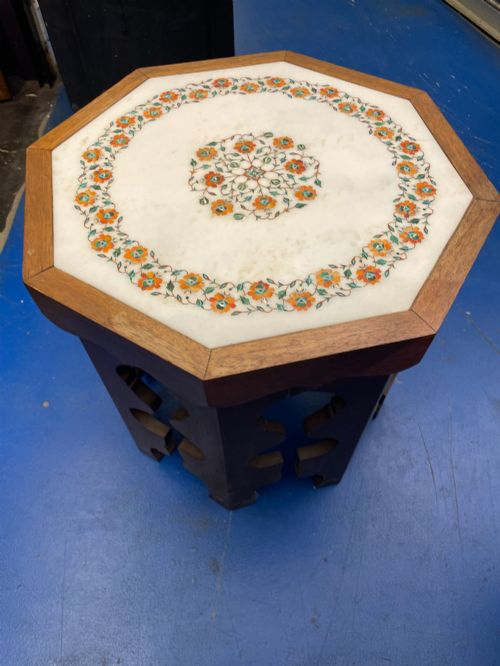
Carvers employed piercing and fretwork techniques to create openwork leaf designs across the surfaces. Certain pieces incorporate contrasting media, integrating bone inlay, brass, and copper details into the wooden structures.
Retail Price Guide 2026
Typical UK retail prices for pierced carved side table, calculated from the Sellingantiques database of over a million retail prices indexed since 2003. This retail price guide relies exclusively on Sellingantiques data; no external sources or auction records are used, so the figures do not describe the wider market.
The inventory spans the nineteenth century up to nineteen hundred, featuring teak, padauk, and burr walnut.
What varies in quality
The distinction between standard and superior pieces rests entirely upon the depth and precision of the carved fretwork. Crisp, deep relief work demonstrates a higher degree of artisan skill than shallow or mechanical surface scoring.
Material selection dictates the overall presence of the table, where finely figured burr walnut or dense padauk elevate the piece above plain timber alternatives.
The Pierced Carved Side Table Glossary
- Anglo-Indian
- Describes furniture made in India during the British colonial period, combining European furniture forms with traditional Indian carving techniques.
- Fretted
- Woodwork cut through with decorative patterns using a fretsaw, creating lightweight panels with open spaces.
- Padauk
- A heavy, durable tropical hardwood with a reddish brown colour, frequently utilised in nineteenth century colonial furniture.
- Burr walnut
- Timber taken from a walnut tree growth containing distorted grain patterns, prized for its swirling decorative effect on table tops.
Frequently Asked Questions
What is a pierced carved side table?
It is a small support surface featuring intricate fretwork and openwork carvings across its wooden panels. These items typically originate from nineteenth century Britain or Anglo-Indian workshops.
Such tables function as decorative accents in a room, often taking the form of occasional furniture, lamp tables, or designs with removable tray tops.
How were these tables used originally?
Historically, these items served light domestic duties such as holding lamps, displaying decorative objects, or presenting tea. Fold-up variants offered portability for colonial households.
Today, they suit similar placement beside seating or in hallways where their carved surfaces remain visible.
Are all these tables Anglo-Indian?
Not all pieces share that origin, although Anglo-Indian examples dominate the selection. Other items, such as Victorian lamp tables, originate from British workshops.
Distinguishing between them relies on observing the timber choice and the style of ornamentation applied to the structure.
What woods are common in this furniture?
The recorded materials include exotic hardwoods like teak and padauk alongside traditional European timbers such as walnut and burr walnut. Some examples also incorporate bone inlay or metal elements.
These varied substances reflect both the regional origins of the workshops and the stylistic preferences of the nineteenth century.