





Pierced Carved Cupboard
A pierced carved cupboard brings intricate traditional craftsmanship and rich timber grain directly into a room.
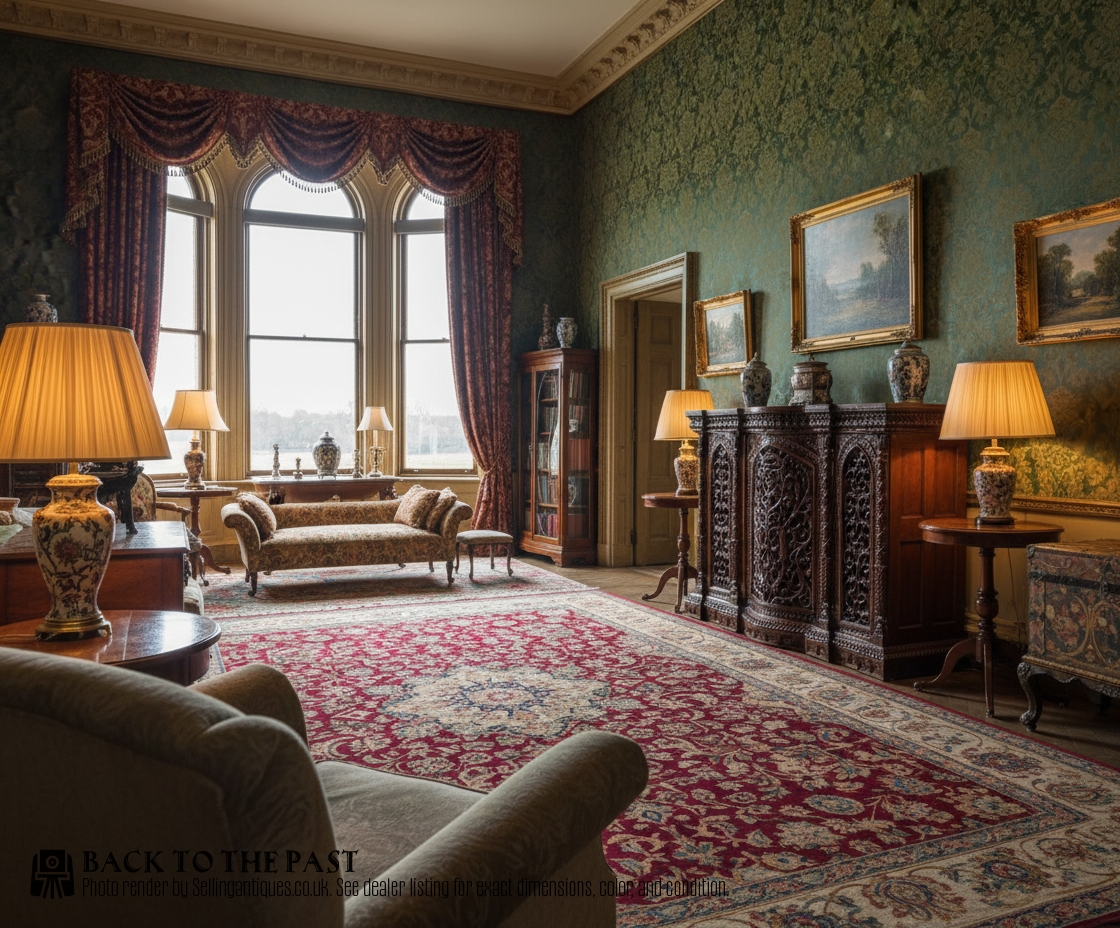
Pierced Carved Cupboard
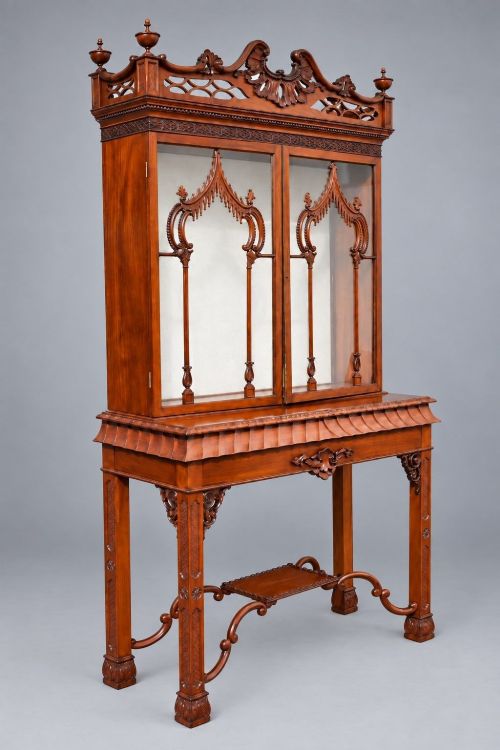
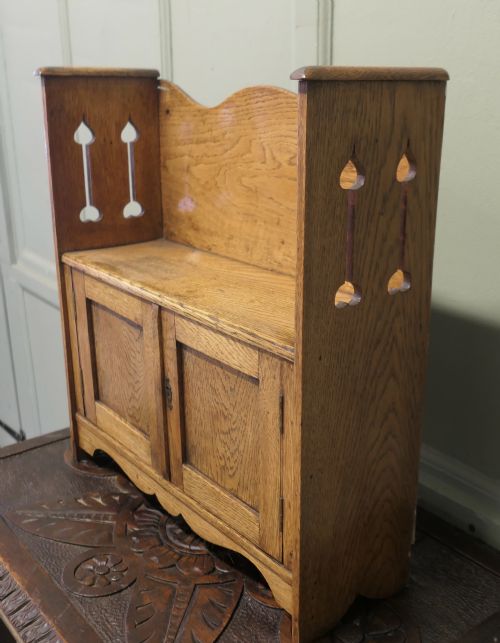
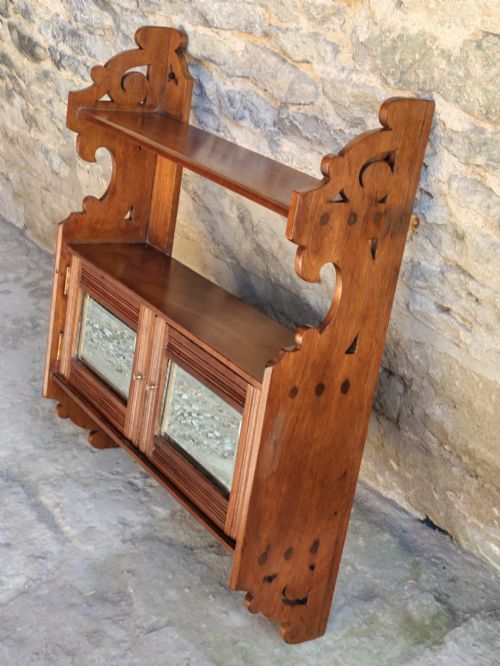
A pierced carved cupboard covers an array of storage forms, from hanging wall cabinets and bedside night tables to large sideboards and display cabinets. Buyers seeking this type encounter works ranging from 18th-century Georgian designs to Victorian and early 20th-century pieces.
Forms span specialised uses, including gin cabinets intended for verandas, music cabinets, and small table cabinets. Each object provides enclosed storage shaped by period carving traditions.
Materials and construction
Cabinet makers utilised a diverse selection of timbers, relying heavily on hardwoods such as mahogany, walnut, oak, teak, padauk, and rosewood. Softer woods and limewood also appear where intricate relief work required a more forgiving medium.
Construction methods combine traditional joinery with deeply pierced and relief-carved surface ornament. Brass hardware such as hinges and handles often complements the timber structures, while glass panels feature in display variations.
A veranda gin cabinet from Ceylon brings tropical refreshment straight into the British parlour.
Distinctions in execution
Depth and clarity of the pierced carving set examples apart, separating flat surface decoration from deeply undercut, expressive ornamentation. The crispness of floral, geometric, or figurative motifs reveals the hand of a skilled carver.
Selection of timber grain and the integrity of the original joints dictate structural longevity. Finer items demonstrate careful matching of exotic woods and robust secondary framing that supports heavy carved doors and panels.
The Pierced Carved Cupboard Glossary
- Pierced work
- Woodwork cut entirely through to create openwork patterns and negative space. This technique allows light and air to pass through cabinet doors.
- Padauk
- A dense tropical hardwood displaying rich reddish-brown colouration. It was favoured by colonial carvers for its stability and fine grain.
- Vernacular
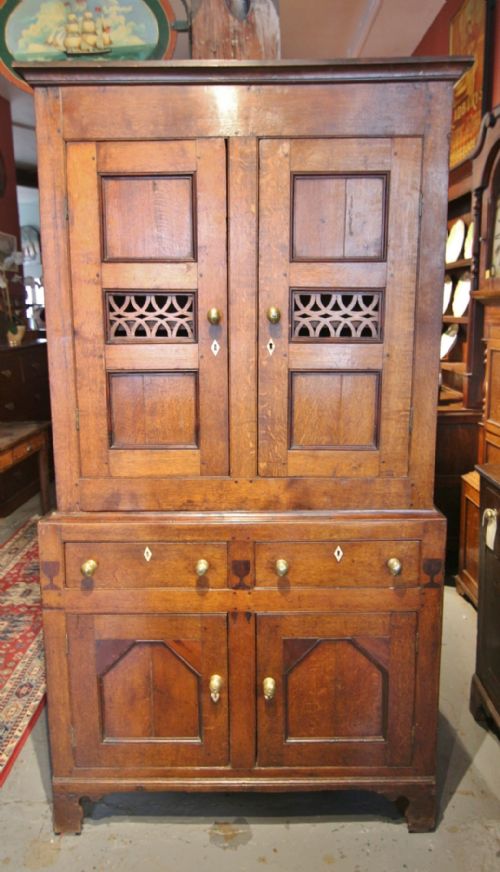
- Regional furniture built by local craftsmen following traditional domestic uses rather than high-style metropolitan fashions. Welsh food cupboards exemplify this approach.
- Inlay
- Contrasting strips of wood or other materials set flush into the primary timber surface to form geometric or linear decoration. This technique enhances flat panels on regional cabinets.
Pierced Carved Cupboard: Frequently Asked Questions
What is a pierced carved cupboard?
A pierced carved cupboard is a storage piece featuring panels cut through with openwork designs alongside relief carving. These cabinets originate from various periods including the eighteenth and nineteenth centuries.
They serve practical storage functions while functioning as decorative focal points due to their intricate woodwork.
Where were Anglo-Indian cabinets made?
Anglo-Indian cabinets were produced during the nineteenth and early twentieth centuries in workshops influenced by both British furniture forms and traditional Indian carving techniques. Craftsmen utilised dense tropical hardwoods native to the region.
These pieces often combine European cabinet shapes with deeply undercut botanical and scroll motifs.
How do I care for a hardwood cabinet?
Hardwood cabinets require placement away from direct heat sources and dramatic humidity fluctuations to prevent timber movement. Regular dusting with a dry cloth maintains the surface.
Application of appropriate furniture wax preserves the natural finish of woods like teak, mahogany, and padauk without building up heavy residue.
How can I tell the period of a carved cabinet?
Dating relies on examining the timber species, construction joints, hardware, and stylistic indicators present in the carving. Georgian and Victorian pieces exhibit different proportions and ornamental vocabulary.
Reference to specific revival styles, such as Chinese Chippendale or Art Nouveau, provides further chronological context for individual items.