
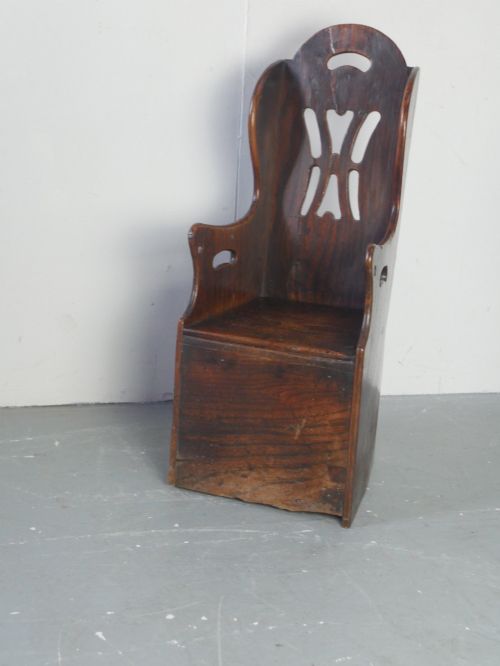
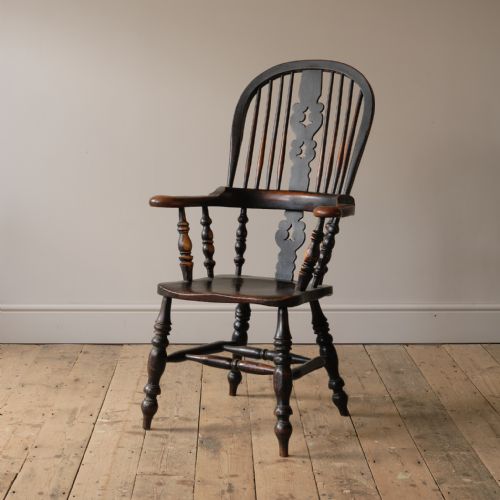
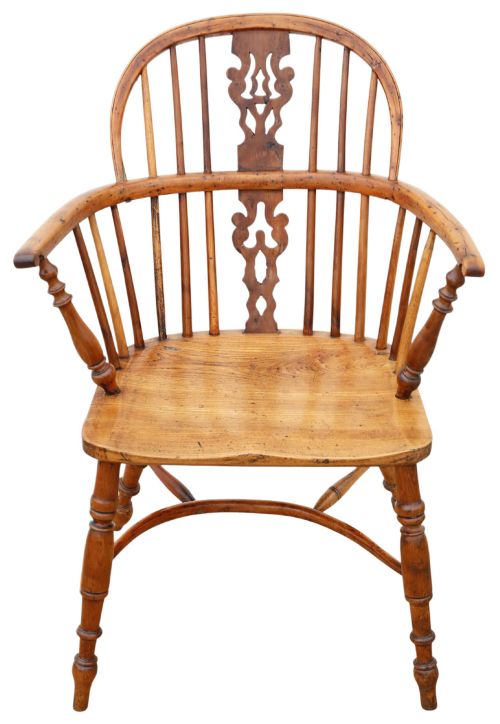
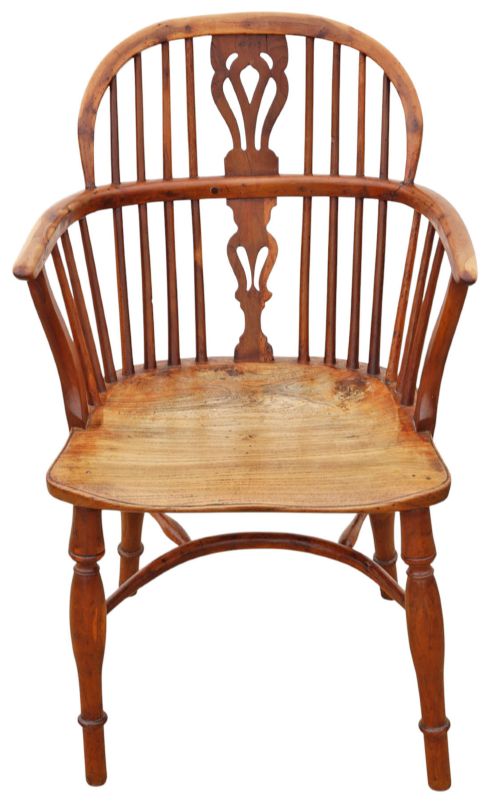
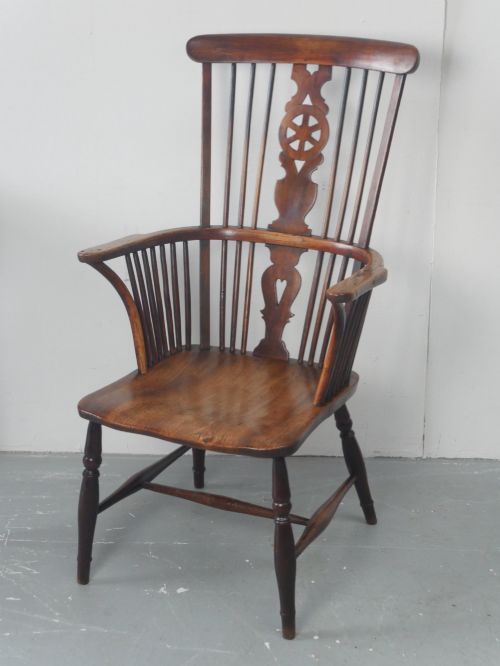
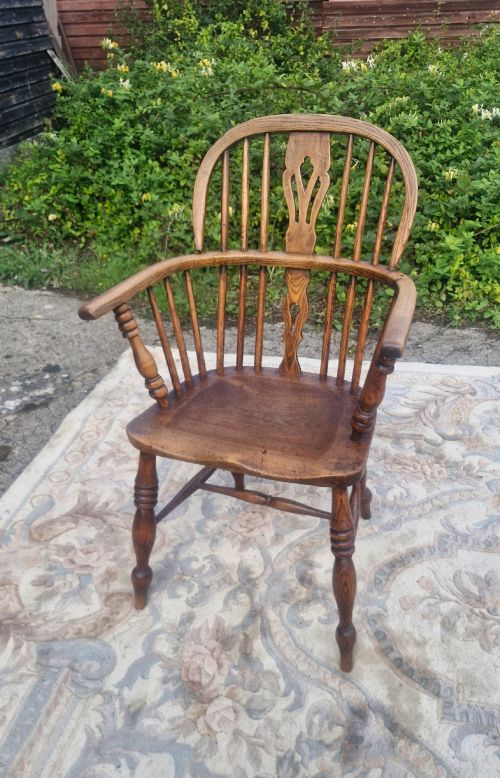
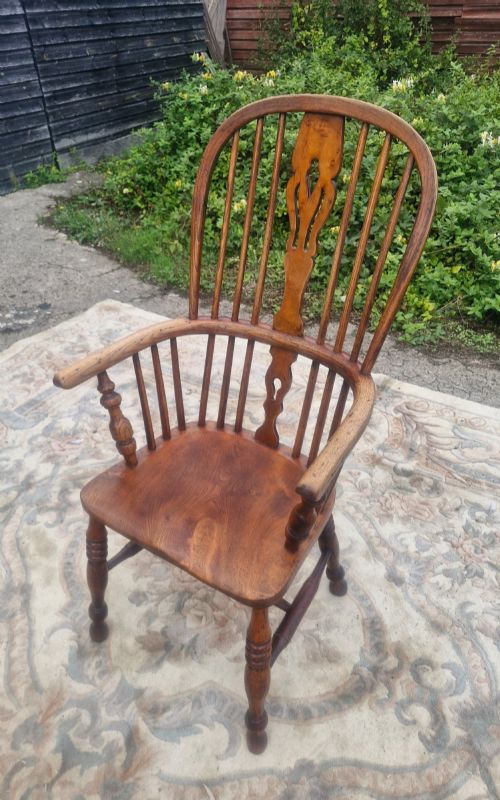


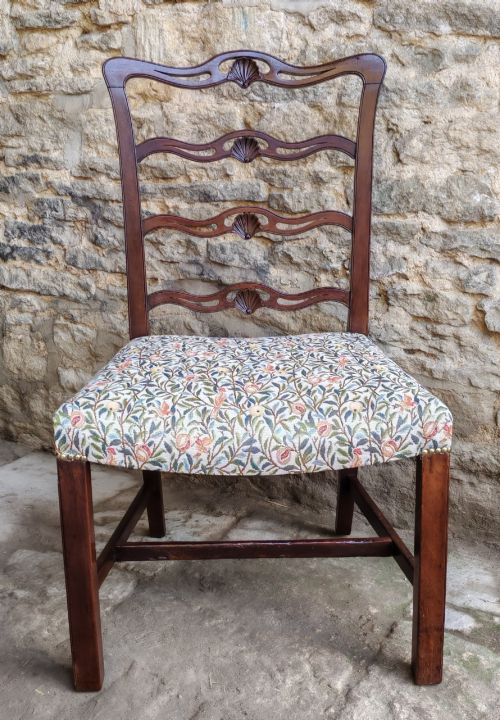
Pierced Back Wooden Chair
A pierced back wooden chair offers tactile seating through traditional country craftsmanship, drawing collectors to durable elm, ash, and yew timbers.
Pierced Back Wooden Chair
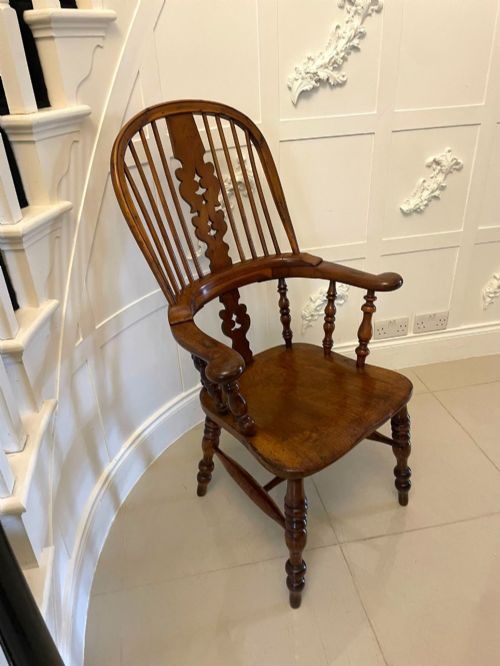
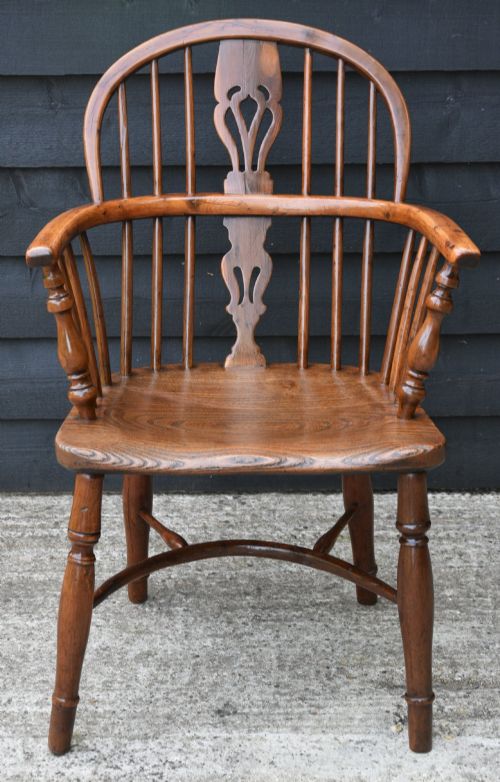
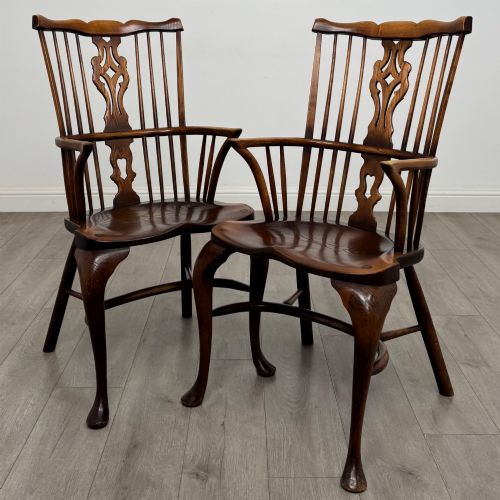
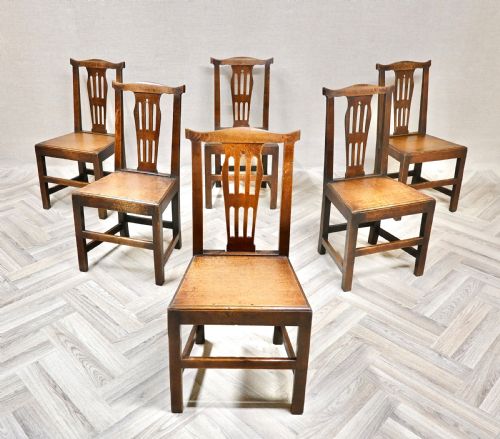
A pierced back wooden chair encompasses traditional seating forms found across English country houses and town dwellings from the eighteenth century onward. Buyers searching for a pierced back wooden chair encounter domestic seating such as Windsor armchairs, ladderback dining chairs, and hall chairs fashioned in regional workshops.
The selections on this page rely heavily on vernacular forms spanning the Georgian, Victorian, and Edwardian periods. Most examples emerge from domestic timber traditions, pairing robust central splats or pierced uprights with shaped seats and sturdy turned legs.
How they were made
Makers utilised native hardwoods such as elm, ash, and yew for Windsor and country dining chairs, bending green timber for hoops and carving solid plank seats. Spindles and legs were turned on lathes before being joined through traditional wedged mortise and tenon construction.
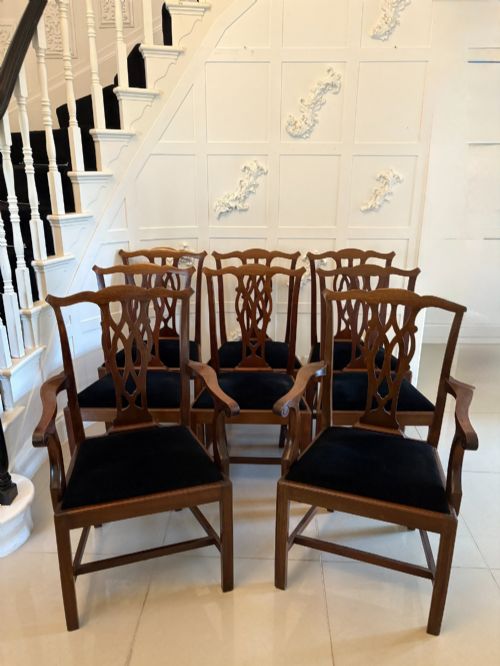
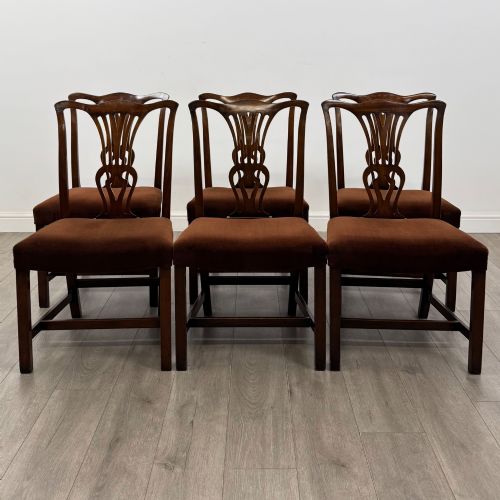
Mahogany and oak appear in more formal Georgian and Victorian dining or hall chairs, employing pierced splats cut from wide boards and joined with pegged frame construction. Surface finishes rely on traditional wax polishing to feed the grain over decades of handling.
Listings feature regional vernacular seating primarily constructed from native British timbers including elm, ash, yew, and beech across the eighteenth and nineteenth centuries.
What varies in quality
Quality rests upon the selection of timber and the harmony of the turning, particularly in country windsors where yew grain and well-figured elm seats distinguish superior work. The crispness of the piercing in a mahogany splat or the balance of a bentwood hoop marks the maker's hand.
Proportion and original patination dictate the standing of a piece, separating domestic vernacular output from standard utilitarian production. Chairs retaining their original surface skin and uncompromised structural joints command greater regard.
Gabbitass Worksop
The Pierced Back Wooden Chair Glossary
- Windsor chair
- A chair built with a solid wooden seat into which the legs and back spindles are separately bored and wedged. This form dominated English country seating through the eighteenth and nineteenth centuries.
- Splater
- The central vertical strip of wood in a chair back, often pierced or carved for decoration in Georgian dining chairs.
- Carver
- A traditional term for an armchair, typically used at the head of a dining table alongside matching single chairs.
Pierced Back Wooden Chair: Frequently Asked Questions
What is a pierced back wooden chair?
A pierced back wooden chair refers to seating featuring an openwork design carved or cut into the wooden back splat or central support. These pieces range from formal mahogany dining chairs to rustic country forms.
They serve as functional seating and decorative examples of historical woodworking traditions spanning several centuries of British domestic life.
How do I identify a Windsor chair?
Windsor chairs are defined by their heavy solid wooden seats, which serve as the central anchor for both the legs below and the back spindles above. They frequently combine different native timbers like elm seats with ash or yew spindles.
Look for turned undercarriages and shaped saddle seats that indicate regional English country manufacture during the Georgian or Victorian eras.
Are these chairs suitable for daily dining?
Many of these chairs were originally constructed for dining or parlour use and remain entirely practical for modern daily seating. Solid timber construction provides remarkable durability across generations of regular household use.
Care should be taken to check joint stability and timber condition before placing antique seating into heavy daily service around a busy table.
How should I care for antique wood?
Antique wooden chairs require stable indoor humidity levels away from direct heat sources and intense sunlight to prevent timber shrinkage. Regular dusting with a soft cloth and occasional application of traditional beeswax maintains the surface sheen.
Avoid modern liquid polishes containing silicones, which can penetrate open grain and alter the historic patination accumulated over centuries.