




Pine Church Chair
These pine church chair examples are sturdy ecclesiastical seating options shaped by Gothic revival design, offering robust timber character for daily use.
Pine Church Chair
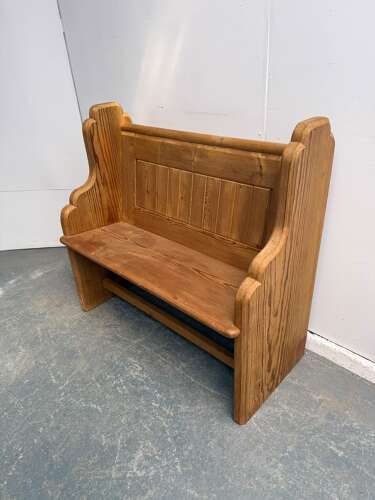
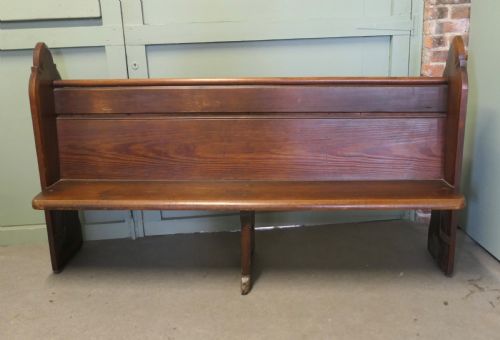
A pine church chair brings solid ecclesiastical seating into domestic spaces, drawing on nineteenth-century design traditions. When you search for a pine church chair, you encounter forms ranging from single pews and hall chairs to armchairs and benches.
Most pieces seen here belong to the Victorian period, often featuring pitch pine and softwood construction. Makers designed these items for religious interiors, resulting in robust proportions and architectural silhouettes.
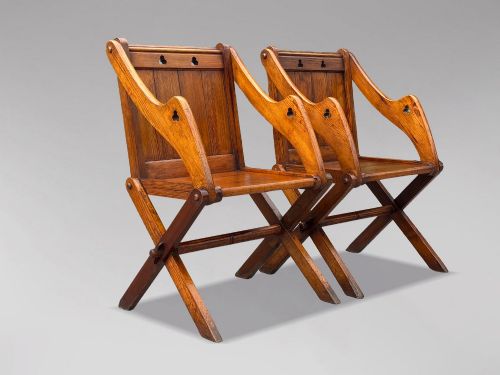
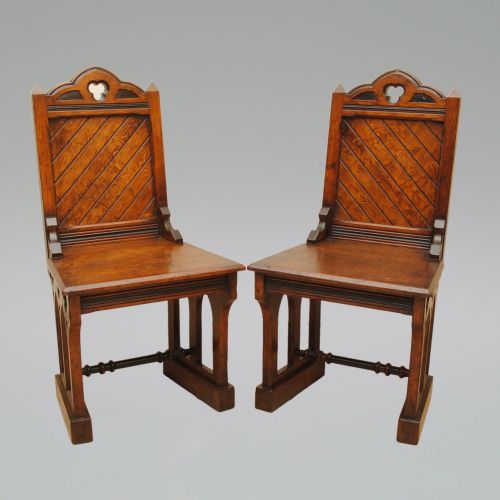
The selection includes specific regional variations such as Glastonbury armchairs and Gothic throne chairs. These functional objects combine ecclesiastical purpose with domestic utility.
How they were made
Craftsmen utilised pitch pine and general softwood timbers, finished with wax to protect the wood. These materials provided the necessary strength for heavy ecclesiastical use.
Joinery techniques supported the Gothic revival and rustic country styles visible across the pieces, sometimes incorporating metal studs, upholstery fabric, or brass details.
What varies in quality
The distinction between standard seating and superior examples rests on the crispness of the Gothic carving and the choice of pitch pine. Pieces displaying well-figured timber grain and sophisticated architectural silhouettes command greater attention from collectors.
Construction integrity and surface treatment also define the tier of a piece. Wax finishes that preserve the underlying softwood without masking its natural grain indicate careful historical maintenance.
The Pine Church Chair Glossary
- Pitch pine
- A resinous softwood known for its durability and prominent grain pattern. It forms the primary material for many nineteenth-century ecclesiastical furnishings.
- Gothic Revival
- An architectural and decorative style popular during the Victorian era. It utilises pointed arches, quatrefoils, and vertical emphasis derived from medieval buildings.
- Glastonbury armchair
- A specific nineteenth-century chair form featuring X-framed legs and a flat wooden seat. This design draws inspiration from ancient ecclesiastical seating traditions.
- Softwood
- Timber derived from conifers, such as pine, used extensively for utilitarian church furniture. It offers workability while maintaining structural reliability.
Pine Church Chair: Frequently Asked Questions
What is a pine church chair?
A pine church chair is a nineteenth-century ecclesiastical seating item constructed from softwood or pitch pine. These pieces often incorporate Gothic revival design elements.
They served functional roles in religious settings before entering the domestic market as hall chairs, armchairs, and benches.
How do I date a pitch pine chair?
Dating relies on stylistic markers such as Victorian Gothic revival ornamentation and construction methods. The evidence points to the nineteenth century, including specific years like eighteen-eighty.
Examining the timber grain and hardware, such as brass or metal studs, helps establish the chronological context of the piece.
Where were these chairs used?
These chairs originated in churches, chapels, and ecclesiastical meeting halls. Their robust construction was intended for congregations and clergy members.
Today, buyers place them in hallways, living rooms, and studies as functional seating with architectural presence.
What styles are common in church seating?
The primary styles observed are Gothic revival, Victorian Gothic, and rustic country. These aesthetics reflect nineteenth-century architectural revivals.
Characteristics include pointed structural lines, throne-like backs, and straightforward timber construction.