


Ecclesiastical Throne Chair
These ecclesiastical throne chair examples bring serious architectural presence and historic weight straight into a room.
Ecclesiastical Throne Chair
An ecclesiastical throne chair embodies the grand seating traditions of churches, chapels, and monastic halls, designed to command attention through vertical height and imposing proportions. When searching for an ecclesiastical throne chair, buyers encounter pieces that draw heavily on historic architectural motifs, particularly from medieval and ecclesiastical contexts.
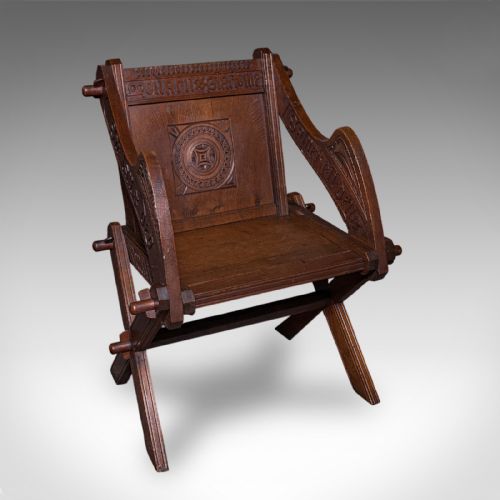
The selections span distinct periods including pre-reformation fifteenth century examples alongside nineteenth century revivals, Edwardian interpretations, and twentieth century chapel seating. Forms primarily manifest as substantial armchairs, high-backed elbow seats, and specific regional variations like Glastonbury chairs.
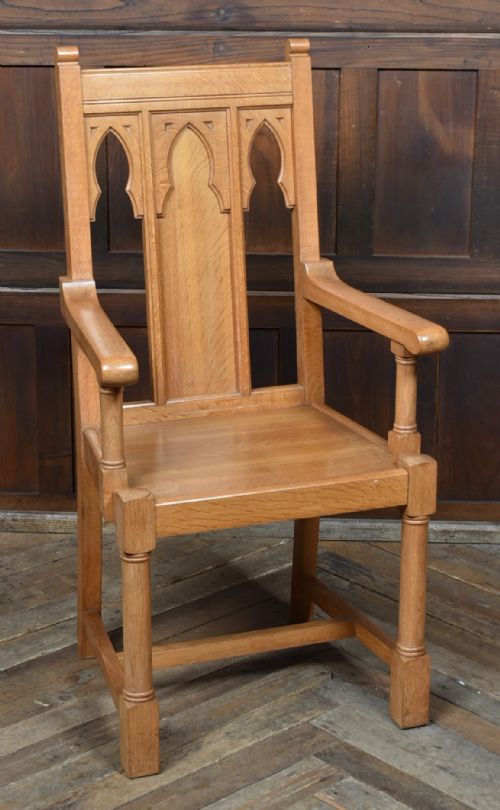
Oak dominates the structural forms, occasionally supplemented by pitch pine or painted wood, whilst upholstery often incorporates fabric and leather. Stylistically, Gothic Revival and Victorian Gothic idioms prevail, bringing pointed arches, tracery, and formal dignity to domestic or institutional interiors.
Materials and construction methods
Makers relied predominantly on solid timbers, utilising English and Welsh oak alongside pitch pine to achieve the necessary structural integrity for such heavy seating forms. These woods provided the density required to support deep carving and architectural framing.
Construction techniques mirror traditional carpentry, employing robust joinery to sustain the monumental scale and upright posture demanded of thrones. Surface finishes range from natural waxed timber to painted wood and applied gold leaf, highlighting decorative details.
Seating areas frequently integrate supportive materials, with fabric, leather, and brass accents appearing across various periods. Structural ornamentation includes inscriptions and Gothic Revival carving that reflect the ecclesiastical origins of the designs.
Several examples feature direct inscriptions, turning a simple chapel seat into a silent witness with a handwritten backstory.
Evaluating quality and execution
The distinction between ordinary and exceptional pieces rests upon the ambition of the architectural carving and the integrity of the timber selection. Heavier, dense timbers like English oak provide a superior foundation for crisp detailing compared to softer alternatives.
Proportion and scale dictate the visual impact, where balanced height and authoritative framing separate standard armchairs from true throne forms. The fidelity of the Gothic Revival detailing, from tracery to joinery, indicates the workshop's commitment to period precedent.
The Ecclesiastical Throne Chair Glossary
- Glastonbury chair
- A traditional folding armchair type with an X-frame base and sloping back, frequently constructed in oak and associated with ecclesiastical contexts.
- Gothic Revival
- An architectural and decorative style popular during the nineteenth century that resurrects medieval forms, pointed arches, and structural motifs.
- Pitch pine
- A resinous softwood utilised in nineteenth-century furniture manufacture for its durability and distinctive grain pattern.
- Carver armchair
- A sturdy wooden armchair, often placed at the head of a table or within a hall, sharing stylistic traits with ecclesiastical seating.
Ecclesiastical Throne Chair: Frequently Asked Questions
Where did ecclesiastical throne chairs originate?
These seats developed primarily within religious settings such as cathedrals, abbeys, and chapels to seat clergy and dignitaries during services.
Over time, cabinetmakers adapted these monumental forms for domestic and institutional use, giving rise to nineteenth-century revival pieces.
How do you style an ecclesiastical throne chair?
Their imposing scale makes them ideal as anchor pieces in large hallways, studies, or living rooms where architectural presence is desired.
Pairing them with minimal surrounding decor allows the historic timber and Gothic details to command visual focus.
What is a Glastonbury chair?
A Glastonbury chair is a specific form of wooden armchair featuring interlocking components that historically allowed the frame to be dismantled.
Identified by sloped arms and a panelled back, these chairs are frequently linked to ecclesiastical and monastic traditions.
How are different periods distinguished?
Pre-reformation and early examples display authentic medieval construction methods, hand-cut joinery, and centuries of patina on the timber.
Nineteenth-century Gothic Revival pieces often utilise machine assistance alongside hand carving, reflecting Victorian interpretations of earlier ecclesiastical styles.